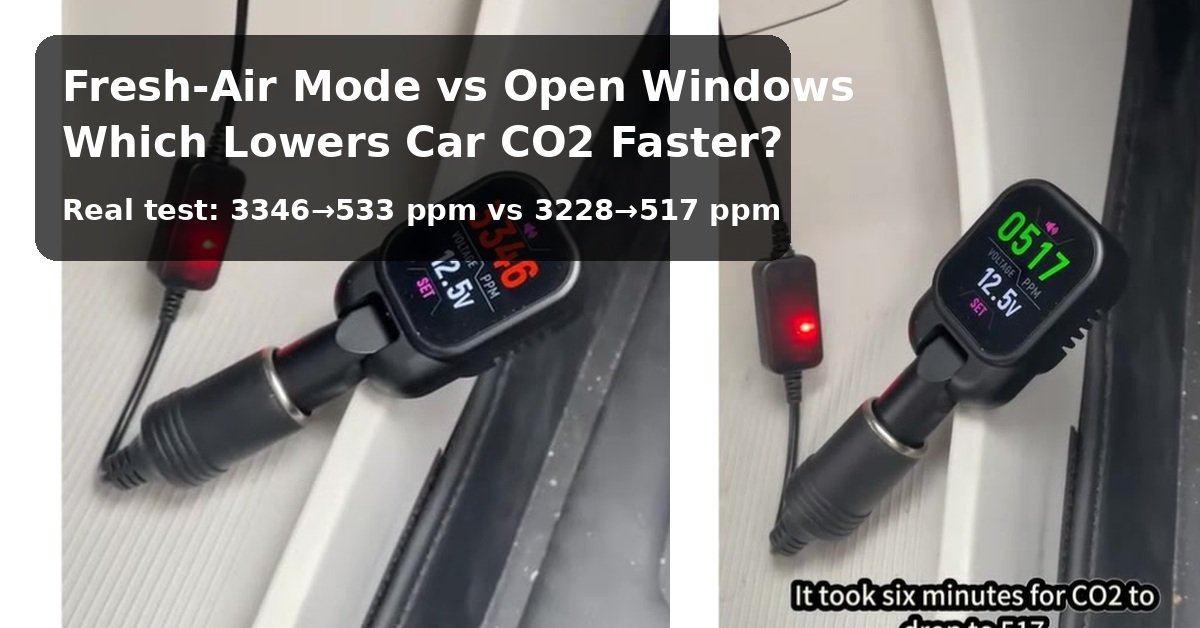
When carbon dioxide has already built up inside a car, what is the fastest practical way to lower it?
Should you switch the air conditioner from recirculation to fresh-air mode, or simply open the windows?
We tested both methods in the same vehicle using the EVO-CO2V car CO₂ monitor.
In our real-world comparison:
| Ventilation Method | Starting CO₂ | After About 6 Minutes |
|---|---|---|
| Fresh-air mode, fan speed 6 | 3,346 ppm | 533 ppm |
| Diagonal windows opened | 3,228 ppm | 517 ppm |
Both methods reduced cabin CO₂ dramatically.
In this test, the open-window run ended at a slightly lower concentration, but because the two trials did not begin at exactly the same CO₂ level, the results should be treated as a real-world comparison rather than a controlled laboratory ranking.
Quick Answer
When cabin CO₂ was above 3,000 ppm, both methods worked well.
Using the vehicle’s fresh-air mode at fan speed 6 reduced CO₂ from approximately 3,346 ppm to 533 ppm in about six minutes.
In a second test, after CO₂ had risen again, opening two windows diagonally reduced the reading from approximately 3,228 ppm to 517 ppm in about six minutes.
So the practical takeaway from our test is:
If cabin CO₂ is high, either fresh-air HVAC ventilation or opening the windows can increase air exchange substantially.
Opening the windows produced the slightly lower final reading in our test.
Test 1 — Fresh-Air Mode With the Windows Closed
For the first test, cabin CO₂ had risen above 3,000 ppm.
The EVO-CO2V display showed approximately:
3,346 ppm CO₂
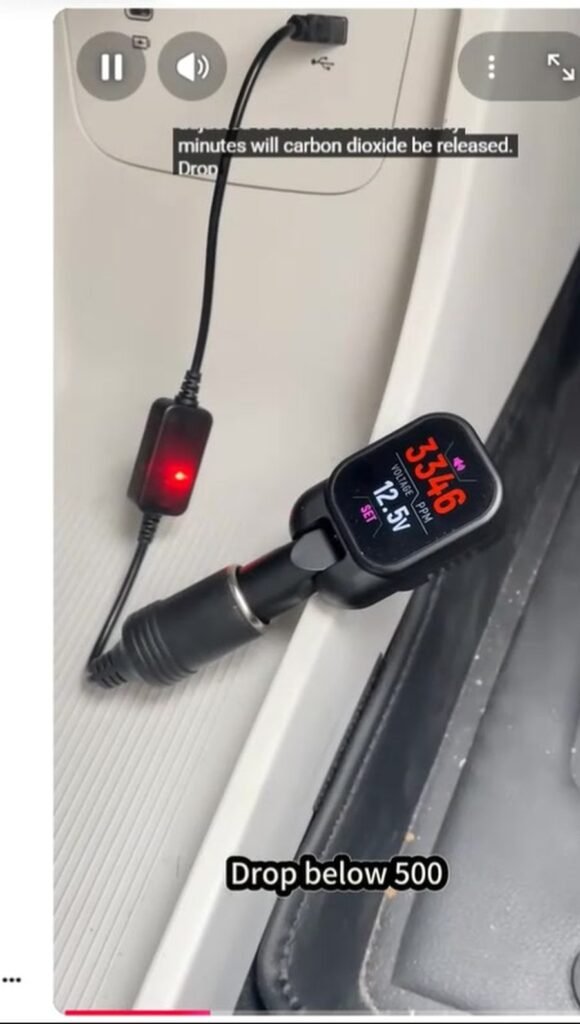
At the start of the fresh-air HVAC test, EVO-CO2V showed approximately 3,346 ppm CO₂.We then switched the HVAC system to fresh-air / outside-air mode.
The fan speed was set to:
Level 6
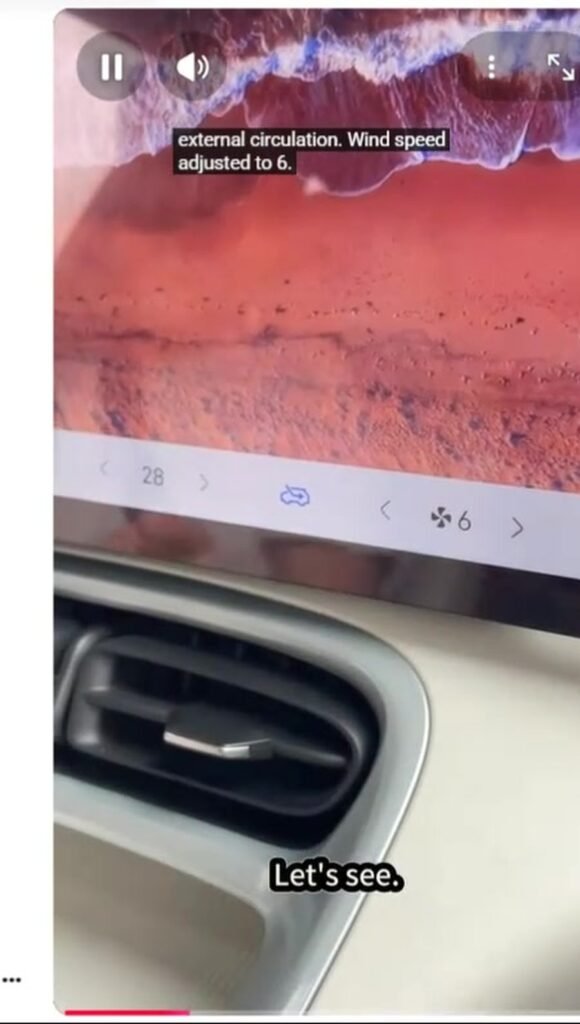
The vehicle HVAC was set to fresh-air mode with the fan at level 6 for the first CO₂ ventilation test.The windows remained closed.
The purpose was to see how quickly outside air supplied through the vehicle’s ventilation system could dilute the high-CO₂ cabin air.
We recorded the starting time and continued driving.
After About 6 Minutes: 533 ppm
Approximately six minutes later, EVO-CO2V showed:
533 ppm CO₂
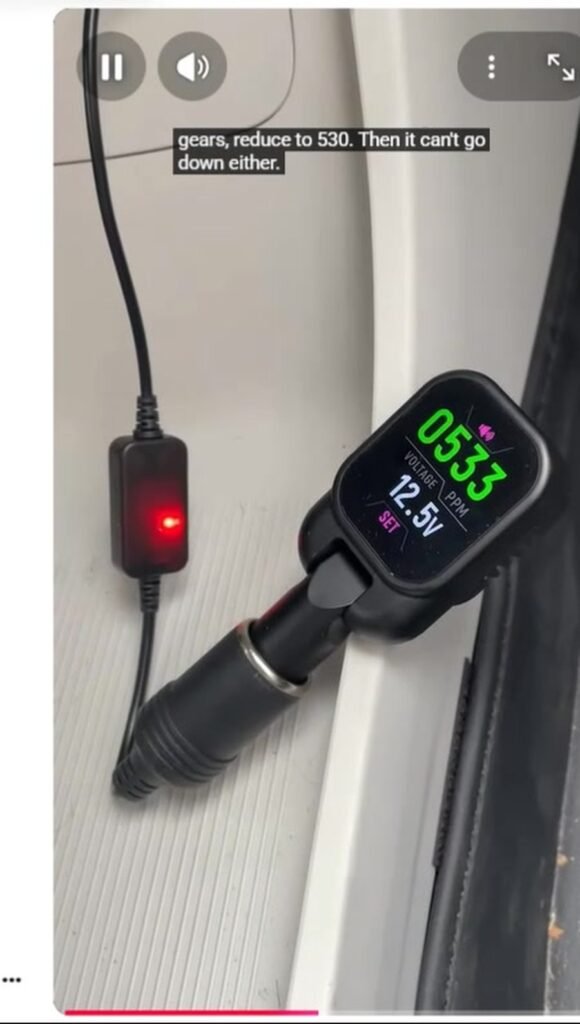
After about six minutes in fresh-air mode, EVO-CO2V showed 533 ppm CO₂.This was a substantial decrease from the starting concentration of approximately 3,346 ppm.
The test demonstrates that fresh-air mode can provide significant cabin air exchange while the windows remain closed.
Research using vehicle HVAC systems has similarly found that introducing outside air reduces CO₂ that accumulates during recirculation. PMC vehicle HVAC and CO₂ study
Test 2 — Raise the CO₂ Again
For the second part of the comparison, we switched back to recirculation and allowed cabin CO₂ to increase again.
Before beginning the window test, EVO-CO2V showed approximately:
3,228 ppm CO₂
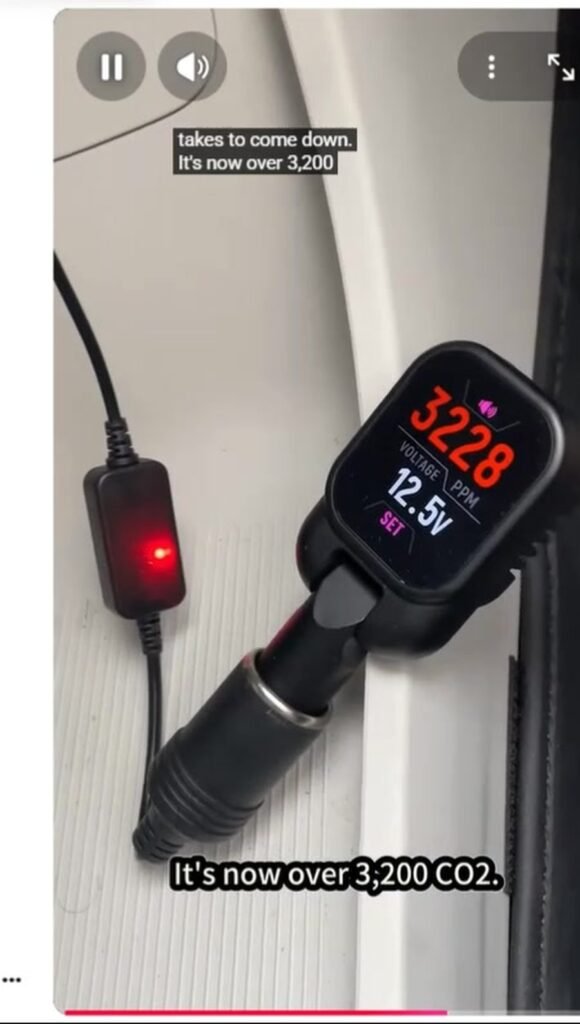
At the start of the open-window test, EVO-CO2V showed approximately 3,228 ppm CO₂.We then stopped using the air conditioner for the ventilation comparison and opened the windows.
Test 2 — Open Two Windows Diagonally
Instead of relying on the HVAC fresh-air intake, we opened two windows positioned diagonally across the cabin.
This creates a cross-cabin airflow path while the vehicle is moving.
We recorded the start time again and observed how quickly EVO-CO2V responded.
Research into vehicle airflow has found that opening a front window on one side together with a rear window on the opposite side can establish effective cross-ventilation while driving. PMC vehicle cross-ventilation study
After About 6 Minutes: 517 ppm
Approximately six minutes later, EVO-CO2V displayed:
517 ppm CO₂
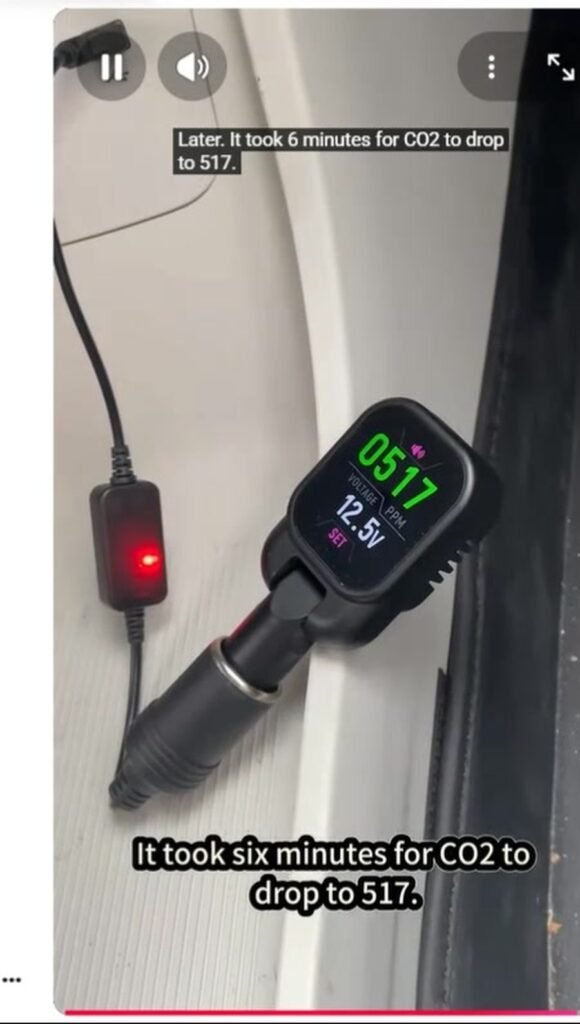
After about six minutes with two diagonal windows open, EVO-CO2V showed 517 ppm CO₂.The second run therefore changed from approximately:
3,228 ppm → 517 ppm
over roughly six minutes.
That final value was slightly lower than the 533 ppm observed after the fresh-air HVAC test.
However, the difference between 533 ppm and 517 ppm is small, and the starting concentrations were also different.
For that reason, we do not claim that this experiment proves opening the windows is always faster.
What the test clearly demonstrates is that both approaches produced strong CO₂ dilution in this vehicle while it was moving.
Watch the full real-world comparison below:
Fresh-Air Mode vs Open Windows: What Did Our Test Show?
The two real-world runs were:
Fresh-air HVAC
3,346 ppm
→ approximately 6 minutes
→ 533 ppm
Diagonal windows
3,228 ppm
→ approximately 6 minutes
→ 517 ppm
The open-window test reached the slightly lower final concentration.
But this experiment did not control every variable required for a laboratory comparison.
Vehicle speed, outside wind, starting CO₂ concentration, exact airflow rate and environmental conditions can all affect the result.
Therefore, the safest interpretation is:
Both fresh-air mode and open windows rapidly increased cabin air exchange in our test. The diagonal-window run ended slightly lower, but more controlled testing would be required to quantify which method has the higher ventilation rate.
Why Does Opening Windows Work So Quickly While Driving?
A moving vehicle creates pressure differences around the body of the car.
Opening windows allows those pressure differences to drive outside air through the passenger compartment.
With appropriately positioned openings, air can enter through one window and exit through another, creating cross-ventilation.
Experimental and airflow studies have found that open windows can produce high vehicle air-exchange rates, particularly when the car is moving. PMC open-window ventilation study
That explains why the CO₂ reading in our test dropped rapidly once the windows were opened.
Why Does Fresh-Air Mode Also Lower CO₂?
Fresh-air mode changes the HVAC system from mainly reusing cabin air to bringing more outside air into the vehicle.
That incoming air dilutes CO₂ exhaled by occupants.
Vehicle-cabin studies have repeatedly observed higher CO₂ during heavy recirculation and lower CO₂ when outside-air ventilation is introduced. ScienceDirect vehicle cabin CO₂ study
This means you do not necessarily need to open the windows every time cabin CO₂ rises.
Fresh-air mode can also provide substantial ventilation while keeping the windows closed.
Is Opening the Windows Always the Better Choice?
No.
CO₂ is only one part of cabin air quality.
Opening the windows can increase air exchange, but it also directly exposes the cabin to outdoor conditions.
Depending on where you are driving, outside air may contain:
traffic particles, dust, smoke or other pollutants.
Research has found that open-window driving can increase exposure to outdoor particulate pollution, while recirculation can substantially reduce particle entry. ScienceDirect study on in-vehicle particulate exposure
So vehicle ventilation involves a trade-off:
More outside air can lower CO₂ faster, but outside-air quality also matters.
What Should You Do When Car CO₂ Is High?
Our test suggests two practical options.
If outdoor conditions are good, opening windows can provide rapid ventilation.
If you prefer to keep the windows closed, switching the HVAC system from recirculation to fresh-air mode can also lower CO₂ substantially.
EVO-CO2V makes the change visible by showing the actual cabin CO₂ concentration rather than requiring the driver to estimate ventilation from time alone.
What Does This Test Actually Prove?
This test directly documented two ventilation runs.
In the first run:
3,346 ppm → 533 ppm in approximately six minutes using fresh-air mode at fan speed 6.
In the second run:
3,228 ppm → 517 ppm in approximately six minutes with diagonal windows open.
Both tests were conducted in a real vehicle while driving.
The experiment demonstrates that both methods can rapidly dilute elevated cabin CO₂.
It does not establish a universal ventilation rate for all vehicles.
What This Test Does Not Prove
This was not a controlled laboratory comparison.
The two tests did not start at exactly the same CO₂ concentration.
Outside wind speed, vehicle speed and airflow through the HVAC system were not independently measured.
The timing shown in the video was also recorded at approximately minute-level resolution.
Therefore, the difference between 533 ppm and 517 ppm should not be interpreted as proof that one method is universally faster by a specific percentage.
Different cars and driving conditions can produce different results.
Frequently Asked Questions
Does fresh-air mode lower CO₂ inside a car?
Yes. Fresh-air mode introduces more outside air into the cabin, which can dilute CO₂ produced by occupants. In our test, CO₂ fell from approximately 3,346 ppm to 533 ppm in about six minutes.
How fast did opening the windows lower CO₂?
In our test, opening two windows diagonally while driving reduced CO₂ from approximately 3,228 ppm to 517 ppm in about six minutes.
Which was faster in this test?
The open-window run ended at 517 ppm, while the fresh-air HVAC run ended at 533 ppm after roughly the same observation time. Because the starting concentrations differed, we do not treat this as a precise controlled ranking.
Why open windows diagonally?
Opening windows on different sides of the vehicle can create a cross-ventilation path that allows outside air to enter through one opening and cabin air to leave through another.
Should I always open the windows when CO₂ is high?
Not necessarily. Fresh-air HVAC ventilation can also lower cabin CO₂ while keeping the windows closed. Outdoor air quality, weather, noise and driving conditions may affect the best choice.
Does recirculation cause cabin CO₂ to rise?
Recirculation reduces outside-air exchange. With occupants breathing inside the cabin, CO₂ can therefore accumulate over time.
Does EVO-CO2V measure carbon monoxide?
No. EVO-CO2V measures carbon dioxide (CO₂), not carbon monoxide (CO).
Test Conclusion
Our real-world test compared two ways of reducing elevated car cabin CO₂:
Fresh-air mode, fan speed 6:
3,346 ppm → 533 ppm in about 6 minutes
Diagonal windows open:
3,228 ppm → 517 ppm in about 6 minutes
Both methods substantially reduced cabin CO₂.
The open-window test ended slightly lower, but because the test conditions and starting concentrations were not identical, we do not claim that opening the windows is universally faster.
The stronger conclusion is:
When cabin CO₂ is high, increasing outside-air exchange matters far more than simply continuing to recirculate the same cabin air.
Whether that outside air enters through the HVAC system or through open windows depends on the driving situation and outside-air conditions.
Test Information
Product: EvoDevice EVO-CO2V
Test type: Real-world vehicle ventilation comparison
Method 1: Fresh-air HVAC mode
HVAC fan setting: Level 6
Method 1 start: approximately 3,346 ppm
Method 1 result: 533 ppm after approximately 6 minutes
Method 2: Two windows opened diagonally
Method 2 start: approximately 3,228 ppm
Method 2 result: 517 ppm after approximately 6 minutes
Environment: Moving real vehicle, non-laboratory test
Original video date: October 29, 2025
Results apply only to the vehicle and conditions shown in this test. Vehicle design, speed, HVAC airflow, window position, outdoor wind and environmental conditions can affect ventilation performance.
Leave a Reply