If a CO₂ monitor shows a number on the screen, how can you tell whether the sensor is actually responding to changes in carbon dioxide?
A simple real-world check is to expose the sensor to two very different conditions:
fresh outdoor air and exhaled breath.
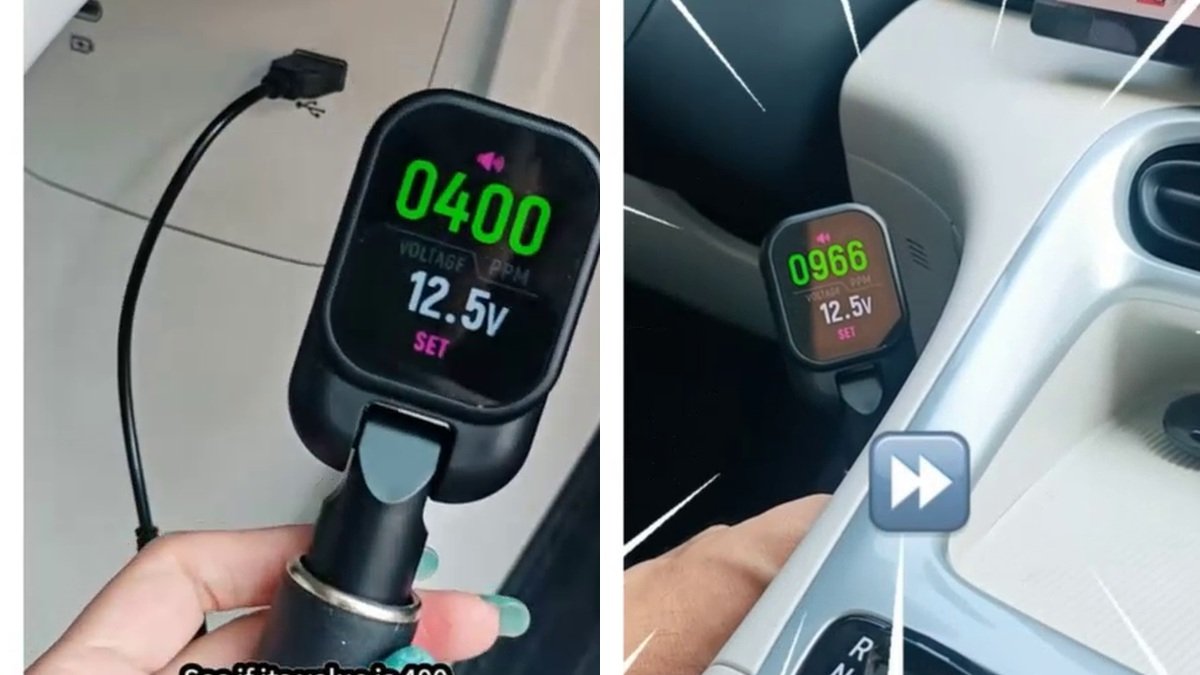
We tested this with EVO-CO2V inside a vehicle.
The reading began at approximately 400 ppm after the vehicle was opened for ventilation.
After exhaling toward the CO₂ sensor, the displayed concentration increased rapidly:
416 → 446 → 712 → 942 → 966 ppm
We then opened the vehicle again.
By the end of the video, the reading had already fallen to approximately:
654 ppm
This demonstrates a clear sensor response to changing CO₂ concentration.
But it is important to understand what this test does—and does not—prove.
Quick Answer
A simple CO₂ response check can be performed by:
- ventilating the area with outdoor air;
- observing the baseline reading;
- briefly exhaling near the CO₂ sensor;
- watching whether the reading increases;
- ventilating again and observing whether the reading begins to decrease.
In our test, EVO-CO2V moved from approximately 400 ppm to 966 ppm after exposure to exhaled breath and then began falling again when fresh air was introduced.
That is evidence that the sensor was responding to changes in CO₂.
It is not a laboratory accuracy calibration.
What Did We Actually Test?
We started by opening the vehicle so that cabin air could exchange with outside air.
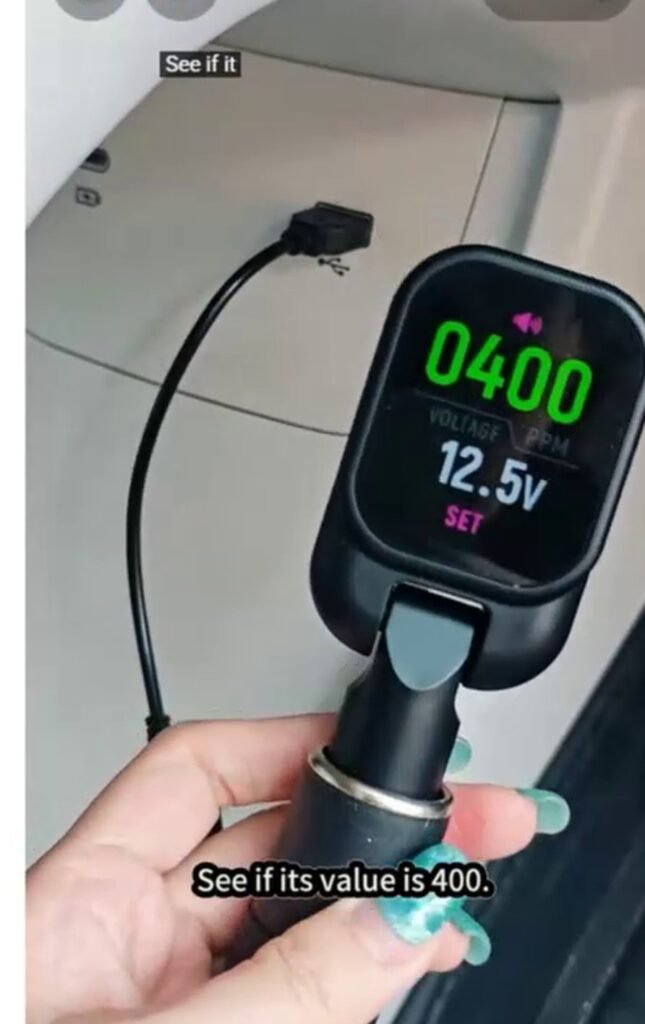
After ventilating the vehicle, EVO-CO2V showed approximately 400 ppm CO₂ and 12.5 V.After ventilation, EVO-CO2V displayed approximately:
400 ppm CO₂
and:
12.5 V
We then exhaled toward the CO₂ sensor.
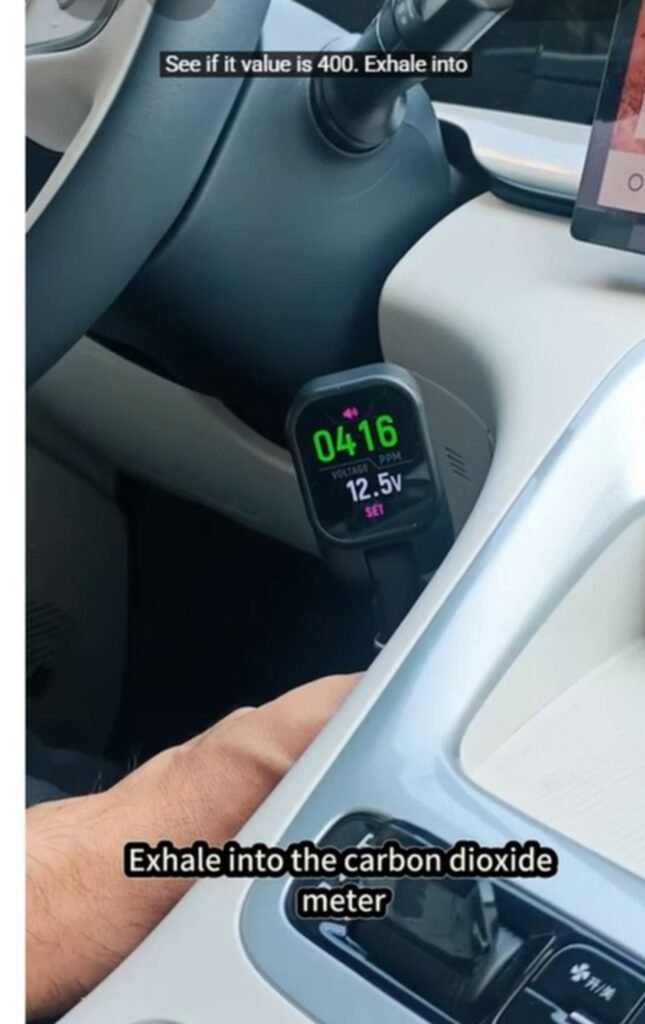
The CO₂ reading began rising shortly after exhaled breath was directed toward the sensor.The displayed concentration increased progressively:
| Test stage | CO₂ reading |
|---|---|
| Ventilated baseline | ~400 ppm |
| Initial response | 416 ppm |
| Continued response | 446 ppm |
| Rising | 712 ppm |
| Rising rapidly | 942 ppm |
| Peak shown in the video | 966 ppm |
| After reopening the vehicle | ~654 ppm |
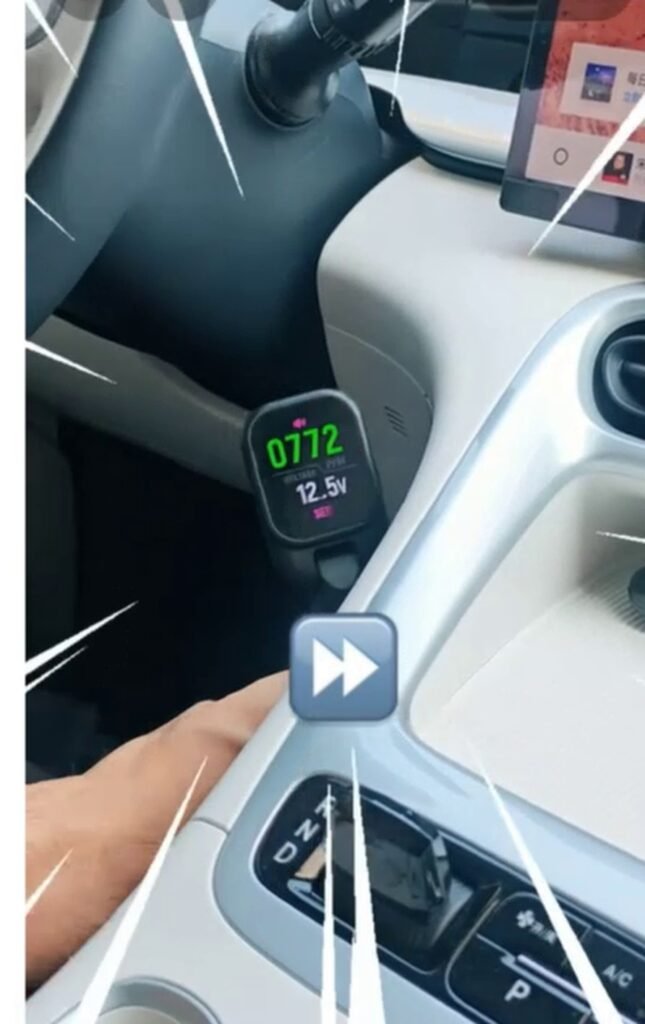
The displayed CO₂ concentration continued rising, reaching approximately 712 ppm during the response test.The exact numbers are less important than the overall pattern:
low background → rapid rise after exhalation → decline after ventilation.
Watch the original real-world test below:
Why Does Exhaling Near the Sensor Make CO₂ Rise So Quickly?
Outdoor air contains carbon dioxide at concentrations measured in hundreds of parts per million.
NOAA reports that the globally averaged atmospheric CO₂ concentration reached approximately 425.6 ppm in 2025. Local outdoor concentrations can differ depending on location and surroundings. NOAA atmospheric CO₂ data
Human exhaled breath contains vastly more CO₂.
NIOSH notes that exhaled breath can contain approximately 4–5% carbon dioxide, while research measurements commonly place exhaled CO₂ around 4%. That is roughly 40,000 ppm, although the concentration reaching a nearby sensor becomes heavily diluted by surrounding air. NIOSH exhaled-breath CO₂ reference
So when someone exhales near a functioning CO₂ sensor, a rapid increase is expected.
Why Did the Monitor Stop Around 966 ppm Instead of Showing 40,000 ppm?
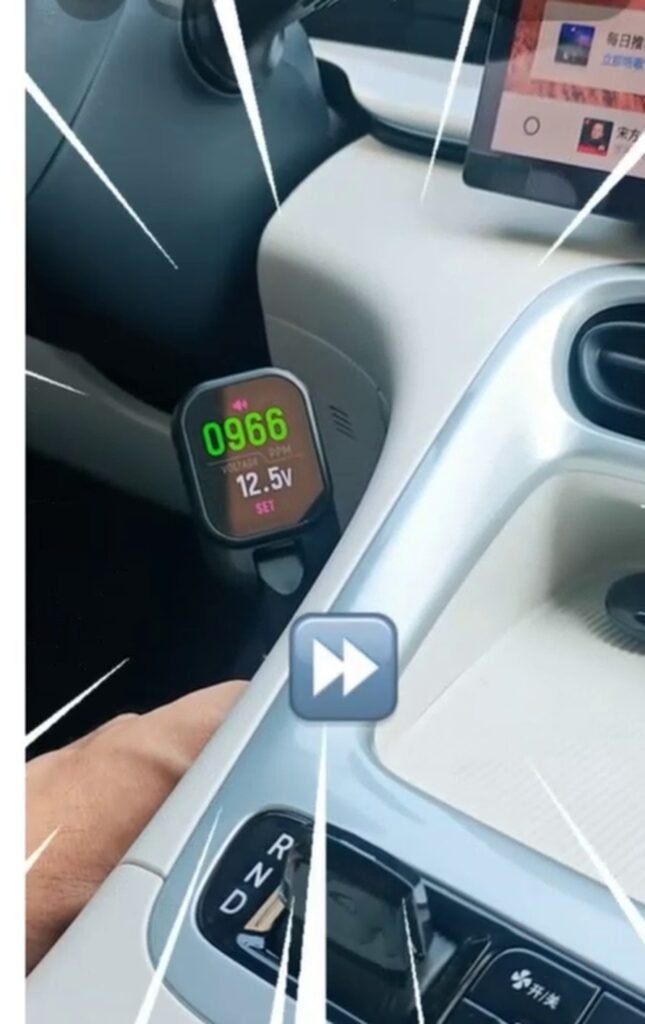
The highest CO₂ reading clearly shown in the video was approximately 966 ppm after exhaled breath was introduced near the sensor.Because the monitor was not measuring pure exhaled breath.
The breath plume immediately mixed with surrounding cabin air.
There are also several other factors:
- distance between the mouth and sensor;
- airflow around the sensor;
- sensor response time;
- display update interval;
- internal averaging or filtering;
- and how long the breath plume remains around the sensing chamber.
Therefore, 966 ppm should not be interpreted as the actual CO₂ concentration of human breath.
The purpose of this test was simply to create a rapid concentration change and see whether the instrument responded.
What Is an NDIR CO₂ Sensor?
EVO-CO2V uses an NDIR-based CO₂ sensing method.
NDIR stands for:
Non-Dispersive Infrared
Carbon dioxide absorbs infrared radiation at specific wavelengths.
An NDIR sensor uses an infrared light source and detector to measure how much infrared energy is absorbed by CO₂ in the sampled air.
NIST describes NDIR spectroscopy as one of the best-established methods for measuring greenhouse-gas concentrations, including carbon dioxide. NIST NDIR CO₂ measurement explanation
Does This Breath Test Prove a CO₂ Monitor Is Accurate?
No.
This is the most important limitation of the test.
A rapid rise after exhaling shows that the sensor is responding to CO₂-rich air.
A decline after introducing fresh air shows that the measurement also responds in the opposite direction.
But neither observation proves that:
400 ppm is exactly 400 ppm, or that 966 ppm is exactly 966 ppm.
NIST explains that converting an infrared sensor signal into an accurate CO₂ measurement requires calibration using air with a known gas concentration. Studies of low-cost NDIR sensors have also shown that individual sensors may have measurable errors before calibration and environmental correction. NIST CO₂ calibration guidance
So this test should be described as a:
response check
rather than an:
accuracy calibration.
What If the Number Does Not Change Immediately?
A CO₂ monitor does not necessarily have to react instantly.
Different sensors may use different:
- sampling intervals;
- response times;
- averaging algorithms;
- display update rates;
- filtering methods.
Therefore, a slowly changing number does not automatically mean the sensor is defective.
What is more useful is whether the instrument shows a clear and repeatable response when the surrounding CO₂ concentration changes significantly.
In our EVO-CO2V test, the response was clearly visible within seconds.
Why Start With Fresh Air?
Starting with well-ventilated air provides a useful low-CO₂ reference condition.
In this test, EVO-CO2V showed approximately 400 ppm after the car had been opened.
That value was broadly within the range expected for outdoor-background CO₂, although it should not be treated as a universal outdoor value.
NOAA reports a 2025 global atmospheric mean of approximately 425.6 ppm, and actual local concentrations vary. NOAA atmospheric CO₂ data
Why Open the Car Again After the Breath Test?
The second ventilation step is useful because it tests the sensor in the opposite direction.
After the reading rose to approximately 966 ppm, the vehicle was opened again.
Near the end of the video, EVO-CO2V displayed approximately:
654 ppm
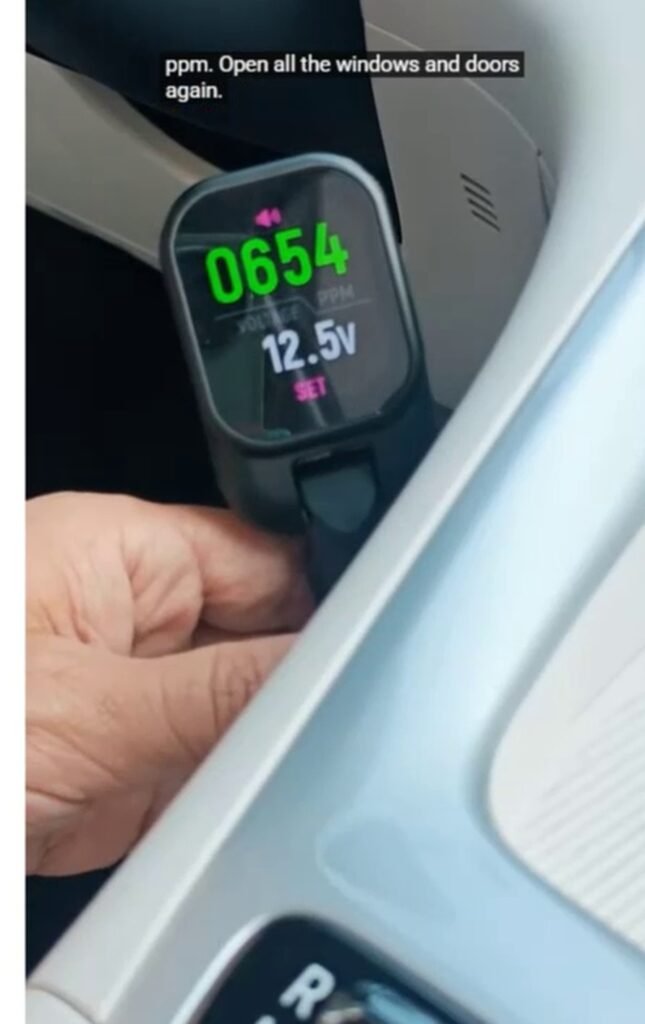
After the vehicle was opened again for ventilation, the CO₂ reading had fallen to approximately 654 ppm by the end of the video.The video ended before the reading had enough time to return close to the original 400 ppm baseline.
So we should not claim that the video proves full recovery to 400 ppm.
What the video does show is that the concentration had already begun moving downward once ventilation was restored.
Can This Method Be Used With Any CO₂ Meter?
It can be useful as a basic functional check, but different instruments may behave differently.
A meter may use:
- NDIR;
- another CO₂ measurement technology;
- different averaging intervals;
- different response times;
- or different display update logic.
For that reason, two working CO₂ meters do not necessarily need to display identical values at every second during a breath-response test.
For formal accuracy verification, a known calibration gas or comparison with a calibrated reference instrument is required.
Important: This Test Is Only About CO₂
This test does not demonstrate whether the instrument detects:
- carbon monoxide;
- VOCs;
- nitrogen dioxide;
- particulate matter;
- oxygen;
- or other gases.
EVO-CO2V measures carbon dioxide — CO₂.
A change in the CO₂ reading should therefore only be interpreted as a response related to carbon dioxide measurement.
What Does This Test Actually Show?
This real-world experiment showed three clear stages.
First, after ventilation, EVO-CO2V displayed approximately:
400 ppm
Second, after exhaling toward the sensor, the displayed CO₂ rose rapidly, reaching:
966 ppm
Third, after opening the vehicle again, the reading began falling and had reached approximately:
654 ppm
by the end of the video.
That pattern is consistent with a CO₂ sensor responding dynamically to changing carbon dioxide concentration.
It does not by itself establish laboratory measurement accuracy.
What This Test Does Not Prove
This experiment does not prove that:
- the instrument is perfectly calibrated;
- 400 ppm was the exact outdoor CO₂ concentration;
- 966 ppm was the concentration of exhaled breath;
- every CO₂ sensor should react at the same speed;
- a slow display update automatically means a sensor is defective;
- or this method can replace calibration with a known reference gas.
Those are important distinctions between a functional response test and a measurement-accuracy test.
Frequently Asked Questions
How can I quickly test whether a CO₂ monitor is responding?
Ventilate the area, observe the baseline reading, briefly exhale near the CO₂ sensor, and watch whether the reading increases. Then ventilate again and see whether the reading begins to decrease.
Should a CO₂ meter increase when I breathe near it?
Normally, yes. Human exhaled breath contains much more CO₂ than ambient outdoor air, so a responsive CO₂ sensor should detect an increase when exposed to a sufficiently concentrated breath plume. NIOSH exhaled-breath CO₂ reference
Does a breath test prove the meter is accurate?
No. It demonstrates sensor response, not precise calibration. Accuracy verification requires comparison against a known CO₂ concentration or a calibrated reference instrument. NIST CO₂ calibration guidance
Why did EVO-CO2V only reach 966 ppm?
Because exhaled breath mixed rapidly with surrounding cabin air before reaching the sensor. The displayed value therefore represented a diluted local concentration rather than undiluted exhaled breath.
Why did the reading fall after opening the car?
Opening the vehicle increased air exchange with outside air, diluting the elevated local CO₂ concentration around the sensor.
Is 400 ppm always the correct outdoor CO₂ value?
No. Atmospheric CO₂ varies by time and location. NOAA reports a global average of approximately 425.6 ppm for 2025, but local values can differ. NOAA atmospheric CO₂ data
Does EVO-CO2V use an NDIR sensor?
EVO-CO2V uses NDIR-based CO₂ sensing. NDIR detects carbon dioxide through its absorption of infrared radiation.
Test Conclusion
This simple real-world test produced a clear response pattern:
Approximately 400 ppm before the breath test
→
966 ppm after exhaling near the sensor
→
approximately 654 ppm after ventilation resumed
The result shows that EVO-CO2V responded rapidly to a major change in local CO₂ concentration.
The scientifically correct conclusion is therefore:
This is a practical CO₂ sensor response check, not a laboratory accuracy calibration.
For precise accuracy verification, the instrument would need to be tested against known CO₂ concentrations or a calibrated reference instrument.
Test Information
Device: EVO-CO2V
Test type: Fresh-air and exhaled-breath CO₂ response test
Initial reading: approximately 400 ppm
Highest reading shown: 966 ppm
Reading after ventilation resumed: approximately 654 ppm
Displayed vehicle voltage: approximately 12.5 V
Test environment: Passenger vehicle
Original video date: November 2, 2025
Original video duration: approximately 44.4 seconds
Leave a Reply