01
LED Fixture Checks
Compare Lux, CCT and white LED spectral shape between bulbs, panels or ceiling fixtures.
More than a Lux meter
Measure Lux, color temperature and the actual spectral distribution of standard phosphor-converted white LEDs - then map up to 99 points across your lighting setup.
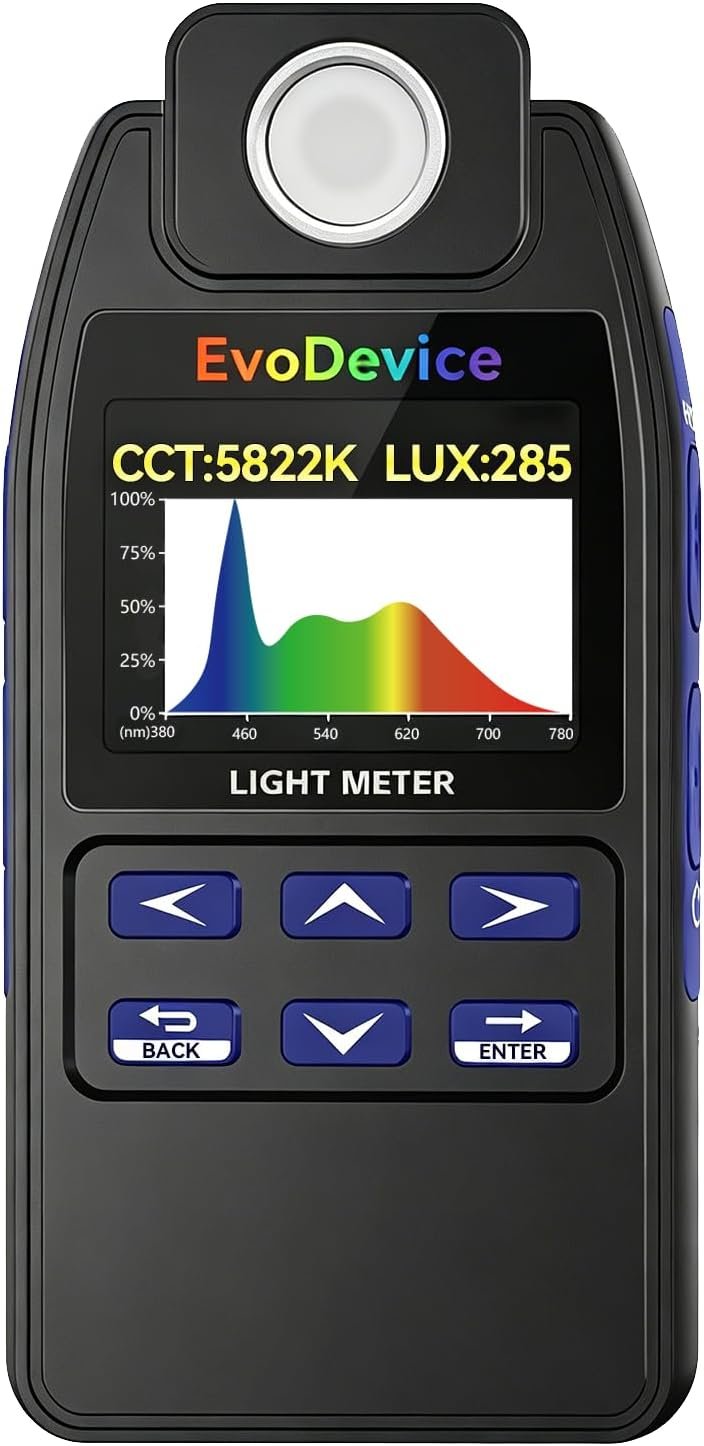
A different class of light meter
A standard Lux meter can tell you how much light reaches one spot. E130 adds the information you need to understand a white LED lighting setup in greater depth.
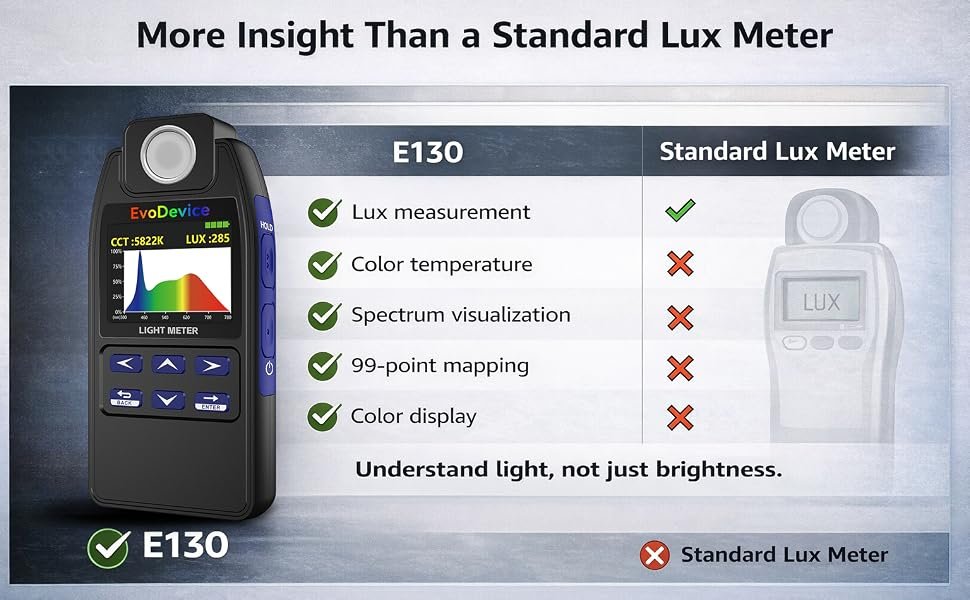
The feature that changes the category
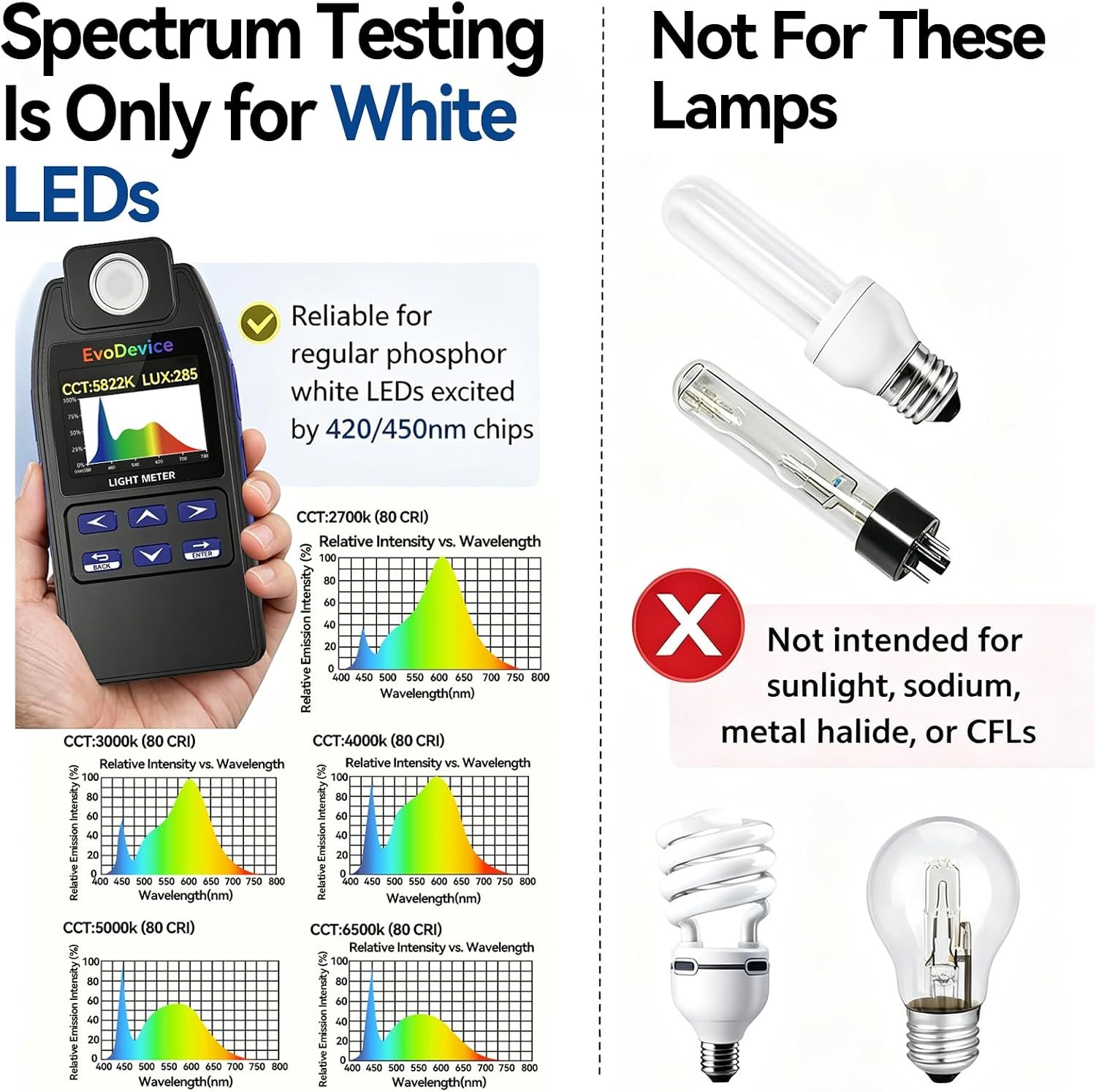
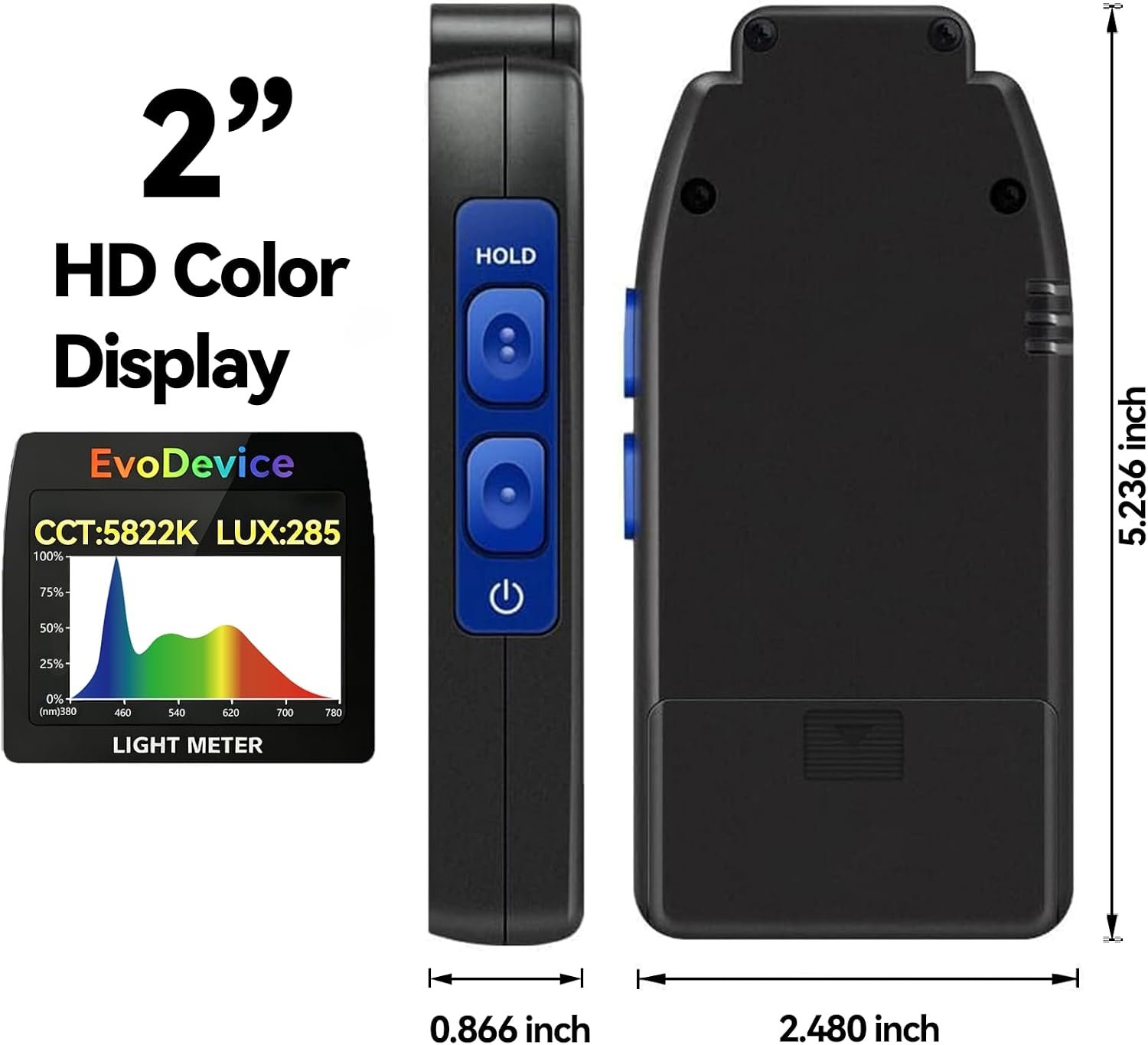
E130 is calibrated to display the spectral distribution of common phosphor-converted white LEDs excited by 420 nm or 450 nm chips. You can see the excitation peak and the broad phosphor output instead of relying on color temperature alone.
Useful for LED bulbs, panels, ceiling fixtures, studio lights and other standard white LED sources.
Compare spectral shape alongside Lux and CCT directly on the handheld color display.
Measure beyond the label
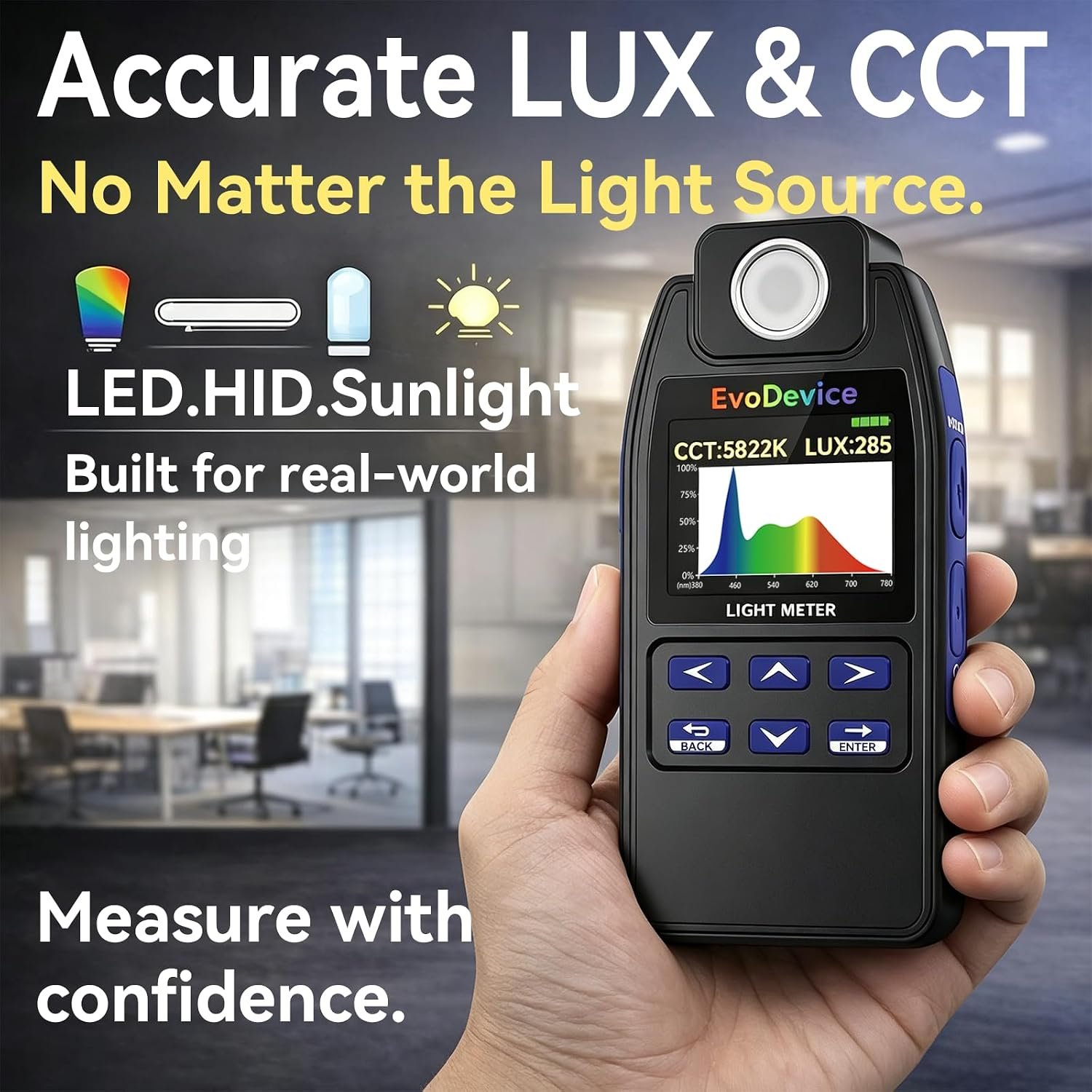
Lamp packaging gives you specifications. E130 lets you verify the light at the real measurement position, where distance, angle, diffusion and fixture placement affect the result.
One spot rarely tells the whole story
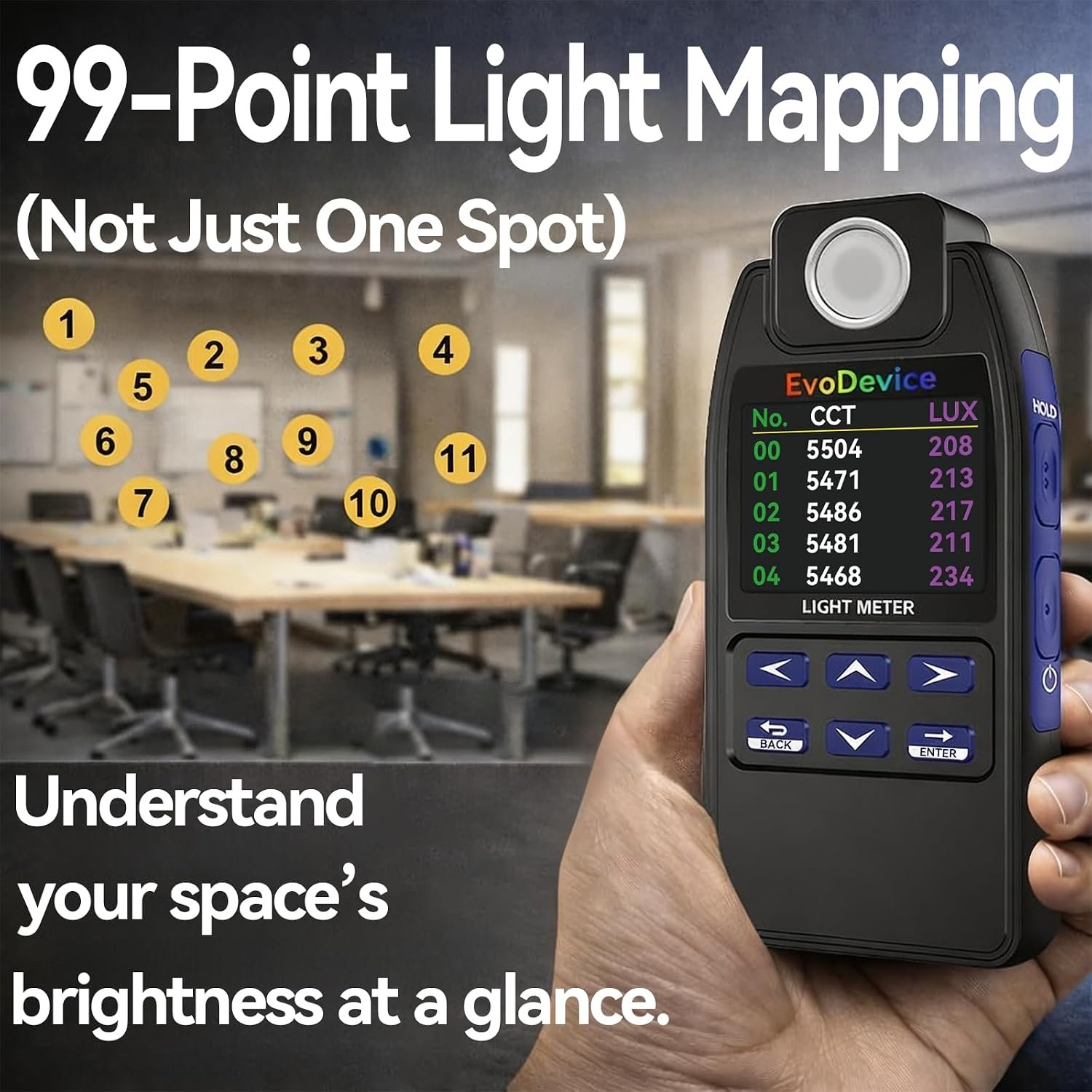
Record readings across a room, workbench, shooting table, shelf or fixture zone. The sequence stays visible on the meter, making it easier to identify uneven lighting, hot spots and falloff.
Built for practical lighting checks
E130 is for users who need useful lighting data without stepping up to a full laboratory spectroradiometer.
Compare Lux, CCT and white LED spectral shape between bulbs, panels or ceiling fixtures.
Balance LED sources by measured brightness and color temperature before the camera rolls.
Map the working area to locate dark edges, bright centers and uneven fixture coverage.
Capture before-and-after readings when adjusting distance, position, diffusion or output.
Portable and self-contained
The E130 keeps the measurement and the visual result in one handheld instrument, with a large color screen and tactile controls for field use.
Clear scope. Better results.
The spectrum function is intended for standard phosphor-converted white LEDs using 420 nm or 450 nm excitation. This clear scope is what allows the product to focus on a common real-world LED category at an accessible price.
Standard white LED bulbs, panels, ceiling lights, studio lights and similar phosphor-converted sources.
Sunlight, sodium lamps, metal-halide lamps and CFLs. Their displayed spectrum curve is not intended for analysis.
Frequently asked questions
Yes. E130's spectrum mode is designed for standard phosphor-converted white LEDs excited by 420 nm or 450 nm chips - the common architecture used in many white LED bulbs, panels and fixtures.
It measures illuminance in Lux, correlated color temperature (CCT), the spectral distribution of supported white LEDs, and it can store up to 99 measurement points for mapping lighting distribution.
No. For sunlight, sodium, metal-halide and CFL sources, use the Lux and CCT readings. The spectrum curve is not intended for analysis on those light sources.
No. E130 is a focused, affordable handheld meter for white LED spectrum visualization, Lux, CCT and practical light mapping. It does not replace instruments that provide a full set of laboratory color metrics.
No. It does not calculate shutter speed, aperture or ISO. It is designed to measure the light itself, which is useful when setting up or comparing LED lighting.
Related Measurement Guide
E130 focuses on visible white LED measurement: Lux, CCT, spectral distribution and multi-point mapping. For a broader view, learn how these measurements differ from UVI, UVA and UVB, and when a dedicated UV meter is the right tool.
Understand light, not just brightness
Measure Lux, CCT, supported white LED spectrum and lighting distribution with one portable E130 meter.
View Purchase Options →
Use the EvoDevice Measurement Glossary for concise explanations of Lux, correlated color temperature and spectral distribution when interpreting supported white-LED measurements.
Choose E130 for Lux, CCT and spectral-distribution measurement of supported phosphor-converted white LEDs. Choose E-ABI when the measurement question is UVI, UVA or UVB.