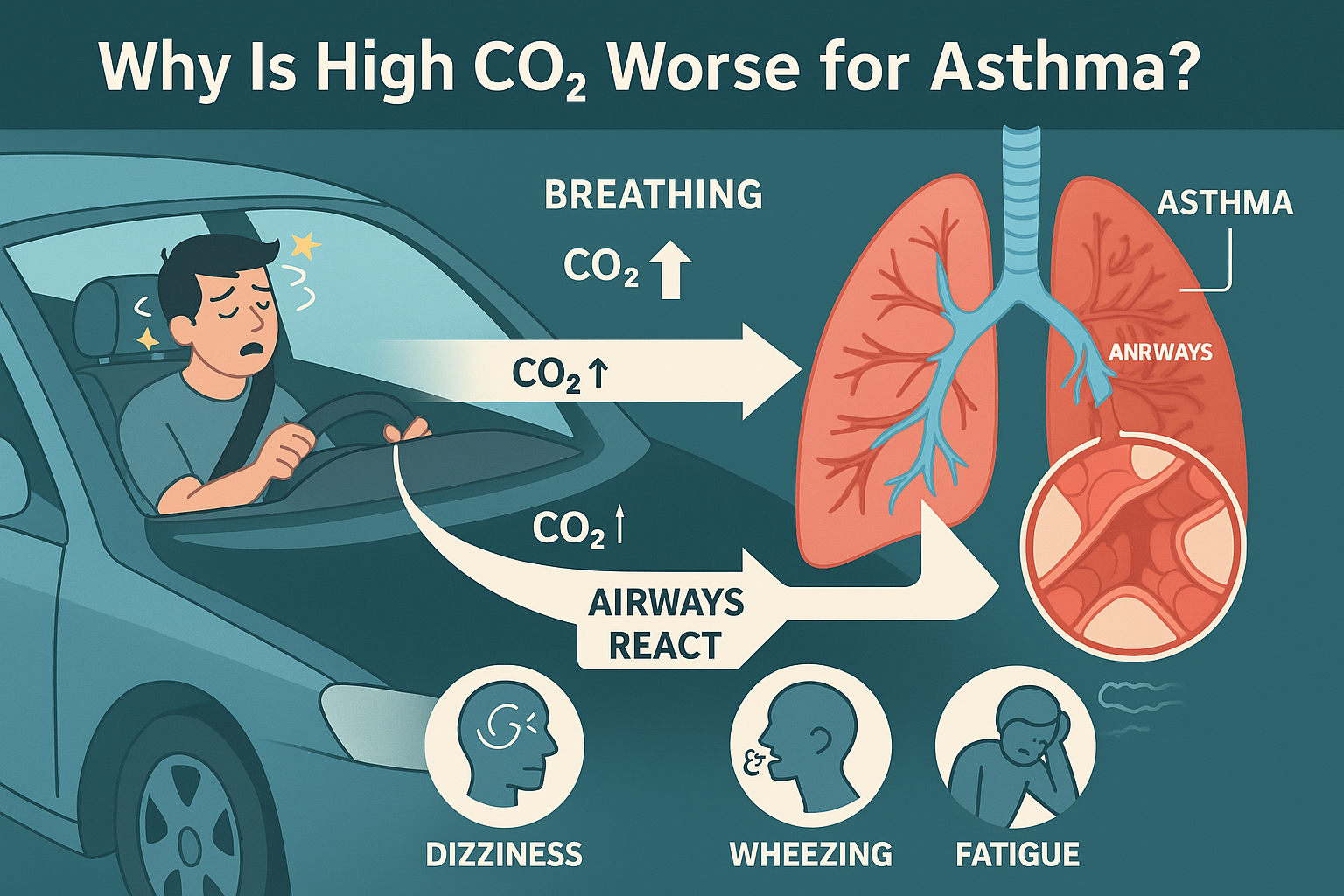
I Didn’t Think It Mattered — Until I Experienced It Firsthand
I used to think that CO₂ buildup in a car was mostly a comfort issue.
A little dullness here.
A mild fogginess there.
No big deal, right?
But once I started paying attention — especially after driving with people who really breathe differently — I realized something important:
👉 High CO₂ doesn’t hit everyone the same way — and people with asthma can feel it much earlier and more intensely.
That insight changed how I think about ventilation and air quality every time someone with asthma is in the car.
What I Used to Assume
Driving and air quality used to feel straightforward:
- fresh air = good
- stale air = uncomfortable
- windows off = recirculation
But I didn’t connect airflow with breathing sensitivity.
I thought:
“If I can sit here comfortably, others probably can too.”
That assumption started to fall apart once I understood how the lungs of someone with asthma respond to subtle changes.
Why CO₂ Matters More for People With Asthma
Here’s the first thing I learned:
👉 High CO₂ doesn’t have to be dramatic to be disruptive.
It just has to increase the effort required to breathe clearly.
For people with asthma, that matters a lot.
🫁 1. Their Airways Are More Sensitive
Asthma isn’t just about wheezing —
it’s about airways that resist smooth airflow.
When CO₂ rises:
- the air composition shifts subtly
- breathing regulation becomes a bit harder
- lungs have to work a bit more
For someone with asthma, that small extra effort can feel like a real burden.
😤 2. CO₂ Changes Irregular Breathing Patterns
Even modestly elevated CO₂ can:
- affect breathing rhythm
- reduce effective oxygen exchange
- increase the sense of breathlessness
For a person already struggling with airflow regulation, this makes normal breathing feel heavier — even if they don’t consciously know why.
🚗 3. Subtle Effects Add Up Faster
A healthy person might interpret rising CO₂ as:
- mild fatigue
- slight mental dullness
- “just a bit stale”
Someone with asthma might experience:
- subtle tightness
- increased breath awareness
- mild discomfort
- feeling “off” without an obvious trigger
Those sensations don’t always register as danger, but they do register as uncomfortable — and can exacerbate asthma symptoms.
What I Noticed When I Paid Attention
Once I began observing high CO₂ conditions around people with asthma, a pattern emerged:
They didn’t have dramatic reactions.
Instead, they showed:
- shallower breathing
- increased focus on respiration
- more frequent sighs
- an urge to open a window sooner
Without a meter, I might have dismissed it.
With a meter, the numbers confirmed the experience.
And the correlation was too clear to ignore.
Why Fresh Air Helps So Much
Fresh air doesn’t just feel better.
It actually:
- lowers CO₂ concentration
- increases oxygen availability
- reduces the effort needed to breathe
- stabilizes breathing rhythm
For someone with asthma, that’s not a subtle benefit — it’s a meaningful relief.
A Simple Rule I Use Now
I don’t wait for anyone to say they feel uncomfortable.
Instead, I treat CO₂ like a precautionary measure:
👉 If CO₂ is rising — ventilate.
Earlier than you think you need to.
This simple shift helps:
- keep breathing easier
- avoid creeping tightness
- reduce the chance of mild respiratory stress
- make the ride more comfortable for sensitive lungs
Final Thoughts
High CO₂ levels in cars aren’t dramatic — and that’s exactly why they’re easy to overlook.
But for people with asthma:
- even minor shifts in air composition
- even subtle increases in respiratory effort
- even gentle changes in breathing rhythm
can feel disproportionately real.
The goal isn’t to avoid driving, blame the car, or create anxiety.
It’s simply this:
Air should support healthy breathing — not make it harder.
Once I saw how CO₂ affected people with asthma, I stopped assuming “comfortable” meant “safe.”
And that’s made all the difference in how I manage in-car air quality.
Amazon is a trademark of Amazon.com, Inc. or its affiliates.
Leave a Reply