Many drivers notice that when the temperature inside the car is high, they feel dizzy, fatigued, or “foggy” much faster than when the cabin is cool. Why does this happen? The answer lies in the combined effects of heat, air circulation, and rising carbon dioxide (CO₂) levels.
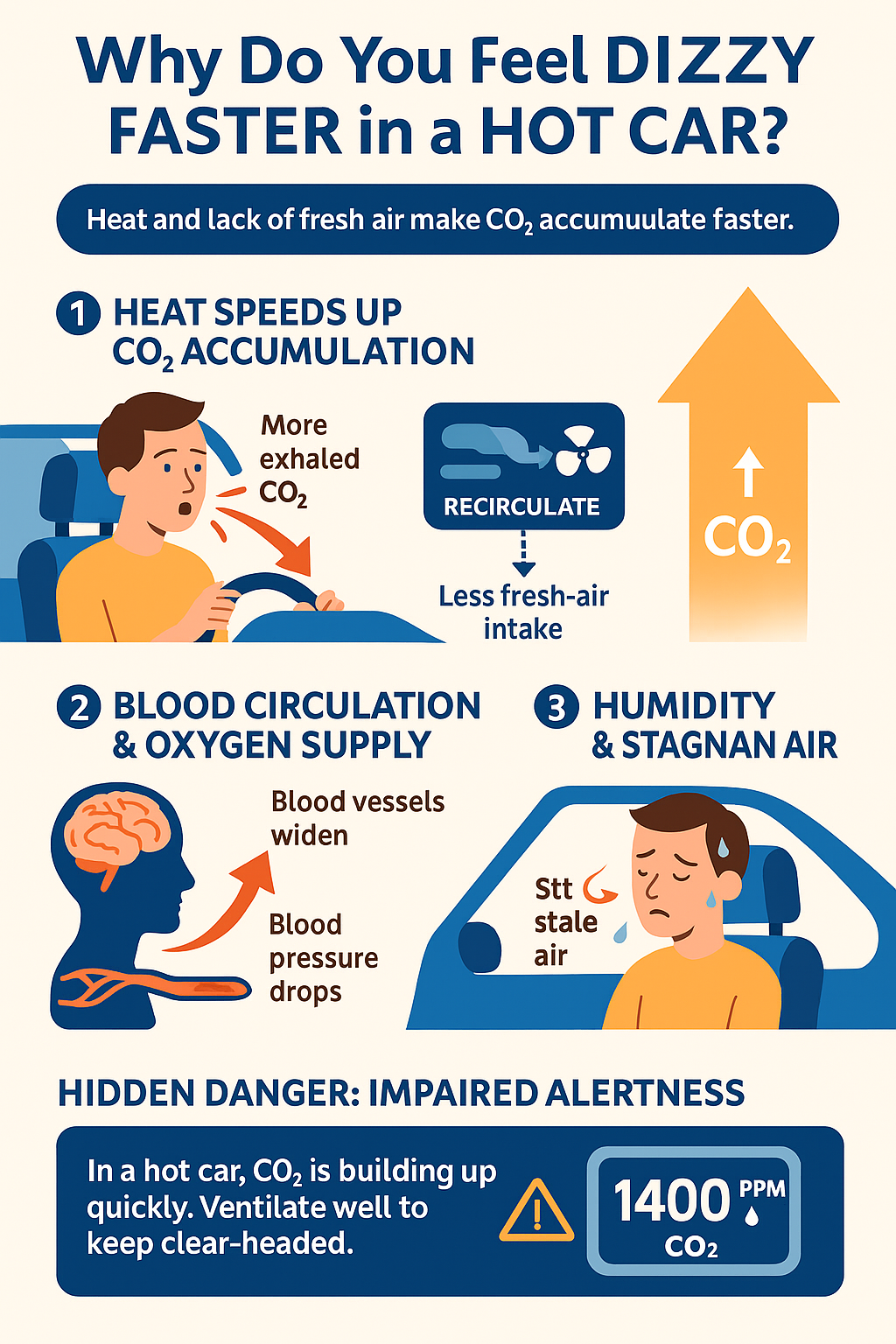
1. Heat Speeds Up CO₂ Accumulation
When the car is hot, people breathe faster and their metabolism rises, releasing more CO₂. At the same time, drivers often use recirculation mode or lower the fan speed to keep cool, which reduces fresh-air intake. Together, this makes CO₂ build up much faster than in cooler conditions.
2. Blood Circulation and Oxygen Supply
High temperatures cause blood vessels to expand and blood pressure to drop. As a result, the brain receives less oxygenated blood. Even if the CO₂ level in the cabin is the same as in cooler conditions, the body is more sensitive to oxygen shortage, leading to dizziness and fatigue.
3. Humidity and Air Stagnation
Heat usually comes with higher humidity inside the car, especially from breathing and sweating. Humid, stagnant air makes the cabin feel “stuffy” and harder to breathe in, amplifying the effects of elevated CO₂. Unlike temperature or odors, CO₂ has no smell or taste, so drivers don’t notice the problem until symptoms set in.
4. The Hidden Danger: Impaired Alertness
Studies show that even at 1,000–1,500 ppm of CO₂, drivers can start experiencing slower reaction times and reduced focus. In a hot car, these symptoms arrive sooner and feel stronger. This is why long drives on warm days can be particularly risky without proper ventilation.
✅ How EVO-CO2V Helps
Our EVO-CO2V CO₂ Meter gives drivers real-time visibility into cabin air quality.
- Audible alerts when CO₂ exceeds safe levels.
- Helps you decide when to switch from recirculation to 100% fresh-air intake.
- Keeps you sharp, focused, and safer on the road — even on the hottest days.
🚗 Takeaway
Feeling dizzy in a hot car isn’t just about the heat. It’s a sign that CO₂ is accumulating faster than you think. With real-time monitoring, you can stay clear-headed, protect your health, and drive more safely.
Amazon is a trademark of Amazon.com, Inc. or its affiliates.
Leave a Reply