Tag: CO2 in Cars

CO2 in cars

  • 🌿 Do You Still Need to Worry About CO2 If Your RV Has a Vent Fan?

    🌿 Do You Still Need to Worry About CO₂ if Your RV Has a Vent Fan?

    I Used to Assume “Vent Fan = Problem Solved” — Until I Understood How Air Actually Moves

    When I first became comfortable with RV living, I thought I had air quality figured out.

    My RV had a roof vent fan.
    It moved air.
    It reduced heat and humidity.

    So I assumed:

    If the vent fan is on, CO₂ can’t be a problem.

    That assumption felt reasonable — until I spent enough nights actually living, cooking, resting, and sleeping inside an RV.

    Over time, I realized something important:

    👉 A vent fan helps with CO₂ — but it doesn’t automatically solve it.
    Whether CO₂ matters depends on airflow paths, timing, and how the RV is used.

    Once I understood that, vent fans stopped being “magic solutions” and became what they really are: useful tools that still need intention.


    What a Vent Fan Actually Does (And What It Doesn’t)

    A typical RV vent fan:

    • exhausts air from the cabin
    • creates a pressure difference
    • encourages air movement
    • helps remove heat and moisture

    What it does not guarantee:

    • complete air replacement
    • uniform ventilation throughout the RV
    • continuous fresh-air intake

    A vent fan moves air — but air exchange only happens if there’s a clear path for new air to enter.

    That distinction matters.


    Why CO₂ Can Still Rise With a Vent Fan Running

    This was my first real “aha” moment.

    CO₂ inside an RV comes mainly from:

    • human breathing
    • continuous occupancy
    • long sealed periods

    A vent fan helps reduce CO₂ only if three conditions are met.


    1️⃣ There Must Be an Intake Path

    For air to leave, air must enter.

    If:

    • windows are fully closed
    • doors are sealed
    • intake vents are blocked

    Then the fan may mostly:

    • circulate cabin air
    • move air locally
    • reduce humidity without refreshing air

    CO₂ may still rise — just more slowly.


    2️⃣ Fan Speed and Duration Matter

    A low-speed fan:

    • feels quiet and gentle
    • moves limited air volume

    Short bursts:

    • help with odors or steam
    • don’t significantly lower CO₂

    CO₂ is about time and volume.

    Sustained airflow matters far more than occasional ventilation.


    3️⃣ Occupancy Changes Everything

    One person breathing is one thing.
    Two or three people sleeping overnight is another.

    CO₂ accumulation increases with:

    • more people
    • longer time
    • tighter sealing

    A vent fan that’s “good enough” for daytime use may not be enough overnight.


    The Mistake I Used to Make

    I treated the vent fan like an on/off solution.

    Fan on = safe air
    Fan off = risky air

    Reality is more nuanced.

    The fan is only part of the system.
    The rest is:

    • intake openings
    • airflow paths
    • timing
    • duration

    Once I stopped assuming and started observing, the picture became clear.


    When a Vent Fan Works Very Well for CO₂

    A vent fan meaningfully helps when:

    • there’s a cracked window or designed intake
    • the fan runs continuously during occupancy
    • ventilation starts early, not after hours
    • airflow paths are predictable
    • the RV isn’t fully sealed

    In these conditions, CO₂ stays much more stable.


    When You Still Need to Be Intentional

    Even with a vent fan, CO₂ deserves attention when:

    • sleeping overnight
    • multiple people are inside
    • weather forces everything closed
    • the RV is well insulated and sealed
    • long stationary periods are involved

    These are not emergencies — just conditions where air reuse accumulates quietly.


    Why Vent Fans Feel More Effective Than They Sometimes Are

    This part surprised me.

    Vent fans:

    • create sound
    • create movement
    • create the feeling of freshness

    But CO₂:

    • has no smell
    • causes no irritation
    • doesn’t announce itself

    So it’s easy to assume:

    “The air feels fine — the fan must be working.”

    Often it is working — just not enough to fully refresh the air.


    How I Use a Vent Fan Now

    I didn’t stop using vent fans.
    I just stopped relying on them blindly.

    Now I:

    • make sure there’s an intake path
    • run the fan earlier, not later
    • think in hours, not minutes
    • adjust based on how many people are inside
    • treat the fan as part of a system

    No anxiety.
    No rigid rules.
    Just awareness.


    A Simple Mental Model That Helped Me

    This is how I think about it now:

    • Vent fan = exhaust
    • Fresh air = intake
    • CO₂ control = balance over time

    You need all three.

    A fan alone moves air.
    Balanced airflow replaces air.


    Final Thoughts

    So — do you still need to worry about CO₂ if your RV has a vent fan?

    Not worry — but understand.

    A vent fan is helpful.
    It’s often necessary.
    But it isn’t automatic ventilation by itself.

    Once I stopped assuming “fan on = problem solved” and started thinking in terms of air paths and time, RV air quality became much easier to manage — calmly and predictably.

    Because CO₂ in an RV doesn’t build up suddenly.

    It builds up quietly.

    And quiet problems are best handled with awareness, not fear.

    View on Amazon

    Amazon is a trademark of Amazon.com, Inc. or its affiliates.
  • 🌡️ Does High Cabin CO₂ in Vehicles Create a Greenhouse Effect?

    I Used to Assume It Did — Until I Looked at the Physics

    When I first started paying attention to CO₂ levels inside vehicles, a question naturally came up:

    “If CO₂ causes the greenhouse effect in the atmosphere,
    does high CO₂ inside a car create a greenhouse effect too?”

    At first glance, it sounds logical.

    Cars get hot.
    CO₂ is linked to heat trapping.
    Both involve enclosed spaces.

    But once I actually looked at the physics, I realized something important:

    👉 High CO₂ inside a vehicle does not create a greenhouse effect in the way we usually mean that term.

    The similarity is mostly linguistic — not physical.


    What the Greenhouse Effect Actually Is

    The greenhouse effect is a planet-scale phenomenon.

    It happens because:

    • sunlight (short-wave radiation) enters the atmosphere
    • Earth’s surface absorbs that energy and re-emits it as infrared (long-wave radiation)
    • greenhouse gases (like CO₂, methane, water vapor) absorb and re-emit some of that infrared radiation
    • this slows the loss of heat to space

    Key points:

    • it involves radiation, not airflow
    • it works over kilometers of atmosphere
    • it depends on energy balance with outer space

    This is not what’s happening inside a car cabin.


    Why Cars Get Hot — And Why CO₂ Isn’t the Reason

    Cars get hot mainly because of solar heating, not CO₂.

    Here’s what actually happens:

    • sunlight enters through the windows
    • interior surfaces absorb that light
    • those surfaces heat up
    • warm air gets trapped because the cabin is sealed

    This is sometimes called a “greenhouse effect,” but that’s a simplification.

    In reality, it’s mostly:

    • solar gain
    • reduced convection
    • limited heat escape

    CO₂ concentration inside the cabin plays essentially no role in this heating process.


    Why High CO₂ in a Car Doesn’t Trap Heat

    This was the key realization for me.

    Inside a car:

    • the air volume is very small
    • temperatures are dominated by the heater, A/C, and sunlight
    • air is constantly mixed by fans and movement

    The amount of CO₂ inside the cabin:

    • is tiny compared to atmospheric processes
    • does not meaningfully change heat retention
    • does not alter cabin temperature in any noticeable way

    Even at elevated levels (e.g., 2000–4000 ppm), CO₂’s heat-trapping effect in such a small, mixed volume is negligible.


    So Why Do People Associate CO₂ With “Heat”?

    Because the word greenhouse is misleading when applied casually.

    Two different things get mixed together:

    🌍 Atmospheric greenhouse effect

    • global
    • radiative
    • long-term
    • energy balance with space

    🚗 Vehicle cabin heating

    • local
    • short-term
    • dominated by sunlight and insulation
    • controlled by HVAC

    They sound related — but they operate on completely different scales and mechanisms.


    What High Cabin CO₂ Actually Affects

    This is where CO₂ does matter.

    High CO₂ inside a vehicle affects:

    • mental clarity
    • alertness
    • perceived fatigue
    • comfort over time

    It does not:

    • heat the cabin
    • trap thermal energy
    • make the car warmer

    CO₂ is about air quality and physiology, not cabin temperature.


    The Mistake I Used to Make

    I used to think:

    “If the car feels warm and stuffy, CO₂ must be trapping heat.”

    In reality:

    • warmth comes from heat sources
    • “stuffy” comes from air reuse
    • those two sensations often occur together — but for different reasons

    Once I separated them, everything made sense.


    Why This Distinction Matters

    Confusing CO₂ with heat leads to:

    • unnecessary worry
    • incorrect assumptions
    • poor ventilation decisions

    For example:

    • opening a window cools the car and lowers CO₂ — but for different reasons
    • turning on A/C cools the air, but may not reduce CO₂ at all

    Understanding the difference helps you choose the right response.


    A Simple Way I Think About It Now

    Here’s the mental model that finally clicked for me:

    • Heat in a car = energy and insulation
    • CO₂ in a car = breathing and air exchange

    They’re independent systems.

    They often change together, but they’re not causally linked.


    Final Thoughts

    High CO₂ inside a vehicle does not create a greenhouse effect.

    The car doesn’t get hotter because of CO₂.
    It gets hotter because of:

    • sunlight
    • insulation
    • limited airflow

    CO₂ affects how you feel, not how warm the cabin becomes.

    Once I stopped using the word “greenhouse” loosely and started thinking in terms of actual physics, the confusion disappeared.

    And with that clarity, managing cabin air became simpler, calmer, and more precise.

    Because when concepts are separated properly,

    View on Amazon

    Amazon is a trademark of Amazon.com, Inc. or its affiliates.
  • 🔥 Why Do CO₂ Sensors Need a Warm-Up Period?

    I Used to Think It Meant the Sensor Was Inaccurate — I Was Wrong

    The first time I turned on a CO₂ sensor and saw the number slowly change over the first few minutes, I felt uneasy.

    The reading wasn’t stable.
    It drifted a little.
    It didn’t immediately “lock in.”

    My first reaction was:

    “Is this sensor unreliable?”

    But after learning how CO₂ sensors — especially NDIR sensors — actually work, I realized something important:

    👉 A warm-up period doesn’t mean a CO₂ sensor is inaccurate.
    It means the sensor is stabilizing into accuracy.

    Once I understood that, warm-up behavior stopped looking suspicious and started looking like good engineering.


    What “Warm-Up” Really Means (And What It Doesn’t)

    When people hear “warm-up,” they often imagine:

    • heating something until it works
    • fixing an unstable device
    • compensating for poor quality

    That’s not what’s happening here.

    For a CO₂ sensor, warm-up simply means:

    Reaching a stable internal operating condition so measurements are consistent and repeatable.

    It’s about equilibrium, not correction.


    Why CO₂ Sensors Can’t Be Instantly Perfect

    CO₂ sensors — especially NDIR types — are precision measurement systems.

    Inside the sensor:

    • an infrared light source turns on
    • electronic components stabilize
    • temperature inside the sensor equalizes
    • signal processing settles

    All of these processes take a little time.

    During the first minutes after power-up:

    • internal temperature is changing
    • optical components are stabilizing
    • electronic offsets are settling

    Until those reach steady state, readings may drift slightly.

    That’s normal.


    Why Temperature Stability Matters So Much

    This was the key insight for me.

    CO₂ measurement is sensitive to:

    • temperature
    • pressure
    • optical alignment

    Even small internal temperature changes can affect:

    • infrared emission intensity
    • detector response
    • signal amplification

    So instead of pretending temperature doesn’t matter, good sensors:

    • allow a warm-up phase
    • stabilize internally
    • then deliver consistent readings

    In other words:

    Warm-up is how the sensor earns your trust.


    Why NDIR Sensors Especially Need Warm-Up

    NDIR sensors rely on:

    • an IR light source
    • an optical path
    • absorption measurement

    The IR emitter itself:

    • changes slightly as it warms
    • stabilizes after a short period

    The detector also:

    • responds differently at different temperatures

    A warm-up period allows both to reach a predictable operating point.

    That’s why many NDIR sensors specify:

    • a short warm-up for “initial readings”
    • a longer period for “full accuracy”

    This isn’t a flaw — it’s transparency.


    What Warm-Up Looks Like in Real Use

    In practice, warm-up usually means:

    • readings may drift slightly for the first few minutes
    • changes are gradual, not erratic
    • values settle into a stable range
    • after stabilization, trends become reliable

    What it does not look like:

    • random jumps
    • chaotic noise
    • wildly fluctuating numbers

    If you see smooth convergence, that’s a good sign.


    Why Warm-Up Is More Noticeable in Cars

    I noticed warm-up behavior most clearly in cars.

    Why?

    Because:

    • temperature differences are larger
    • sensors may start cold
    • the cabin environment changes quickly

    When you power on a CO₂ meter in a car:

    • the sensor warms internally
    • the cabin air warms
    • airflow patterns change

    So you’re seeing two stabilizations at once:

    • the sensor
    • the environment

    Once both settle, readings make much more sense.


    The Mistake I Used to Make

    I used to judge accuracy in the first 30 seconds.

    That was the wrong approach.

    Now I:

    • let the sensor warm up
    • observe trends, not instant values
    • judge behavior after stabilization

    Accuracy isn’t about the first number you see.

    It’s about consistent behavior over time.


    How Long Is “Normal” Warm-Up?

    There’s no single number, but generally:

    • initial stabilization: a few minutes
    • full thermal equilibrium: several minutes more

    This varies by:

    • sensor design
    • ambient temperature
    • airflow

    And that variability is expected.


    Why Warm-Up Is Actually a Good Sign

    Here’s the perspective shift that helped me:

    Cheap or fake “CO₂” devices often:

    • show instant numbers
    • never change
    • don’t react logically

    Real sensors:

    • stabilize
    • respond to physics
    • take time to settle

    So when I see a short warm-up period now, I don’t worry.

    I relax.

    Because it tells me the sensor is actually measuring something real.


    A Simple Rule I Use Now

    I don’t ask:

    “Is this reading correct yet?”

    I ask:

    “Has the sensor reached a steady state?”

    Once it has:

    • trends are meaningful
    • comparisons make sense
    • ventilation effects are clear

    That’s when the data becomes valuable.


    Final Thoughts

    CO₂ sensors need a warm-up period for the same reason:

    • precision instruments
    • optical systems
    • measurement electronics

    all need stability.

    Warm-up doesn’t mean uncertainty.
    It means the system is settling into accuracy.

    Once I understood that, I stopped worrying about the first few minutes — and started trusting the patterns that follow.

    Because with CO₂ sensors,
    accuracy isn’t instant.
    It’s intentional.

    View on Amazon

    Amazon is a trademark of Amazon.com, Inc. or its affiliates.
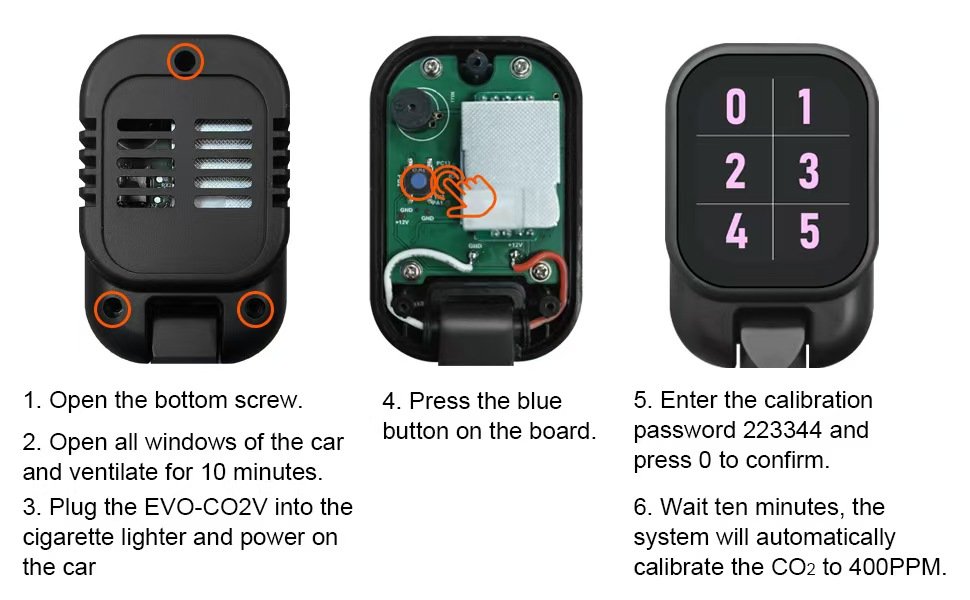
  • 🧩 EVO-CO2V Calibration Guide (New Feature from Oct 2025)

    Starting from October 2025, new EVO-CO2V units include a built-in calibration function — allowing you to ensure long-term accuracy with just a few simple steps.

    Even though the EVO-CO2V is factory-calibrated, environmental changes (temperature, storage time, humidity) can cause slight drift.
    This manual calibration lets you easily reset it back to 400 ppm (fresh-air baseline).


    🔧 Step-by-Step Calibration

    1️⃣ Open the bottom screw.
    2️⃣ Ventilate your car — open all windows for 10 minutes to ensure fresh outdoor air (around 400 ppm CO2).
    3️⃣ Plug in the EVO-CO2V and power on your car.
    4️⃣ Press the blue button on the circuit board.
    5️⃣ Enter the calibration password 223344, then press 0 to confirm.
    6️⃣ Wait 10 minutes — the system will automatically calibrate itself to 400 ppm.


    ✅ Notes for Best Accuracy

    • Perform calibration outdoors or in a well-ventilated area.
    • Avoid calibration near people or exhaust gases.
    • Repeat every 6–12 months if you frequently use the device in closed spaces.

    🌿 Why It Matters

    Proper calibration ensures your readings remain accurate, stable, and reliable — whether you’re monitoring air quality in your car, RV, or truck.

    From October 2025 onward, you can trust your EVO-CO2V to not only warn you of high CO2 levels, but also keep itself precise with easy in-car calibration.

    View on Amazon

    Amazon is a trademark of Amazon.com, Inc. or its affiliates.
  • 🚗 Is Recirculate Air Mode Dangerous in a Car?

    I Used to Think It Was Either Safe or Unsafe — The Reality Is More Subtle

    For a long time, I thought this question had a simple answer.

    “Is recirculate air mode dangerous in a car?”

    Either yes or no.
    Either good or bad.

    Most people seem to fall into one of two camps:

    • Always use recirculation (it cools faster, blocks smells)
    • Never use recirculation (it feels unhealthy)

    I used to switch between these two beliefs myself — until I actually paid attention to what recirculation mode does, and more importantly, what it does not do.

    Here’s what I learned.


    First: What Recirculation Mode Actually Does

    Recirculation mode simply means this:

    👉 The HVAC system reuses cabin air instead of pulling in outside air.

    That’s it.

    It does not:

    • remove oxygen
    • add toxins
    • create dangerous gases
    • trap exhaust by itself

    Recirculation is an airflow choice, not a hazard.

    Whether it becomes a problem depends entirely on time, occupancy, and ventilation balance.


    Why Recirculation Exists in the First Place

    Car manufacturers didn’t add recirculation by accident.

    It has real advantages:

    • cools or heats the cabin faster
    • improves energy efficiency
    • blocks outside odors and pollution
    • stabilizes cabin temperature
    • reduces HVAC load

    In traffic, tunnels, dusty roads, or extreme weather, recirculation can be the best choice.

    So the mode itself is not “bad.”


    Where the Concern Comes From

    The concern around recirculation usually comes from one thing:

    👉 CO₂ accumulation over time.

    When recirculation is on:

    • people keep breathing
    • CO₂ is continuously exhaled
    • no fresh air is added
    • CO₂ gradually rises

    This does not cause immediate danger.
    It does not cause suffocation.

    But over longer periods, it can affect:

    • mental clarity
    • alertness
    • comfort
    • perceived fatigue

    That’s the real issue — performance, not survival.


    Why Recirculation Feels Fine at First

    This is what fooled me for years.

    Recirculated air often feels:

    • cooler
    • quieter
    • more stable
    • more comfortable

    CO₂ has:

    • no smell
    • no irritation
    • no instant warning

    So everything feels fine — until clarity subtly drops.

    That delay is what creates confusion and myths.


    When Recirculation Is Completely Fine

    I still use recirculation regularly.

    It’s usually fine when:

    • drives are short
    • only one person is in the car
    • it’s used temporarily (cooling down fast)
    • you’re blocking heavy outside pollution
    • you switch modes occasionally

    In these cases, CO₂ simply doesn’t have enough time to matter.


    When Recirculation Needs Attention

    Recirculation deserves more awareness when:

    • drives are long (hours)
    • multiple people are inside
    • the cabin is tightly sealed
    • it’s used continuously without breaks
    • the car is very quiet and insulated

    In these scenarios, CO₂ can climb slowly and quietly.

    Not dangerously — but enough to matter for alert driving.


    The Mistake I Used to Make

    I used to think:

    “If recirculation were dangerous, manufacturers wouldn’t include it.”

    That’s true — but incomplete.

    Manufacturers assume:

    • drivers switch modes
    • trips vary
    • air gets refreshed naturally

    They don’t assume hours of uninterrupted recirculation.

    Once I understood that, recirculation stopped being scary — and started being manageable.


    A Better Way to Think About Recirculation

    Here’s the mental shift that helped me:

    • Recirculation is not a danger
    • It’s a tool
    • Tools need timing

    I stopped asking:

    “Should I use recirculation or not?”

    And started asking:

    “How long has the air been reused?”

    That single question changes everything.


    What I Do Now

    I don’t avoid recirculation.
    I use it intentionally.

    My simple habits:

    • use recirculation to cool or heat quickly
    • switch back to fresh air periodically
    • ventilate before I feel dull
    • don’t rely on comfort alone as a signal

    No panic.
    No strict rules.
    Just awareness.


    What Recirculation Is NOT

    It’s important to be clear.

    Recirculation mode is not:

    • carbon monoxide exposure
    • oxygen deprivation
    • a hidden safety defect
    • inherently unhealthy

    Those are separate issues with separate safeguards.

    Recirculation is about air reuse, not air poisoning.


    Final Thoughts

    So — is recirculate air mode dangerous in a car?

    No.
    But it isn’t air-neutral either.

    It’s extremely useful.
    It’s widely misunderstood.
    And when used without awareness for long periods, it can quietly affect how you feel.

    Once I stopped treating recirculation as either “safe” or “dangerous” and started treating it as time-dependent, everything made sense.

    Because in a car, air doesn’t suddenly become bad.

    It just gets reused.

    And reused air doesn’t require fear —
    it requires timing and intention.

    View on Amazon

    Amazon is a trademark of Amazon.com, Inc. or its affiliates.
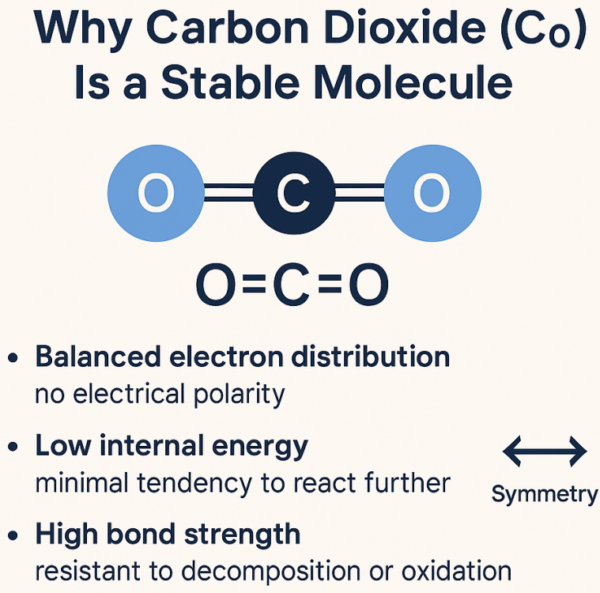
  • 🧠 Non-Dispersive Infrared (NDIR) CO₂ Sensor IC Module

    What It Is, How It Works — And Why It Matters for Your Cabin Air

    When I first started learning about CO₂ monitoring, I quickly ran into the phrase “NDIR CO₂ sensor.”

    It sounded technical.
    Like jargon.
    Something that needed a Ph.D. to understand.

    But once I broke it down, it became one of those clear moments where everything just clicked:

    👉 An NDIR CO₂ sensor is not magic. It’s a physics-based measurement tool — and it’s the reason modern CO₂ meters actually work reliably.

    In this article, I’m going to explain:

    • what an NDIR CO₂ sensor IC module actually is
    • how it measures CO₂
    • why it’s widely used in real-world applications
    • and why understanding it matters for your car’s cabin air

    Let’s dive in.


    What “NDIR” Stands For — In Plain Terms

    NDIR means:

    Non-Dispersive Infrared

    That sounds technical, but here’s the simple idea:

    • Infrared light is a type of light your eyes can’t see
    • CO₂ molecules absorb specific wavelengths of this light
    • The sensor measures how much light is absorbed
    • From that, it calculates the CO₂ concentration

    Unlike chemical sensors that react or wear out quickly, NDIR relies on optics and physics — and that’s why it’s stable and reliable.


    The Basic Components of an NDIR CO₂ Sensor Module

    If you open up an NDIR CO₂ sensor, you’ll see a few key parts:

    🔦 1. Infrared Light Source

    A small lamp or emitter that shines IR light through an optical cavity.

    🔍 2. Detection Chamber

    A space where the IR light travels through the air sample.

    📡 3. IR Detector

    This captures the remaining light after CO₂ absorption.

    🔬 4. Optical Filters

    These ensure the detector only “sees” the wavelengths that CO₂ absorbs.

    🧠 5. Microcontroller / Signal Processor

    This converts the detected signal into a CO₂ reading (e.g., ppm).

    None of these parts burn or “consume” chemicals.
    Nothing degrades suddenly — it all ages smoothly.


    How It Measures CO₂ — In Practice

    Here’s the mechanism in a nutshell:

    1. The IR light source emits light through the measurement chamber.
    2. CO₂ molecules in the air absorb specific infrared wavelengths.
    3. The detector measures how much light is missing at those wavelengths.
    4. The system calculates CO₂ concentration from that absorption.

    The term “non-dispersive” means it doesn’t split the light into a spectrum like a prism.
    Instead, it just measures absorption at targeted wavelengths — making it simpler, robust, and focused on CO₂.


    Why NDIR Is the Standard for CO₂

    NDIR CO₂ sensors are widely used because they are:

    ✔ Stable Over Time

    No consumable chemicals or coatings that wear out quickly.

    ✔ Selective to CO₂

    They don’t get fooled easily by other gases.

    ✔ Accurate Over a Wide Range

    From outdoor ambient levels to the elevated levels inside cars or rooms.

    ✔ Suitable for Continuous Monitoring

    They can run 24/7 without drifting wildly.

    That’s why you see NDIR sensors in:

    • indoor air quality monitors
    • HVAC systems
    • classrooms and offices
    • laboratory analyzers
    • vehicle CO₂ meters

    For cabin air, this is especially useful because CO₂ changes gradually, and you want a sensor that tracks those changes accurately without random noise.


    Why Sensor Modules Matter — Not Just the Numbers

    It’s one thing for a device to display a CO₂ value.

    It’s another for that value to be rooted in physics and stable over time.

    An NDIR CO₂ sensor module provides:

    • a trusted foundation for measurement
    • behavior that matches real-world changes (ventilation, occupancy, outside air)
    • consistency across conditions
    • predictable aging, not sudden failure

    That’s why, once I understood that the “module” is just a precise optical tool — not a guessing game — I started trusting the numbers more.


    Common Misconceptions I Had at First

    ❌ “NDIR means expensive and complicated.”

    Not really — the core technology has matured and become cost-effective.

    ❌ “NDIR sensors wear out like chemical sensors.”

    No — they age slowly and predictably (more on that in another article).

    ❌ “All CO₂ sensors are basically the same.”

    That’s false — different technologies behave differently.
    NDIR is the one that measures actual CO₂ absorption, not proxies.


    What This Means for Your Car’s Cabin Air

    Here’s the real takeaway:

    When you monitor CO₂ in a car, office, bedroom, or RV:

    • you want actual CO₂ measurement
    • not proxies based on temperature or humidity
    • not guesswork from estimated occupancy
    • but a real physical signal based on how CO₂ absorbs infrared light

    That’s what NDIR delivers.

    And because NDIR sensors are stable, you can trust:

    • trends over time
    • before/after ventilation comparisons
    • long-term patterns (e.g., on a trip)

    This is what makes CO₂ monitoring a useful tool, not just a curiosity.


    A Simple Way I Think About It Now

    Instead of imagining CO₂ sensors as “tiny detectors,” I think of them as:

    Infrared eyes tuned specifically to CO₂ molecules.

    They don’t guess.
    They don’t infer from side signals.
    They measure actual absorption.

    That’s the core reason NDIR works well in real-life environments — including in cars.


    Final Thoughts

    The term “NDIR CO₂ sensor IC module” might sound technical, but it really boils down to this:

    👉 It’s a physics-based measurement tool that uses light absorption to reliably track CO₂ levels over time.

    Once you understand that it’s:

    • optical, not chemical
    • stable, not fleeting
    • predictable, not guessy

    …then the numbers start to make sense.

    And that clarity — literally and figuratively — is precisely why CO₂ meters with NDIR sensors are becoming standard tools for air quality awareness in vehicles and indoor spaces.

    If you ever doubt a CO₂ reading, remembering what’s behind that number — a physical absorption measurement — makes it easier to trust the data.

    And once the data makes sense, decisions about ventilation and comfort become much more confident.

    View on Amazon

    Amazon is a trademark of Amazon.com, Inc. or its affiliates.
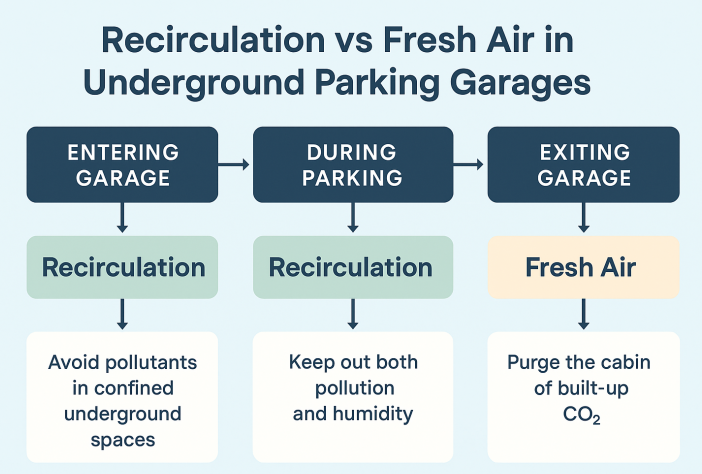
  • 💨 Why You Don’t Suffocate From Your Own Breath

    And What That Really Has to Do With CO₂ in Small Spaces

    When I first learned about CO₂ buildup inside cars and small spaces, a weird thought crossed my mind:

    “Wait — if we exhale CO₂, shouldn’t we eventually suffocate in a sealed room or vehicle?”

    It sounds logical.
    It even feels a bit scary.

    But the answer is surprisingly reassuring — and it all comes down to how our bodies and air chemistry actually work.

    Here’s what I learned — and why it matters when you think about CO₂ inside a car.


    First: What “Suffocate” Actually Means

    To suffocate means to stop getting enough oxygen to sustain life.

    In other words:

    • oxygen levels fall too low
    • carbon dioxide rises too high
    • the body can no longer use oxygen

    But here’s the key:

    👉 You don’t suffocate simply because there’s CO₂ around you.
    Indoor air doesn’t run out of oxygen that quickly.

    Let’s unpack why.


    We Breathe in Air With a Lot of Room to Spare

    Air is mostly:

    • ~78% nitrogen
    • ~21% oxygen
    • ~0.04% CO₂

    When we breathe, we:

    • take in oxygen
    • use a bit of it
    • exhale more CO₂

    But here’s the important part:

    You exhale much more CO₂ than you remove oxygen.

    For every breath:

    • CO₂ rises in the air around you
    • but oxygen only drops a little

    So the air doesn’t “run out” of oxygen quickly — it just gradually changes composition.


    Your Body Is Very Good at Handling CO₂

    CO₂ isn’t just a waste product your body ignores.

    The body constantly monitors and responds to it.

    Special sensors in your:

    • brainstem
    • blood vessels

    track CO₂ levels and adjust:

    • breathing rate
    • depth of respiration
    • heart output

    When CO₂ rises, the body doesn’t wait to panic.
    It quietly increases breathing effort to maintain balance.

    That’s why:

    • you don’t feel “suffocated” first
    • you feel slight changes in breathing before danger

    But those compensations happen early — long before any true breathing crisis.


    Why Oxygen Depletion Happens Much Later

    The dangerous scenario isn’t rising CO₂ — it’s falling oxygen below a critical point.

    But oxygen doesn’t disappear because someone is inside a room.

    Think about this:

    A sealed room with you inside all night:

    • CO₂ rises first
    • oxygen decreases much more slowly

    Even after hours, oxygen might still be high enough to sustain life.

    The reason?

    • Oxygen is abundant to begin with
    • The body uses only a fraction per breath

    CO₂ accumulation is the faster change, not oxygen depletion.


    How This Applies to Cars and Other Small Spaces

    This is where it becomes practical.

    In a sealed car:

    • people breathe continuously
    • CO₂ gradually increases
    • oxygen remains high for a long time

    You rarely feel discomfort.
    You rarely feel “out of air.”
    You just feel:

    • drowsy
    • mentally heavy
    • less alert

    That’s not suffocation.
    That’s air reuse and CO₂ buildup.


    CO₂ Affects Performance Before Safety

    This was a big realization for me.

    When CO₂ climbs:

    • you don’t suddenly gasp
    • you don’t feel pain
    • you don’t lose consciousness quickly

    You simply experience:

    • reduced mental clarity
    • slight cognitive drag
    • gentler alertness

    It’s subtle, not catastrophic.

    Your body protects you long before any true danger.

    That’s why, even in a sealed car for hours, people rarely experience oxygen starvation.


    The Difference Between “Bad Air” and “Dangerous Air”

    In everyday language, “bad air” gets used loosely.

    But when it comes to physiology:

    • CO₂ buildup is about air quality and performance
    • oxygen depletion is about actual survival

    High CO₂ before oxygen loss is the rule, not the exception.

    So you don’t suffocate from your own breath because:

    • your body compensates early
    • oxygen stays plentiful
    • CO₂ changes faster than oxygen drops

    The Mental Shift That Helped Me

    I used to think:

    “If air gets reused, it must become dangerous eventually.”

    Now I think:

    Air changes in stages.
    The early stages affect comfort and clarity, not survival.

    That distinction made all the difference.

    Instead of fearing CO₂ accumulation,
    I now treat it as a performance signal — something to manage, not panic about.


    Final Thoughts

    You don’t suffocate from your own breath because:

    • oxygen doesn’t drop quickly
    • your body compensates long before danger
    • CO₂ rises earlier and more noticeably
    • oxygen depletion happens much later

    In other words:

    CO₂ buildup affects how well you think — not how long you live — in everyday scenarios.

    Once I understood that, the idea of “breathing my own air till it kills me” stopped feeling like a threat and started feeling like a clue — a clue about ventilation, clarity, and how air actually works.

    And that’s the real meaning behind this seemingly scary question.eathing — perfectly clear.

    View on Amazon

    Amazon is a trademark of Amazon.com, Inc. or its affiliates.
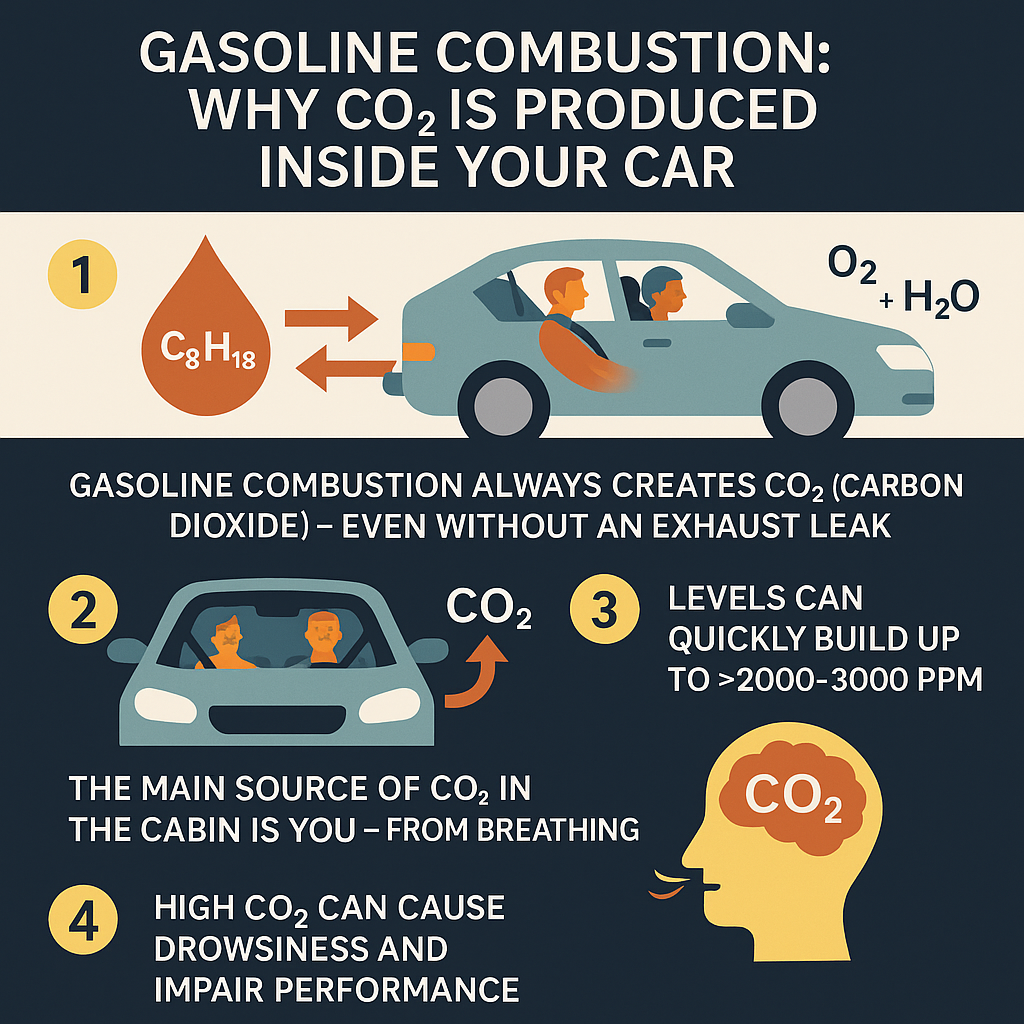
  • ⏳ How Long Does an NDIR CO₂ Sensor Last?

    I Expected a Simple Number — What I Learned Was More Reassuring Than That

    When I first started using CO₂ meters, this was one of my biggest questions:

    “How long does an NDIR CO₂ sensor actually last?”

    I wanted a clean answer.
    A number.
    A clear expiration date.

    Something like:

    • “3 years”
    • “5 years”
    • “10,000 hours”

    But the deeper I looked, the more I realized something important:

    👉 NDIR CO₂ sensors don’t age the way people think they do.

    And once I understood how they work, the question of lifespan became much less stressful — and much more predictable.


    First, What an NDIR CO₂ Sensor Actually Is

    NDIR stands for Non-Dispersive Infrared.

    At its core, an NDIR CO₂ sensor is not a chemical sensor.
    It’s an optical measurement system.

    Inside the sensor:

    • an infrared light source emits IR light
    • CO₂ molecules absorb specific wavelengths
    • a detector measures how much light is absorbed
    • concentration is calculated from physics, not chemistry

    There is:

    • no reactive material
    • no consumable element
    • no chemical coating that gets “used up”

    That alone already explains a lot about lifespan.


    Why NDIR Sensors Don’t “Wear Out” Like Other Sensors

    Many sensors age because:

    • chemicals degrade
    • electrodes corrode
    • surfaces get poisoned
    • reactions slow down

    NDIR sensors don’t rely on any of that.

    Instead, their long-term behavior is dominated by:

    • optical stability
    • light source aging
    • contamination control
    • calibration strategy

    That means they age slowly and predictably, not suddenly.


    The Real Answer: Typical NDIR Sensor Lifespan

    In normal consumer and vehicle applications, a quality NDIR CO₂ sensor typically lasts:

    5–10 years, often longer

    And in many cases:

    • the sensor itself still functions beyond that
    • accuracy remains usable with proper calibration
    • failure is gradual, not catastrophic

    This isn’t marketing optimism — it’s based on how optical systems age.


    What Actually Limits NDIR Sensor Lifespan

    Instead of a countdown timer, NDIR sensors are affected by a few specific factors.

    🔦 1. Infrared Light Source Aging

    The IR emitter slowly loses intensity over time.

    Important detail:

    • this happens gradually
    • the sensor compensates internally
    • degradation is measured in years, not months

    Good designs account for this from day one.


    🌫️ 2. Optical Contamination (Dust, Moisture, Oil)

    NDIR sensors measure light.
    So anything that blocks light matters.

    However:

    • automotive-grade sensors are sealed
    • filters are used
    • internal volumes are protected

    Under normal in-car or indoor use, contamination progresses very slowly.


    🔁 3. Calibration Drift — Not Sensor Failure

    This was a big realization for me.

    Most “end of life” concerns are actually about:

    • calibration drift, not sensor death

    The sensor still works.
    It just benefits from:

    • baseline correction
    • fresh-air calibration
    • software compensation

    Drift does not mean failure.


    Why NDIR Sensors Age Gracefully, Not Suddenly

    This is what makes NDIR reassuring.

    They don’t:

    • suddenly stop reading
    • suddenly jump to nonsense values
    • silently become useless overnight

    Instead, if anything changes, you’ll see:

    • slow offset shifts
    • predictable trends
    • logical behavior over time

    That gives you plenty of warning.


    How I Personally Judge an Aging NDIR Sensor

    I stopped asking:

    “How old is this sensor?”

    And started asking:

    • Does it still read ~400–450 ppm outdoors?
    • Does it rise with people in a closed space?
    • Does it fall with ventilation?
    • Are changes smooth and logical?

    If the answers are yes, the sensor is doing its job — regardless of age.


    What Shortens Lifespan (And What Usually Doesn’t)

    Things that can shorten lifespan:

    • extreme condensation repeatedly entering the sensor
    • direct exposure to oils or solvents
    • severe dust ingress without filtration

    Things that usually do not:

    • normal car use
    • long drives
    • sleeping in a vehicle
    • daily indoor monitoring
    • frequent readings

    NDIR sensors are designed for continuous operation.


    Why NDIR Is Still the Gold Standard for CO₂

    After learning all this, it became clear why NDIR remains dominant.

    Compared to alternatives:

    • it’s stable
    • predictable
    • physics-based
    • long-lived

    That’s why NDIR is used in:

    • building ventilation systems
    • laboratories
    • industrial safety monitors
    • vehicle air-quality tools

    Longevity is not a side effect — it’s a core reason.


    A Simple, Honest Expectation

    Here’s the expectation I use now:

    If an NDIR CO₂ sensor:

    • is well-designed
    • used in normal environments
    • occasionally calibrated

    Then it should provide many years of reliable, meaningful data.

    Not perfect forever.
    But useful far longer than most people expect.


    Final Thoughts

    I used to worry about “sensor lifespan” as if it were a ticking clock.

    Now I see it differently.

    An NDIR CO₂ sensor isn’t something that suddenly expires.
    It’s something that ages slowly, transparently, and predictably.

    Once you understand that, the anxiety disappears.

    You stop watching the calendar —
    and start watching behavior.

    And when a sensor behaves logically year after year,
    that’s not fragility.

    That’s good engineering.

    View on Amazon

    Amazon is a trademark of Amazon.com, Inc. or its affiliates.
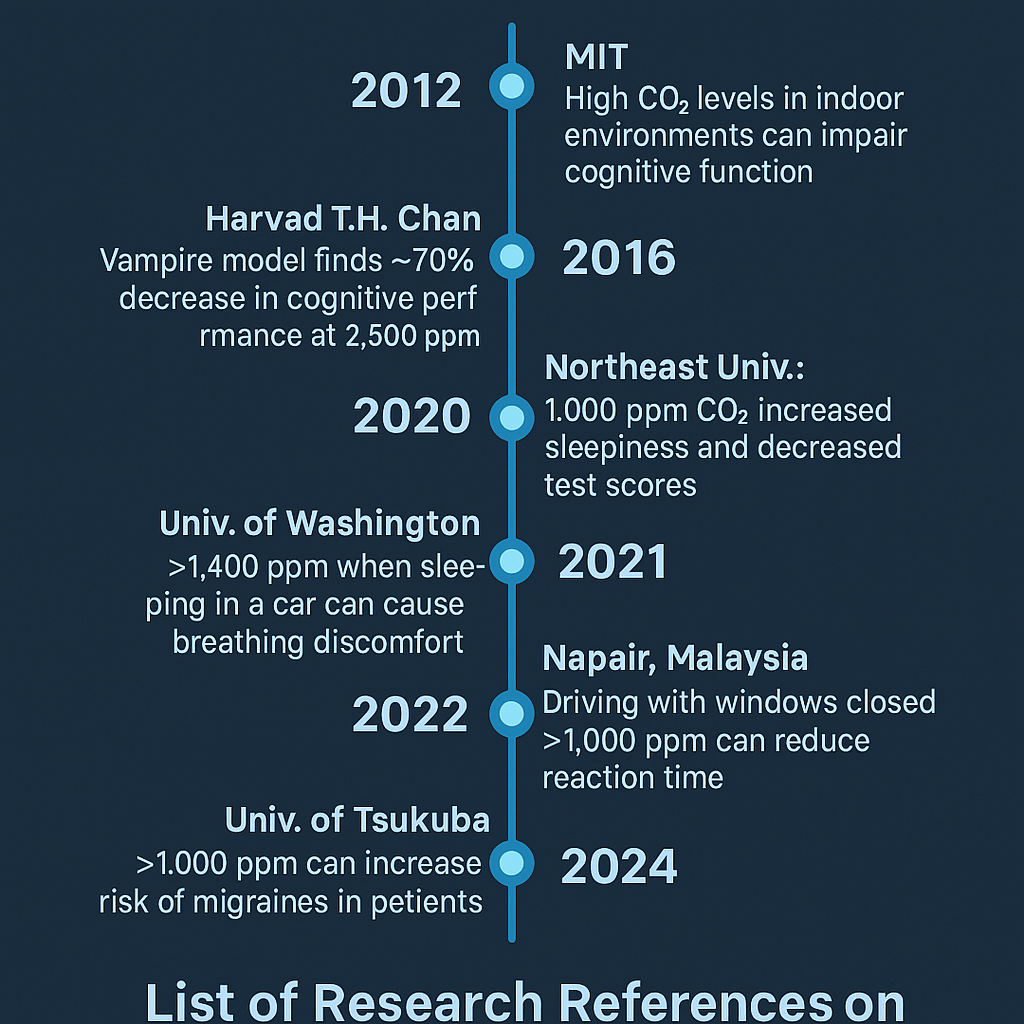
  • 🎯 How to Tell If Your CO₂ Meter Is Accurate

    I Didn’t Trust the Number at First — So I Learned What Actually Makes Sense

    The first time I used a CO₂ meter, I didn’t trust it.

    The number felt… abstract.

    No smell.
    No obvious physical signal.
    Just a value on a screen.

    So when it showed something higher than I expected, my first reaction wasn’t concern — it was doubt.

    “Is this thing even accurate?”

    That question is more common than people admit.

    And the truth is:

    👉 Accuracy doesn’t mean “never changing” or “always matching your expectations.”
    It means behaving logically, consistently, and predictably in the real world.

    Once I understood what accurate really looks like for a CO₂ meter, it became much easier to trust — and use — the data.


    First: What Accuracy Does Not Mean

    Before getting into checks, it helps to clear up a few misconceptions.

    An accurate CO₂ meter does not:

    • stay at the same number all the time
    • match another meter perfectly to the ppm
    • instantly respond to every breath
    • “feel right” based on comfort alone

    CO₂ is invisible, odorless, and slow-moving.

    So accuracy has to be judged by behavior, not intuition.


    1️⃣ Check the Outdoor Baseline (The Simplest Test)

    This is the first thing I always do.

    Take the meter:

    • outdoors
    • away from traffic
    • away from people
    • with good airflow

    Give it a few minutes.

    Most outdoor air today is roughly:

    • 400–450 ppm (depending on location and conditions)

    If your meter stabilizes in that general range, that’s a good sign.

    If it reads:

    • 800 ppm outdoors → suspicious
    • 1200 ppm outdoors → very likely wrong

    This test doesn’t need perfection — just plausibility.


    2️⃣ Watch How the Number Responds to People

    One of the clearest accuracy checks is human presence.

    In a small space:

    • enter the room
    • close the door
    • stay for 10–20 minutes

    An accurate meter will:

    • rise gradually
    • not jump instantly
    • not stay frozen

    More people = faster rise.

    If nothing changes over time, that’s a red flag.


    3️⃣ Open a Window — Does the Meter Respond?

    This test taught me a lot.

    When you:

    • open a window
    • switch to fresh-air mode
    • ventilate intentionally

    An accurate CO₂ meter should:

    • start trending downward
    • respond within minutes (not seconds)
    • show a smooth decline

    The key word is trend, not instant change.

    CO₂ doesn’t vanish — it dilutes.


    4️⃣ Look for Smooth, Logical Movement — Not Noise

    Accurate CO₂ data looks:

    • smooth
    • gradual
    • continuous

    It doesn’t:

    • spike randomly
    • jump hundreds of ppm instantly
    • oscillate wildly

    Small fluctuations are normal.
    Chaotic behavior is not.

    When I stopped expecting “fast reactions” and started looking for logical patterns, accuracy became much easier to judge.


    5️⃣ Compare Situations, Not Just Numbers

    Instead of asking:

    “Is this number correct?”

    I started asking:

    • Is it higher when more people are present?
    • Is it lower after ventilation?
    • Is it higher overnight in a closed space?
    • Is it lower in large, open areas?

    If the relative behavior matches reality, the meter is doing its job.

    Absolute perfection isn’t required for meaningful insight.


    6️⃣ Understand Sensor Type (This Matters More Than Most People Think)

    Not all CO₂ meters are equal.

    The most reliable consumer meters use:

    • NDIR (Non-Dispersive Infrared) sensors

    These:

    • directly measure CO₂ absorption
    • are stable over time
    • don’t rely on assumptions

    If a device doesn’t clearly state it uses NDIR for CO₂, skepticism is reasonable.

    This isn’t marketing — it’s physics.


    7️⃣ Don’t Expect Two Meters to Match Exactly

    This was a big mindset shift for me.

    Two accurate meters:

    • may differ by 50–100 ppm
    • may respond at different speeds
    • may have different averaging

    That doesn’t mean one is wrong.

    What matters is whether:

    • both rise in the same situations
    • both fall with ventilation
    • both show similar trends

    Trend agreement matters more than identical numbers.


    The Mistake I Used to Make

    I used to trust comfort more than data.

    If the air felt fine, I assumed the number must be wrong.

    Now I know:

    • CO₂ affects clarity before discomfort
    • the body is a poor CO₂ detector
    • meters see what we can’t

    Once I stopped arguing with the data and started observing patterns, trust followed naturally.


    A Simple Rule I Use Now

    Here’s my personal checklist:

    If a CO₂ meter:

    • reads ~400–450 ppm outdoors
    • rises with people and time
    • falls with ventilation
    • changes smoothly and logically

    Then it’s accurate enough to be useful.

    And usefulness matters more than lab-grade precision.


    Final Thoughts

    Trusting a CO₂ meter isn’t about believing a number blindly.

    It’s about understanding how CO₂ behaves — and checking whether the meter reflects that behavior.

    Once you know what to look for, accuracy becomes obvious.

    Not dramatic.
    Not mysterious.

    Just quietly consistent.

    And that’s exactly what a good CO₂ meter should be.

    View on Amazon

    Amazon is a trademark of Amazon.com, Inc. or its affiliates.
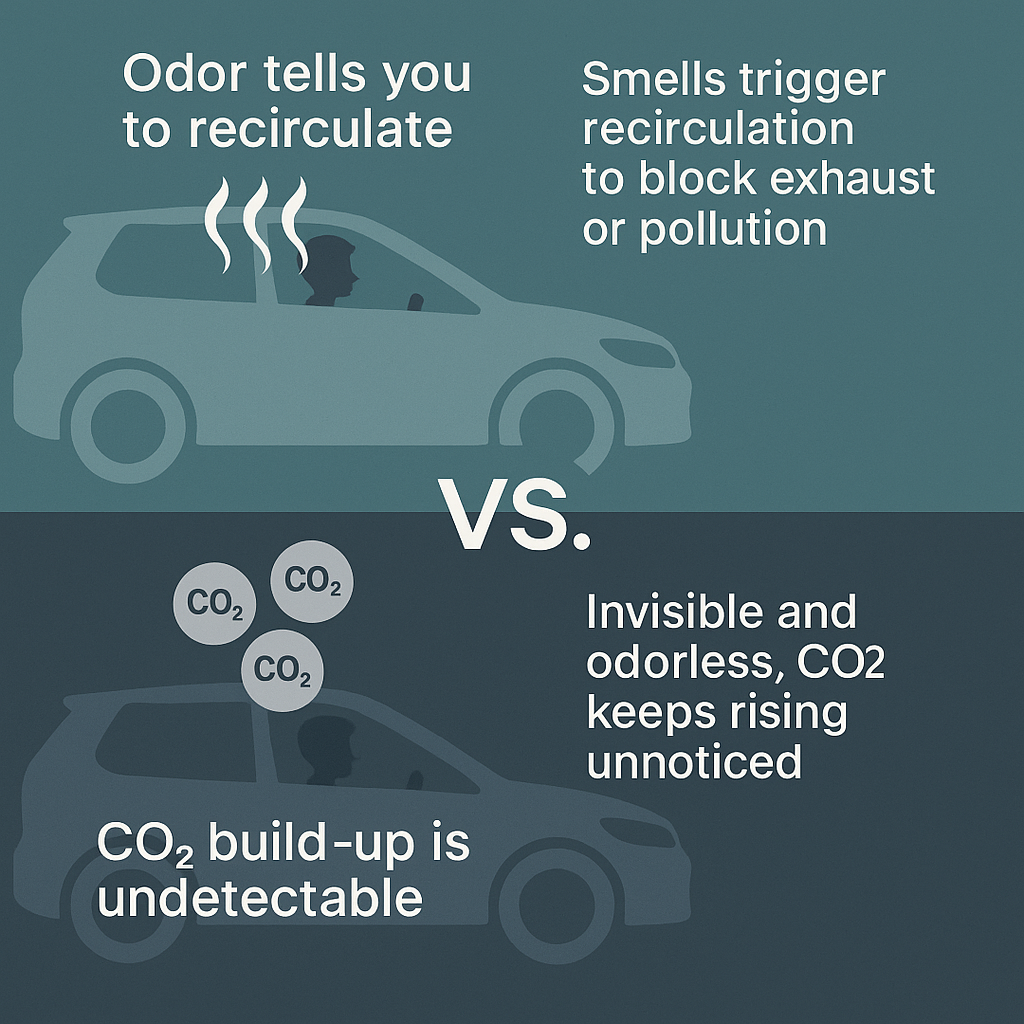
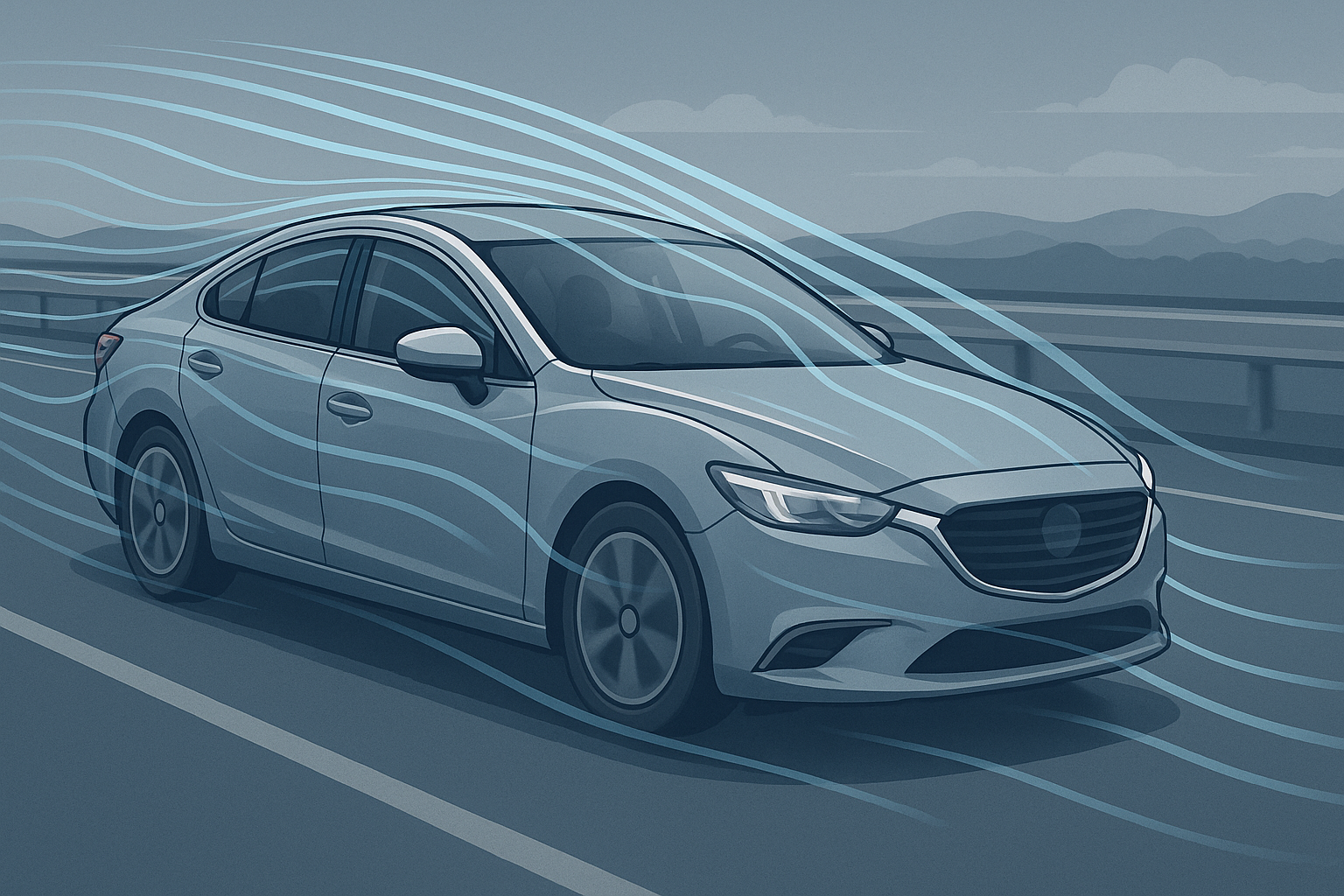
  • 🌪️ Does Aerodynamics Help Reduce CO₂ Inside a Car While Driving?

    🌪️ Does Aerodynamics Help Reduce CO₂ Inside a Car While Driving?

    I Assumed Speed and Airflow Would Solve It — They Don’t (At Least Not the Way I Thought)

    For a long time, I believed something that felt obvious.

    “If the car is moving fast, air must be flowing through it.”
    “Good aerodynamics should help flush the cabin.”
    “CO₂ buildup is probably only a problem when parked.”

    That assumption sounds reasonable.

    After all, modern cars are designed to slice through air efficiently.
    You can feel wind noise.
    You can see air rushing past the windows.

    But once I started paying attention to how cabin air actually behaves, I realized something important:

    👉 Aerodynamics affect how air moves around a car — not how air is exchanged inside it.

    That distinction changes everything.


    What Aerodynamics Actually Do

    Aerodynamics are about:

    • reducing drag
    • improving efficiency
    • controlling airflow outside the vehicle

    A well-designed car:

    • keeps external air flowing smoothly around the body
    • minimizes pressure disturbances
    • reduces turbulence and noise

    This is great for fuel economy and stability.

    But none of this automatically means:

    • fresh air enters the cabin
    • stale air leaves the cabin
    • CO₂ is diluted inside

    External airflow and internal ventilation are two very different systems.


    Why a Moving Car Is Still a Sealed Space

    This surprised me at first.

    Even at highway speed:

    • the cabin is intentionally sealed
    • doors and windows block pressure-driven flow
    • HVAC controls almost all air exchange

    Modern cars are designed to prevent uncontrolled air intrusion.

    That’s why:

    • wind doesn’t roar inside
    • temperature stays stable
    • noise is reduced

    But it also means:

    Speed alone does not guarantee fresh air inside.

    If the HVAC is set to recirculation, the cabin remains a closed loop —
    even at 70 mph.


    The Pressure Myth: “Forward Motion Pushes Air In”

    I used to imagine outside air being “forced” into the cabin as the car moves.

    In reality:

    • pressure zones form around the car
    • most areas are neutral or low-pressure
    • intentional vents control where air enters and exits

    Unless the HVAC is actively drawing in outside air, the system doesn’t magically ventilate itself.

    Aerodynamics help keep air out, not pull it in.


    Why CO₂ Can Still Build Up While Driving

    CO₂ inside the car comes primarily from:

    • human breathing

    As long as:

    • people are inside
    • air exchange is limited
    • time passes

    CO₂ will rise gradually.

    Driving faster doesn’t change that equation.

    What matters is:

    • air intake mode (fresh vs recirculation)
    • fan speed and mixing
    • how long the cabin stays sealed

    Not the vehicle’s drag coefficient.


    Why This Feels Counterintuitive

    This idea clashes with intuition because:

    • we associate movement with ventilation
    • wind is visible and audible
    • motion feels “active”

    But cabin air is managed by design, not motion.

    That’s why you can:

    • drive for hours
    • feel comfortable
    • hear airflow

    …and still be breathing largely reused air.


    When Aerodynamics Can Indirectly Matter

    To be fair, aerodynamics aren’t irrelevant.

    They can indirectly influence cabin air by:

    • reducing noise (making air issues harder to notice)
    • improving sealing (reducing passive leaks)
    • stabilizing pressure (limiting unintended airflow)

    Ironically, better aerodynamics often mean less accidental ventilation, not more.

    So newer, more efficient cars may require more intentional air management, not less.


    What Actually Helps Reduce CO₂ While Driving

    Here’s what I found makes a real difference:

    • switching to fresh-air mode periodically
    • increasing fan speed briefly to mix air
    • avoiding long, uninterrupted recirculation cycles
    • refreshing air before mental dullness appears

    These actions affect air exchange, not external airflow.


    A Simple Way I Think About It Now

    Here’s the mental model that finally stuck:

    • Aerodynamics manage outside air
    • HVAC manages inside air

    They operate independently.

    One improves efficiency.
    The other determines freshness.

    Confusing the two leads to false assumptions.


    Final Thoughts

    Driving speed and sleek aerodynamics don’t protect you from CO₂ buildup inside the car.

    They were never meant to.

    A car can be:

    • fast
    • quiet
    • efficient

    …and still have slowly reused cabin air.

    Once I separated “how air moves around the car” from “how air moves inside it,” the confusion disappeared.

    CO₂ management while driving isn’t about speed or shape.

    It’s about intentional ventilation.

    And that’s a choice the driver makes — not something aerodynamics can do for you.

    View on Amazon

    Amazon is a trademark of Amazon.com, Inc. or its affiliates.
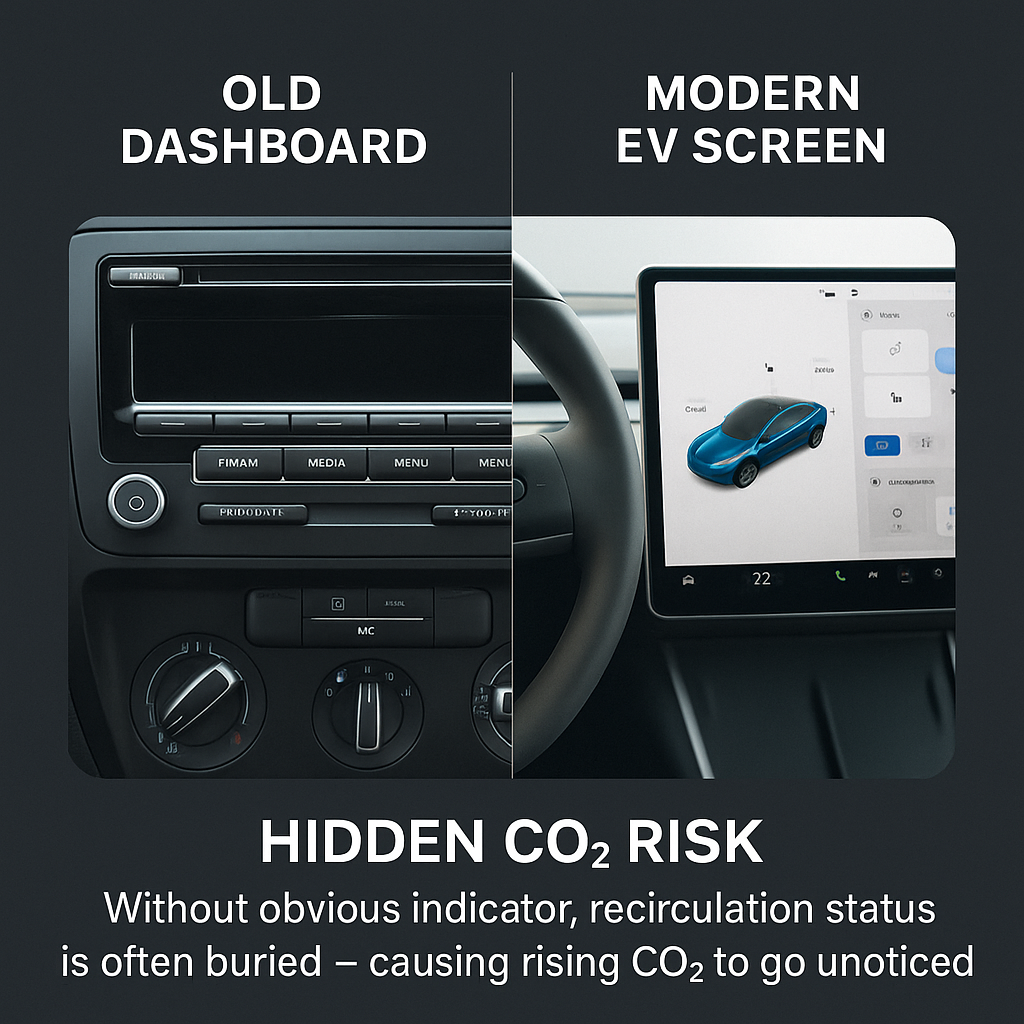
  • 🚗 What’s in Vehicle Exhaust — and Why It Matters

    I Used to Think Exhaust Was Just “Bad Air.” It’s More Complicated Than That.

    For a long time, I thought of vehicle exhaust in very simple terms.

    Exhaust = pollution.
    Pollution = bad.
    End of story.

    As a driver, that felt like enough to know.

    But once I started paying attention to how air behaves around vehicles — and inside them — I realized that this oversimplification was actually hiding the most important part of the picture.

    👉 Vehicle exhaust isn’t one thing. It’s a mixture of very different gases and particles, each behaving differently — and affecting us in different ways.

    Understanding what’s actually in exhaust changed how I think about driving, ventilation, and cabin air.


    Exhaust Is a Chemical Mixture, Not a Single Substance

    When a vehicle burns fuel (gasoline or diesel), the exhaust isn’t just “smoke.”

    It’s a blend of:

    • gases
    • microscopic particles
    • byproducts of combustion

    Some are harmless at low levels.
    Some are dangerous.
    Some are easy to notice.
    Some are completely invisible.

    Lumping them together as “exhaust” makes it harder to understand what really matters.


    The Major Components of Vehicle Exhaust

    Let’s break it down into the parts that matter most for drivers and passengers.


    🟢 Carbon Dioxide (CO₂)

    CO₂ is the largest component by volume in vehicle exhaust.

    It is:

    • colorless
    • odorless
    • non-irritating
    • not toxic at typical environmental levels

    CO₂ doesn’t poison you.

    What it does is indicate:

    • combustion activity
    • air reuse
    • ventilation effectiveness

    CO₂ matters because it:

    • accumulates easily in enclosed spaces
    • affects cognitive clarity before discomfort appears

    It’s not the most dangerous exhaust component —
    but it’s the most persistent and easy to overlook.


    🔴 Carbon Monoxide (CO)

    CO is the most dangerous component of exhaust.

    It is:

    • colorless
    • odorless
    • highly toxic
    • dangerous even at low concentrations

    CO interferes with oxygen delivery in the blood.

    This is why:

    • CO detectors exist
    • exposure is considered an emergency

    Fortunately, modern vehicles are designed to keep CO out of the cabin under normal conditions.

    CO is rare — but serious.


    🟡 Nitrogen Oxides (NOₓ)

    NOₓ gases are:

    • irritants
    • contributors to smog
    • harmful to lungs at high concentrations

    They are more common:

    • in traffic
    • near diesel vehicles
    • in enclosed or poorly ventilated areas

    You may not always smell them, but they contribute to the “harsh” feeling of polluted air.


    ⚫ Particulate Matter (PM2.5 / PM10)

    These are microscopic particles produced during combustion.

    They:

    • penetrate deep into the lungs
    • contribute to long-term health risks
    • are more common in diesel exhaust

    You often notice them as:

    • haze
    • soot
    • or irritation in heavy traffic

    Particles behave very differently from gases — they linger and settle.


    🟣 Unburned Hydrocarbons & VOCs

    These come from:

    • incomplete combustion
    • fuel evaporation
    • oil residues

    They contribute to:

    • odors
    • smog formation
    • “chemical” smells near traffic

    These are often what people think of when they say:

    “The air smells bad.”


    Why Exhaust Behavior Matters for Cabin Air

    Here’s the part that really changed my thinking.

    Vehicle exhaust doesn’t stay neatly behind the car.

    It:

    • lingers in traffic
    • accumulates in tunnels and garages
    • mixes into surrounding air
    • can be pulled into other vehicles

    So even if your own car is working perfectly, your cabin air is still influenced by everyone else’s exhaust.

    Especially when:

    • idling
    • stuck in traffic
    • driving in tunnels
    • parked near other vehicles

    Why Some Exhaust Components Matter More Than Others Inside a Car

    This is a key distinction.

    • CO → emergency hazard, rare, alarm-based
    • Particles & NOₓ → irritation and pollution, often smell-related
    • CO₂ → invisible, odorless, accumulates quietly

    That’s why:

    • your nose reacts to some pollutants
    • alarms exist for CO
    • CO₂ often goes unnoticed

    Each component requires a different response.


    The Mistake I Used to Make

    I used to think:

    “If I don’t smell exhaust, the air must be fine.”

    That’s only partially true.

    Smell tells you about:

    • VOCs
    • some NOₓ
    • fuel residues

    It tells you almost nothing about:

    • CO₂
    • CO at early stages

    So relying on smell alone leaves big gaps.


    Why This Matters for Everyday Driving

    Understanding exhaust composition helped me:

    • stop overreacting to harmless things
    • stop ignoring subtle ones
    • make better ventilation decisions

    Instead of asking:

    “Is this air good or bad?”

    I now ask:

    • What kind of air issue might this be?
    • Which component am I dealing with?
    • What response actually makes sense?

    That shift reduced anxiety and improved clarity.


    Final Thoughts

    Vehicle exhaust isn’t a single danger.

    It’s a complex mix of substances that behave differently, linger differently, and affect us differently.

    Some trigger alarms.
    Some trigger smells.
    Some trigger nothing at all.

    Understanding what’s in exhaust doesn’t make driving scary.

    It makes it predictable.

    And once exhaust stops being a vague threat and becomes a known mixture, managing cabin air becomes calmer, smarter, and far more effective.

    Because the goal isn’t to fear exhaust —
    it’s to understand which parts matter, when they matter, and how to respond.

    View on Amazon

    Amazon is a trademark of Amazon.com, Inc. or its affiliates.
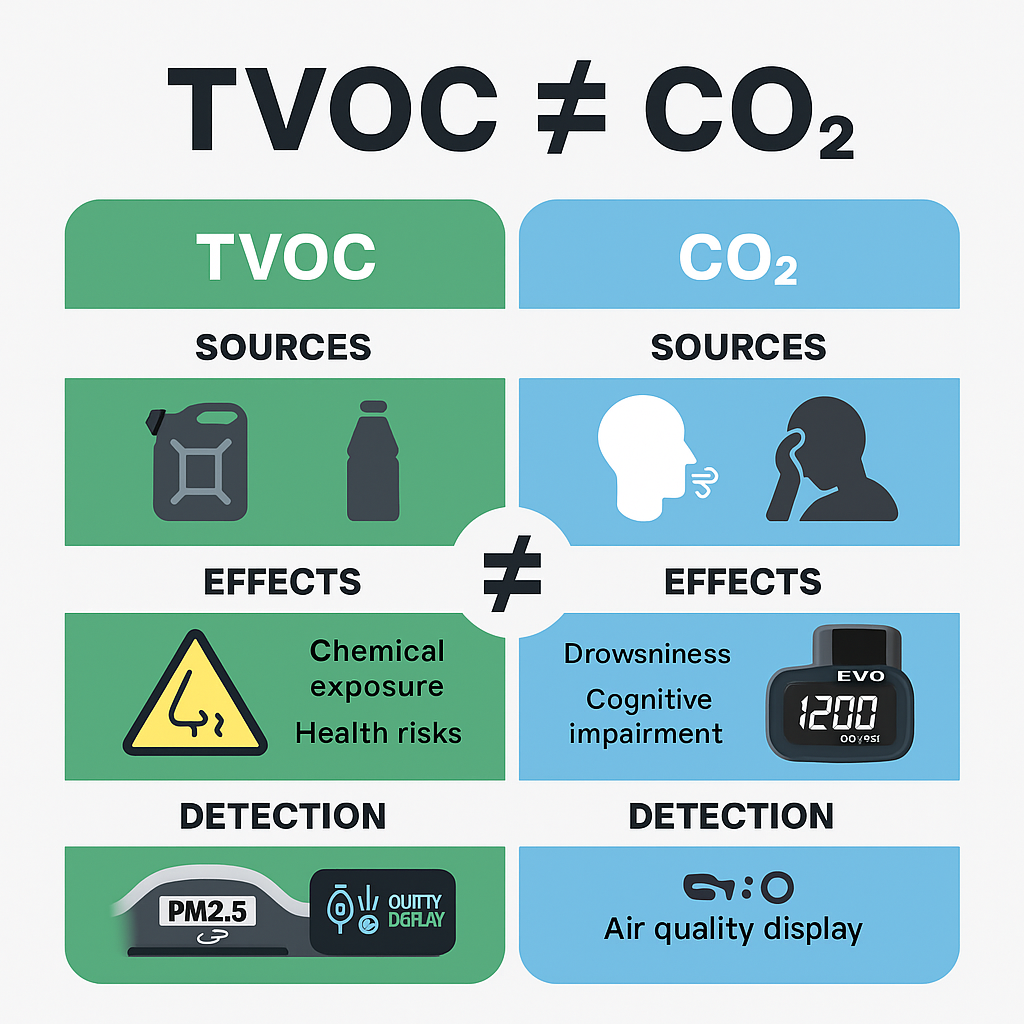
  • 🚘 Types of Vehicles in the U.S. — And How Cabin Air Differs Among Them

    I Used to Think “A Car Is a Car.” The Air Taught Me Otherwise.

    For a long time, I assumed cabin air behaved more or less the same in every vehicle.

    A car is a closed space.
    People breathe.
    Air goes in and out.

    Simple, right?

    But after spending time driving — and sometimes sleeping — in different types of vehicles across the U.S., I realized that assumption was wrong.

    👉 Vehicle type changes cabin air behavior far more than most people expect.

    Not because of brand or luxury —
    but because of volume, sealing, HVAC design, and how the vehicle is actually used.

    Once I started comparing them side by side, patterns became obvious.


    Why Vehicle Type Matters for Cabin Air

    Cabin air quality is shaped by a few core factors:

    • interior air volume
    • how tightly the cabin is sealed
    • HVAC airflow strength and strategy
    • typical trip length
    • how often recirculation is used

    Different vehicle types combine these factors in very different ways.

    That’s why the same number of people can experience very different air conditions depending on the vehicle.


    🚗 Sedans (Compact & Mid-Size)

    Sedans are one of the most common vehicles in the U.S.

    Typical characteristics:

    • relatively small cabin volume
    • good sealing
    • efficient HVAC systems
    • frequent use of recirculation

    How the air behaves:

    • CO₂ rises fairly quickly on long drives
    • air feels stable and comfortable
    • changes are subtle and easy to miss

    Sedans are optimized for comfort and efficiency —
    which also means air is reused very effectively.

    This makes them great for short trips,
    but on long drives, air freshness depends heavily on ventilation habits.


    🚙 SUVs & Crossovers

    SUVs are extremely popular in the U.S., and their air behavior surprised me.

    Typical characteristics:

    • larger cabin volume than sedans
    • higher seating position
    • more interior space, sometimes third rows
    • strong HVAC systems

    How the air behaves:

    • CO₂ builds up more slowly than in sedans
    • but once it does, it spreads throughout a larger space
    • rear seats often get less fresh airflow

    SUVs feel “airier,” which can delay awareness of buildup.

    But longer family trips, multiple passengers, and sealed cabins mean air management still matters, especially for people in the back.


    🛻 Pickup Trucks

    Pickups are common in the U.S., especially outside urban centers.

    Typical characteristics:

    • cab volume varies widely (single, extended, crew cab)
    • very good sealing
    • HVAC often tuned for quick heating/cooling
    • frequent highway driving

    How the air behaves:

    • in smaller cabs, CO₂ can rise surprisingly fast
    • strong airflow can mask air reuse
    • drivers often use recirculation to block dust or smells

    Pickups can feel rugged and “open,”
    but inside the cab, air behavior can resemble a tightly sealed sedan.


    🚐 Minivans

    Minivans are designed around people — and that changes everything.

    Typical characteristics:

    • large interior volume
    • many passengers
    • long trip durations
    • rear climate zones

    How the air behaves:

    • more air volume helps dilute CO₂
    • but many people breathe continuously
    • rear rows often receive reused air

    Minivans handle volume well, but occupancy load is high.

    Air quality becomes more about passenger count and airflow distribution than vehicle size alone.


    🚐 Vans (Cargo & Passenger)

    Vans behave very differently depending on configuration.

    Typical characteristics:

    • very large interior space
    • often partially empty or heavily occupied
    • variable insulation and sealing
    • HVAC not always designed for the full space

    How the air behaves:

    • air exchange can be uneven
    • front cabin may be fresh while rear stagnates
    • sleeping or working inside changes everything

    Vans are where air behavior becomes highly situational.

    Usage matters more than design.


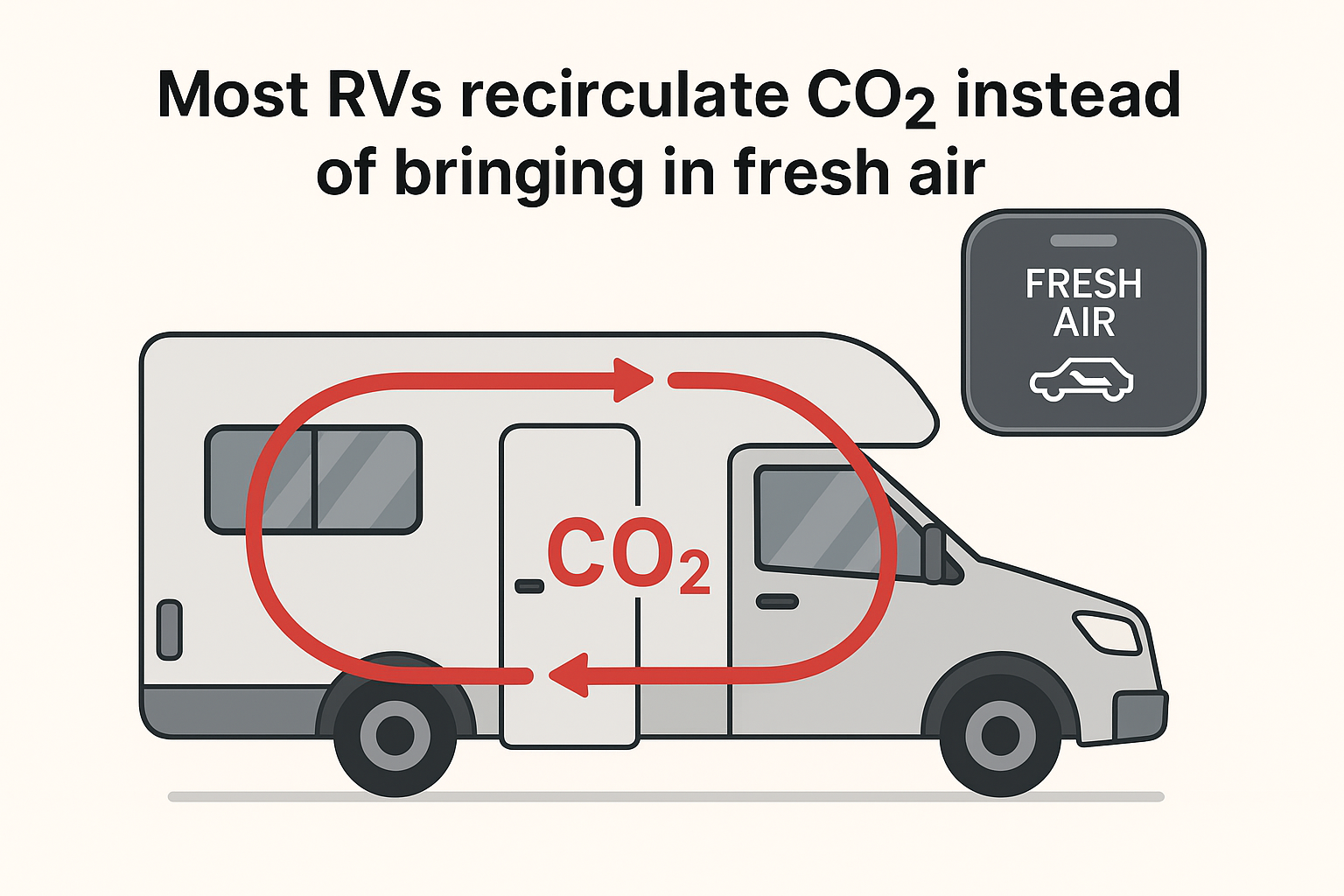
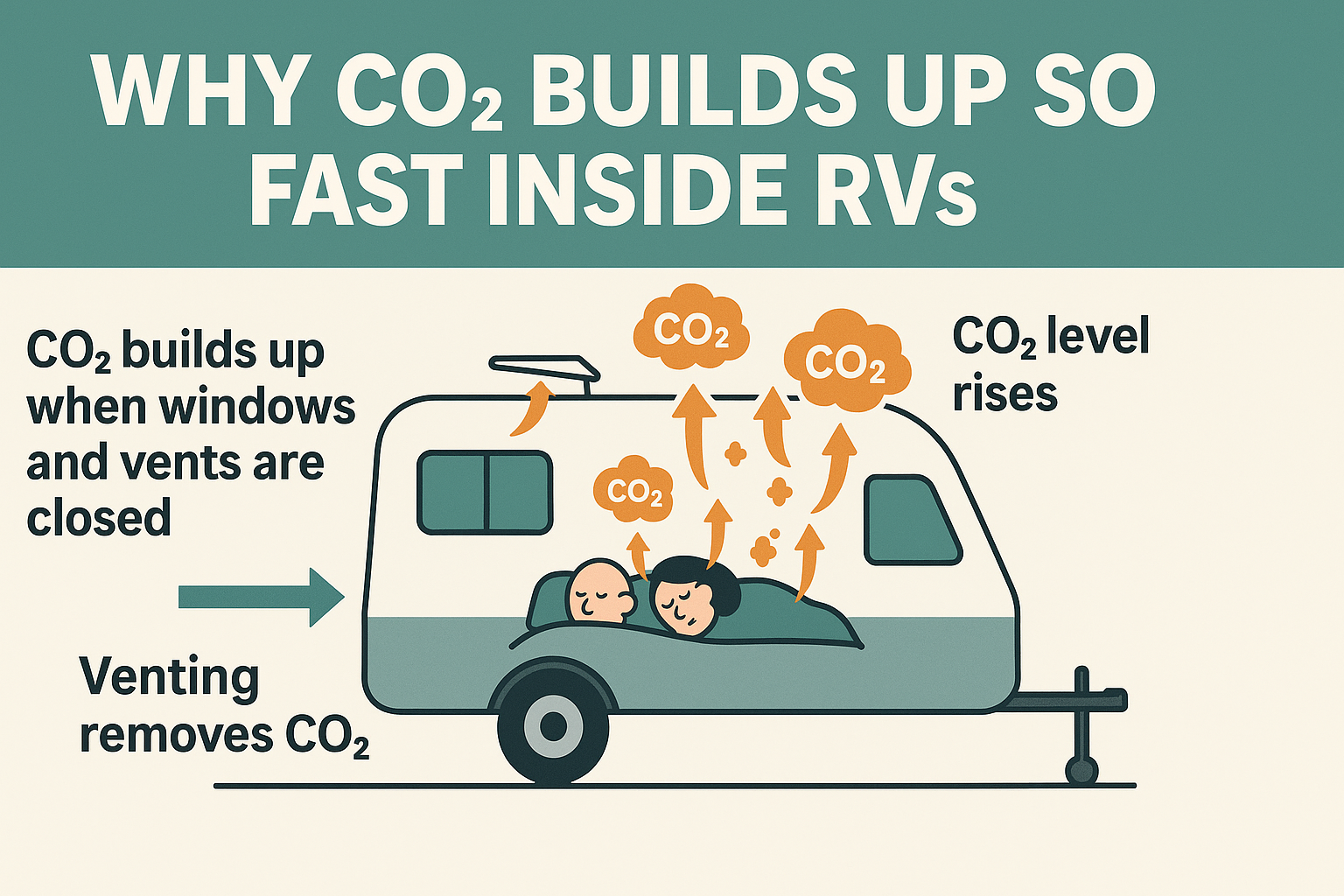
    🚐 RVs & Camper Vans

    RVs are in a category of their own.

    Typical characteristics:

    • large but tightly sealed spaces
    • long continuous occupancy
    • sleeping, cooking, living inside
    • minimal natural ventilation

    How the air behaves:

    • CO₂ can build up quickly despite large volume
    • overnight accumulation is common
    • air quality depends almost entirely on user behavior

    RVs taught me this clearly:

    👉 Time matters more than size.


    ⚡ Electric Vehicles (Across All Types)

    EVs deserve special mention.

    Typical characteristics:

    • extremely quiet cabins
    • excellent sealing
    • smooth, stable HVAC
    • hidden air-circulation indicators

    How the air behaves:

    • reused air feels “normal” for longer
    • CO₂ buildup is harder to notice
    • silence reduces sensory feedback

    EVs don’t change the physics —
    they change perception.

    That’s why air awareness matters more, not less.


    What I Learned From Comparing All of Them

    The biggest lesson wasn’t about which vehicle is “better.”

    It was this:

    👉 Cabin air quality is shaped more by how a vehicle is used than what badge is on the hood — but vehicle type sets the baseline.

    Small, sealed vehicles need more frequent air refresh.
    Large vehicles need better airflow distribution.
    Quiet vehicles need more intentional awareness.


    A Simple Way I Think About It Now

    Instead of asking:

    “What kind of car is this?”

    I ask:

    • How much air volume is there?
    • How many people are breathing inside?
    • How long will we stay sealed?
    • How strong is actual air exchange?

    Those questions apply to every vehicle —
    but the answers change with the type.


    Final Thoughts

    In the U.S., vehicle choice is incredibly diverse.

    Sedans, SUVs, trucks, vans, RVs, EVs —
    they all move people from place to place.

    But inside the cabin, air behaves very differently.

    Once I stopped assuming “a car is a car” and started noticing how design and usage shape air, driving felt less mysterious — and long trips felt clearer.

    Because no matter what you drive,
    air doesn’t manage itself.
    It follows the rules of space, time, and flow.

    Understanding those rules is what makes the difference.

    View on Amazon

    Amazon is a trademark of Amazon.com, Inc. or its affiliates.
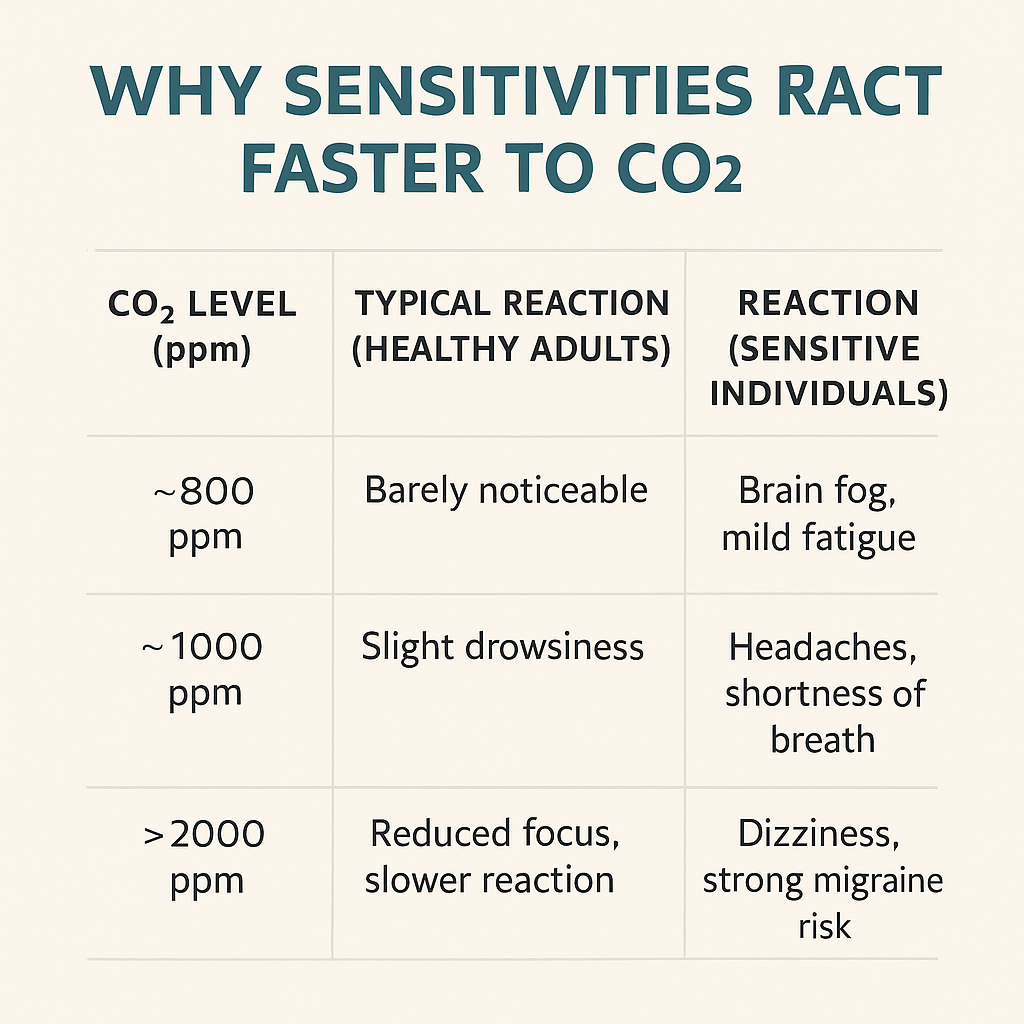
  • ⚡ Should You Turn On the A/C When Using the Heater in an Electric Vehicle?

    I Tried the Gas-Car Trick — and Realized EVs Play by Different Rules

    When I first switched from a gasoline car to an electric vehicle, I brought old habits with me.

    One of them was this familiar advice:

    “Turn on the A/C when using the heater — it keeps the air clearer.”

    So on a cold EV drive, I did exactly that.

    The cabin warmed up.
    The system was quiet.
    Everything seemed normal.

    But something felt off — not bad, just inefficient.

    That’s when I realized an important truth:

    👉 In an electric vehicle, turning on the A/C while using the heater doesn’t mean the same thing it does in a gasoline car.

    Once I understood how EV HVAC systems actually work, the decision became much clearer.


    Why This Advice Exists in the First Place (Gasoline Cars)

    In gasoline cars, this trick works because:

    • the engine already produces waste heat
    • the A/C compressor mainly handles dehumidification
    • running A/C with heat improves airflow and window defogging
    • the energy penalty is relatively small

    So “heater + A/C” often means:

    Warm, dry, well-managed air — with little downside.

    That logic doesn’t transfer cleanly to EVs.


    How EV Heating Is Fundamentally Different

    Electric vehicles don’t have engine waste heat.

    They rely on:

    • resistive heaters, or
    • heat pumps

    Both draw directly from the battery.

    That changes everything.

    In an EV:

    • heating is already energy-intensive
    • adding A/C means additional electrical load
    • the system actively balances range, comfort, and efficiency

    So when you turn on the A/C in winter, you’re not “reusing” excess energy — you’re spending more battery.


    Does Turning On the A/C Help in an EV?

    The honest answer is:

    Sometimes — but not always, and not automatically.

    ✔ When It Can Help

    Turning on A/C can be useful in an EV when:

    • windows are fogging
    • humidity is high
    • visibility is compromised

    In these cases, A/C helps by:

    • removing moisture
    • stabilizing airflow
    • improving windshield clarity

    This is about visibility and safety, not alertness directly.


    ❌ When It Often Doesn’t Help

    On long winter drives where:

    • humidity is already low
    • windows are clear
    • the cabin feels warm but heavy

    Turning on A/C may:

    • increase energy use
    • reduce driving range
    • offer little improvement in freshness or clarity

    Especially if CO₂ buildup — not humidity — is the real issue.


    The Overlooked Factor in EV Drowsiness: Air Reuse, Not Moisture

    This was the key insight for me.

    In EVs, winter drowsiness is often linked to:

    • long, sealed driving
    • quiet cabins
    • stable temperatures
    • reused air

    Not excess humidity.

    A/C doesn’t remove CO₂.
    It doesn’t refresh the air.

    So if the cabin feels heavy, A/C alone may not solve it.


    Why EV Cabins Feel Even Quieter (and Sleepier)

    EVs amplify this effect because they are:

    • extremely quiet
    • vibration-free
    • smooth and stable

    That calm environment is great — but it also:

    • reduces sensory stimulation
    • makes subtle air issues easier to miss

    When warmth + silence + reused air combine, mental clarity can quietly drop.

    Not suddenly.
    Not dramatically.

    Just enough to matter on long drives.


    What I Do Instead in an EV

    I stopped copying gasoline-car habits and started managing air intentionally.

    Here’s what actually works for me.


    🌬️ 1. Prioritize Actual Air Exchange

    Instead of relying on A/C:

    • I switch to fresh-air mode periodically
    • I avoid long recirculation cycles
    • I refresh the cabin before fatigue appears

    Fresh air lowers CO₂.
    A/C does not.


    🔄 2. Use A/C Selectively — Not by Default

    I turn on A/C in winter only when:

    • windows fog
    • humidity is clearly an issue

    Not as a general “alertness fix.”


    🕒 3. Think in Time, Not Sensation

    EV cabins feel comfortable even when air is stale.

    So I stopped waiting to feel something.

    I manage airflow based on:

    • drive length
    • time since last ventilation
    • mental clarity

    Prevention works better than reaction.


    A Simpler Way to Think About EV HVAC

    Here’s the mental model that finally clicked for me:

    • Heater in an EV = warmth (battery cost)
    • A/C in an EV = moisture control (extra battery cost)
    • Fresh air = actual air refresh (clarity)

    They’re three different tools.

    Using the wrong one for the wrong problem wastes energy — and doesn’t fix the issue.


    Final Thoughts

    In an electric vehicle, turning on the A/C while using the heater isn’t automatically helpful — and it isn’t automatically wrong.

    It depends on why you’re doing it.

    If the problem is:

    • fog → A/C helps
    • humidity → A/C helps

    If the problem is:

    • long drives
    • mental dullness
    • reused air

    Then fresh air matters more than dehumidification.

    Once I stopped applying gasoline-car logic to EVs, winter driving became simpler, more efficient, and clearer — without sacrificing range unnecessarily.

    Because in EVs,
    understanding the system matters more than following old rules.

    View on Amazon

    Amazon is a trademark of Amazon.com, Inc. or its affiliates.
  • 🚗 Should You Turn On the A/C When Using the Heater in a Gasoline Car?

    I Used to Think That Made No Sense — Until I Understood What the System Was Actually Doing

    For a long time, I thought this advice sounded ridiculous.

    “Turn on the A/C while using the heater.”

    Why would I cool the air if I’m trying to stay warm?

    It felt wasteful.
    Counterintuitive.
    Almost like bad advice.

    So I ignored it — until I started noticing something during winter driving.

    Even with the heater on and fresh-air mode selected, I sometimes felt:

    • slightly foggy
    • less sharp
    • mentally heavier than expected

    The cabin was warm.
    The airflow felt fine.

    But something wasn’t quite right.

    That’s when I finally looked into what the A/C actually does in a gasoline car — even in winter.


    The Key Misunderstanding: A/C Is Not Just for Cooling

    This was the biggest mental shift for me.

    In modern gasoline cars, the A/C system is not only about temperature.

    When turned on, the A/C:

    • dehumidifies the air
    • improves airflow stability
    • helps the HVAC system manage air more effectively
    • often increases actual air exchange efficiency

    So when the heater and A/C run together, they’re not fighting each other.

    They’re doing different jobs.


    Why Dry Air Feels Clearer — Even When It’s Warm

    When the heater runs alone:

    • air inside the cabin warms up
    • moisture from breathing accumulates
    • windows fog more easily
    • air can feel “heavy”

    Humidity affects comfort and perception.

    Turning on the A/C:

    • removes excess moisture
    • reduces that heavy, stuffy feeling
    • improves windshield clarity
    • helps air move and mix more evenly

    The air stays warm — but it feels lighter and clearer.

    That difference matters on long drives.


    How This Relates to Drowsiness and Alertness

    This surprised me.

    The issue wasn’t temperature.
    It was air quality and airflow behavior.

    Warm, humid, slowly moving air:

    • feels cozy
    • encourages relaxation
    • reduces sensory stimulation

    Combine that with subtle CO₂ buildup, and mental clarity drops quietly.

    Running the A/C alongside the heater:

    • dries the air
    • improves mixing
    • makes ventilation more effective
    • reduces that “sleepy warmth” effect

    You stay warm — without feeling sedated.


    Does This Increase Fuel Consumption?

    Yes — slightly.

    But the tradeoff is small:

    • modern compressors are efficient
    • the A/C cycles, it doesn’t run constantly
    • the difference is minor compared to comfort and clarity benefits

    For me, the improved alertness on long or demanding drives is worth it.

    This isn’t about running the A/C at full blast.

    It’s about letting the system do its job properly.


    When Turning On the A/C With the Heater Makes the Most Sense

    I’ve found it most helpful when:

    • driving long distances in winter
    • windows fog easily
    • the cabin feels warm but heavy
    • I want stable airflow and visibility
    • I’m relying on fresh-air mode

    It’s especially useful during:

    • night driving
    • rainy or humid winter conditions
    • stop-and-go traffic

    What This Does Not Mean

    It does not mean:

    • blasting cold air
    • making the cabin chilly
    • wasting energy unnecessarily

    The temperature is still controlled by the heater.

    The A/C is just conditioning the air.


    A Simple Way I Think About It Now

    Here’s the mental model that finally clicked:

    • Heater = temperature
    • A/C = air quality (humidity + flow)

    In winter, you need both.

    Warmth alone doesn’t guarantee clarity.
    Dry, well-managed air does.


    Final Thoughts

    Turning on the A/C while using the heater in a gasoline car isn’t a trick.

    It’s not about cooling.
    It’s about making warm air work better.

    Once I stopped thinking of the A/C as “cold air only” and started seeing it as part of the air-management system, winter driving felt different.

    Still warm.
    Still comfortable.

    Just clearer — and less tiring.

    And when you’re driving for hours in winter, that clarity matters as much as heat.

    View on Amazon

    Amazon is a trademark of Amazon.com, Inc. or its affiliates.
  • 🚗 Is It Safe to Sleep in a Car With the Windows Closed?

    I Used to Think the Answer Was a Simple Yes or No — It Isn’t

    This is one of those questions that sounds simple.

    “Is it safe to sleep in a car with the windows closed?”

    For a long time, I assumed the answer was obvious.

    If the engine is off and there’s no exhaust, it should be fine.
    If the car is modern and well-sealed, it should be safe.
    If people do it all the time, it can’t be that risky.

    But after spending time actually sleeping in cars, especially on road trips and short overnight stops, I realized something important:

    👉 The real question isn’t whether it’s safe in theory — it’s what happens to the air over time.

    And that changes the answer.


    Why This Question Comes Up So Often

    Sleeping in a car usually happens when:

    • you’re tired on a long trip
    • you’re car camping
    • you stop at a rest area
    • weather makes opening windows uncomfortable
    • noise or insects make sealing the car feel safer

    Closing the windows feels like the responsible choice.

    Quiet.
    Warm.
    Protected.

    And in many ways, it is.


    What Actually Happens Inside a Closed Car While You Sleep

    Once the windows are closed and the doors are shut, the car becomes a very small, sealed space.

    While you sleep:

    • you continue breathing
    • CO₂ is exhaled continuously
    • air exchange is minimal or zero
    • nothing actively removes that CO₂

    Because CO₂ is a stable gas, it doesn’t:

    • disappear
    • settle
    • get absorbed by materials

    It accumulates evenly in the cabin.

    Slowly.
    Quietly.
    Hour by hour.


    Why You Don’t Wake Up When CO₂ Rises

    This is the part that surprises most people.

    CO₂:

    • has no smell
    • causes no irritation
    • doesn’t trigger coughing
    • doesn’t set off alarms

    So even as levels rise, your body doesn’t scream:

    “Wake up — the air is bad.”

    Instead, elevated CO₂ tends to:

    • subtly reduce sleep quality
    • increase light sleep
    • reduce how restorative the sleep feels

    You stay asleep — but recovery suffers.


    The Difference Between “Safe” and “Optimal”

    This is where most misunderstandings come from.

    Sleeping in a car with windows closed is often:

    • not immediately dangerous
    • not toxic by default
    • not an emergency situation

    But “not dangerous” doesn’t automatically mean:

    • good sleep
    • fresh air
    • clear mornings

    CO₂ affects quality, not survival thresholds.

    That’s why people often wake up feeling:

    • foggy
    • tired
    • unrested

    Without knowing why.


    Why Modern Cars Make This More Likely

    Modern cars are designed to:

    • seal tightly
    • reduce noise
    • improve thermal efficiency

    That’s great for driving comfort.

    But when sleeping:

    • natural air leaks are minimal
    • passive ventilation is reduced
    • CO₂ builds up faster than in older cars

    What feels safe and cozy also traps air more effectively.


    What About Oxygen?

    This is a common concern.

    In most scenarios:

    • oxygen does not drop to dangerous levels overnight
    • CO₂ rises long before oxygen becomes an issue

    The primary problem isn’t oxygen depletion.

    It’s CO₂ accumulation and air reuse.

    That’s an important distinction.


    What I Do Now When Sleeping in a Car

    I didn’t stop sleeping in my car.

    I just stopped treating air as something that “takes care of itself.”

    Now, I focus on:

    • avoiding fully sealed, long overnight periods
    • allowing small, controlled air exchange
    • refreshing the cabin before sleep and after waking
    • not relying on how the air feels

    Even small ventilation changes can significantly improve how I feel in the morning.


    When Closed Windows Are More Risky

    Sleeping with windows fully closed becomes more problematic when:

    • more than one person is inside
    • the car is very small
    • sleep lasts many hours
    • ventilation is completely absent

    Time matters more than position.


    Final Thoughts

    Sleeping in a car with the windows closed isn’t automatically unsafe.

    But it isn’t air-neutral either.

    CO₂ doesn’t make noise.
    It doesn’t wake you up.
    It doesn’t announce itself.

    It simply accumulates while you sleep.

    Once I understood that, I stopped asking:

    “Is this safe or unsafe?”

    And started asking:

    “Has the air been refreshed recently?”

    That single question changed how I approach car sleeping — calmly, without fear, and without unrealistic assumptions.

    Because when it comes to sleeping in a car,
    air quality isn’t about panic — it’s about awareness.

    View on Amazon

    Amazon is a trademark of Amazon.com, Inc. or its affiliates.
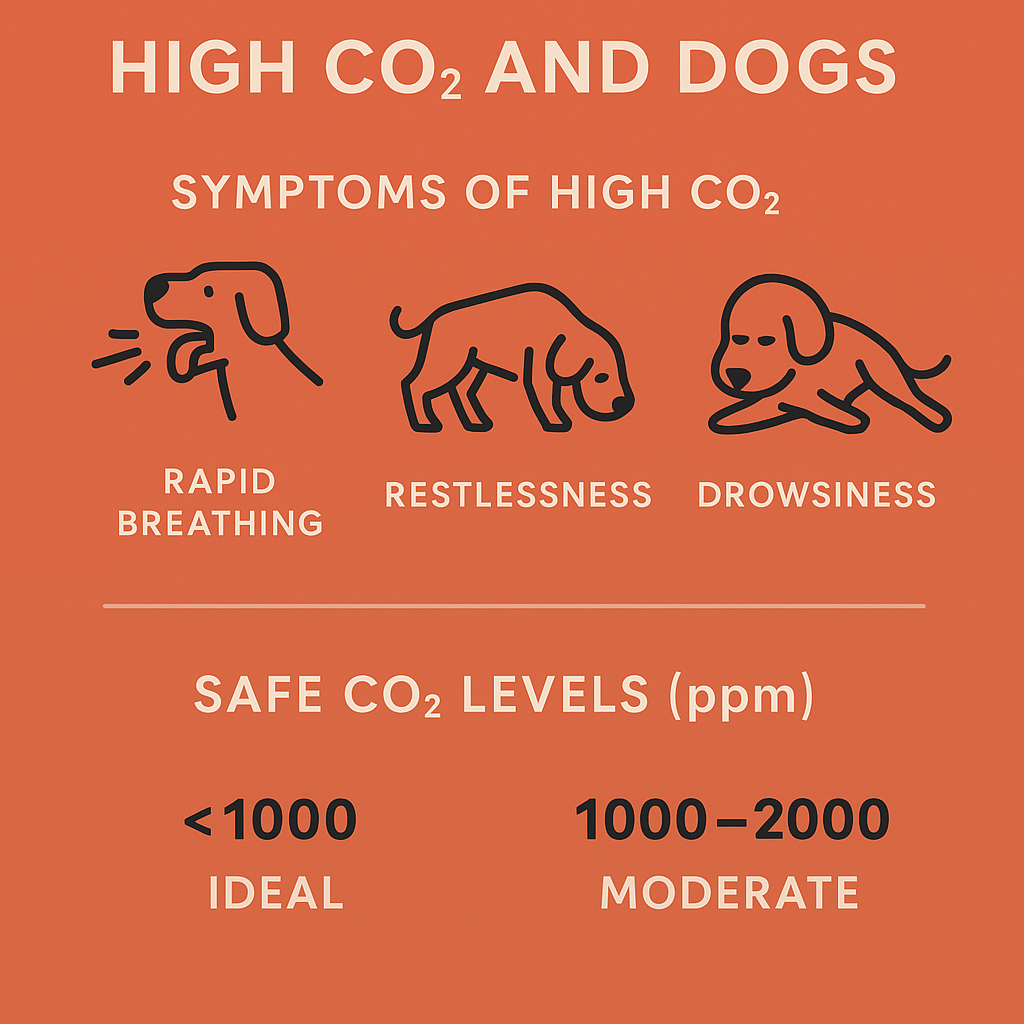
  • 🚐 How to Use the Heater in Your RV During Winter

    Stay Warm, Safe, and Clear-Headed

    The first winter I spent time in an RV, my goal was simple:

    Don’t freeze.

    So I did what most people do:

    • sealed everything tightly
    • turned the heater on
    • kept the cabin warm all night

    And technically, it worked.

    I stayed warm.
    I slept through the night.
    Nothing felt “wrong.”

    But in the morning, I often woke up feeling:

    • heavier than expected
    • mentally foggy
    • not fully refreshed

    At first, I blamed winter.
    Then the mattress.
    Then travel fatigue.

    Eventually, I realized something else was quietly shaping the experience:

    👉 Using the heater correctly in winter isn’t just about temperature — it’s about air movement, air exchange, and awareness.

    Once I adjusted how I used the heater, not whether I used it, winter RV life felt very different.


    Why Winter RV Heating Is Tricky

    An RV in winter creates a unique environment:

    • small air volume
    • tight sealing to retain heat
    • long periods with doors and windows closed
    • continuous heater operation
    • people breathing inside for hours

    All of this is normal.

    But it means the cabin can quickly become:

    • warm
    • quiet
    • comfortable
    • and stale

    The challenge is keeping warmth without sacrificing clarity.


    The Common Winter Mistake I Used to Make

    I used to treat the heater as a “set and forget” system.

    Once the temperature felt right, I stopped thinking about the air entirely.

    That’s when problems quietly appeared.

    Not emergencies.
    Not alarms.

    Just:

    • reduced alertness
    • poorer sleep quality
    • sluggish mornings

    The heater wasn’t the problem.

    The lack of intentional airflow was.


    How I Use the Heater Differently Now

    I still use the heater.
    I just use it with intention.

    Here’s what actually works for me.


    🔁 1. Think in Cycles, Not Continuous Sealing

    Instead of sealing the RV all night, I use gentle cycles:

    • warm the space
    • allow brief air exchange
    • reseal and stabilize

    The goal isn’t constant fresh air —
    it’s avoiding long, completely closed loops.

    Even short ventilation breaks make a noticeable difference by morning.


    🌬️ 2. Keep Air Moving, Not Just Warm

    I used to run the heater with minimal fan speed to keep things quiet.

    Now I keep airflow:

    • low but consistent
    • enough to mix the air
    • not just heat one zone

    Moving air prevents:

    • warm pockets
    • stagnant layers
    • heavy, reused air near the sleeping area

    Silence feels cozy — but still air feels heavy.


    🔄 3. Be Careful With Continuous Recirculation

    Recirculation is efficient for heating.

    But efficiency comes with a tradeoff.

    If recirculation runs for hours:

    • air is reused
    • CO₂ accumulates
    • freshness drops quietly

    I still use recirculation —
    just not endlessly.


    🪟 4. Use Small, Strategic Ventilation — Not Big Drafts

    I don’t sleep with everything wide open.

    Instead, I rely on:

    • small vents
    • cracked windows (when conditions allow)
    • brief fresh-air periods before sleep and in the morning

    This avoids cold shock while still refreshing the air.


    🧠 5. Don’t Use “Feeling Warm” as Your Only Signal

    This was the biggest mindset change.

    Warmth tells you:

    “The heater is working.”

    It does not tell you:

    “The air is fresh.”

    In winter, comfort often hides air reuse.

    So I stopped waiting for discomfort and started managing air proactively.


    Safety Note: CO vs CO₂

    It’s important to be clear.

    • Carbon monoxide (CO) is a serious hazard → alarms are essential
    • Carbon dioxide (CO₂) is about air freshness and mental clarity

    Using the heater properly means respecting both, but responding differently.

    CO alarms protect your life.
    Ventilation awareness protects your clarity and sleep quality.

    One doesn’t replace the other.


    Why This Matters More in Winter Than Summer

    In summer:

    • windows open easily
    • airflow feels natural
    • air exchange happens more often

    In winter:

    • everything is sealed by default
    • heat encourages stillness
    • long nights amplify accumulation

    That’s why winter RV air management needs more intention.


    Final Thoughts

    Using the heater in your RV during winter doesn’t have to mean choosing between:

    • warmth
    • safety
    • clear thinking

    You can have all three.

    The key isn’t turning the heater down.
    It’s using it intelligently.

    Once I stopped treating heat as the only variable and started treating air as a resource — like power or water — winter RV life felt calmer, clearer, and more sustainable.

    Because staying warm is important.

    But staying clear-headed is what makes winter RV living truly comfortable.

    View on Amazon

    Amazon is a trademark of Amazon.com, Inc. or its affiliates.
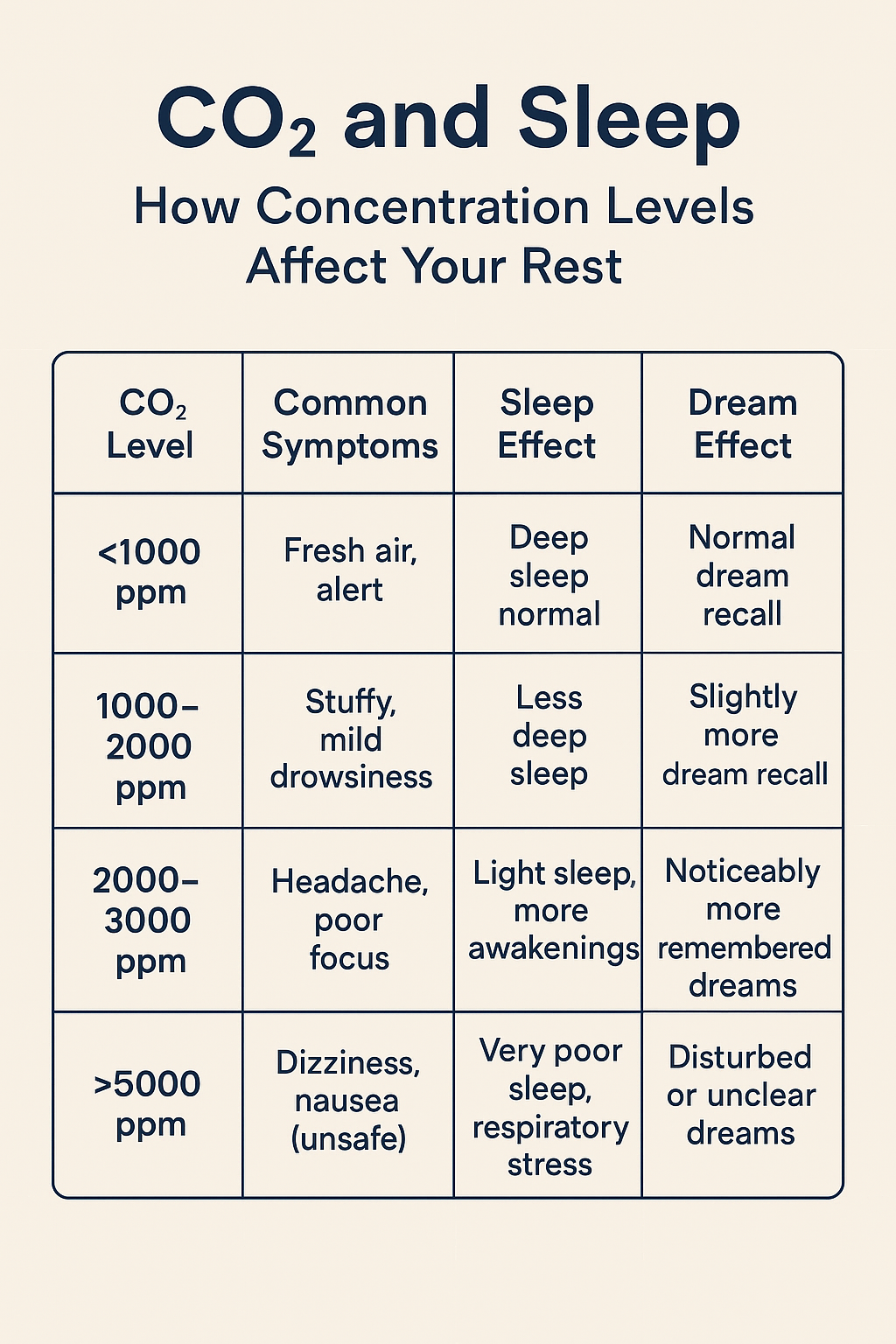
  • 🚗 How to Set Your Car’s Heater Airflow Correctly

    Stay Warm — Without Feeling Drowsy

    For a long time, I thought winter driving drowsiness was just part of the season.

    Cold outside.
    Warm inside.
    Long drives feel heavier.

    So I did what most people do:

    • turned the heater up
    • aimed airflow toward my body
    • sealed the cabin to keep heat in

    I stayed warm — but I also felt less alert than I wanted to be.

    Not sleepy in a dramatic way.
    Just slightly dull.

    It took me a while to realize the problem wasn’t the heater itself.

    👉 It was how I was using the airflow.

    Once I adjusted where the air went and how it moved, warmth and alertness stopped working against each other.


    The Common Mistake: Treating Warmth and Alertness as the Same Goal

    Most heater setups prioritize comfort:

    • maximum warmth
    • minimal drafts
    • stable temperature

    That feels good.

    But alertness depends on something else:

    • air movement
    • air mixing
    • air freshness

    If airflow is optimized only for warmth, the cabin can become:

    • thermally comfortable
    • mentally heavy

    Especially on long drives.


    Why Heater Airflow Matters More Than Temperature

    This was my key realization.

    Temperature answers:

    “Am I cold or warm?”

    Airflow answers:

    “Is the air being refreshed and mixed?”

    You can be perfectly warm and still be breathing reused air.

    And reused air quietly affects clarity.


    How I Set My Heater Airflow Now

    I didn’t invent a complicated system.

    I just stopped letting the heater default do everything.

    Here’s what works for me.


    🔀 1. Split the Airflow — Don’t Aim Everything at One Spot

    I used to direct all warm air:

    • straight at my torso
    • or straight at my face

    That created:

    • warm pockets
    • poor mixing
    • stagnant zones

    Now I split it:

    • some airflow toward the windshield
    • some toward the upper cabin
    • some toward the footwell

    This keeps warm air circulating, not pooling.


    🌬️ 2. Keep the Fan Speed Moderate, Not Minimal

    Low fan speed feels quiet and cozy.

    But it also:

    • reduces air exchange
    • slows mixing
    • lets CO₂ accumulate more easily

    I now keep the fan slightly higher than “barely on.”

    Not noisy.
    Just active.

    Moving air matters more than people think.


    🔄 3. Use Recirculation Strategically — Not Continuously

    Recirculation is great for:

    • quick heating
    • blocking cold drafts

    But it’s not meant to run indefinitely.

    On long drives, I:

    • use recirculation to warm up
    • then switch back to fresh air
    • repeat as needed

    This prevents long closed-loop cycles without freezing the cabin.


    🪟 4. Let Air Touch the Windshield

    This seems unrelated — but it isn’t.

    Directing some warm air at the windshield:

    • improves defogging
    • encourages upward airflow
    • helps pull stale air out of the breathing zone

    It improves both visibility and air movement.


    🧠 5. Don’t Wait Until You Feel Drowsy

    This was the biggest habit change for me.

    CO₂ and airflow issues don’t announce themselves.

    So I stopped waiting to “feel tired.”

    Instead, I adjust airflow:

    • based on time
    • based on drive length
    • based on cabin sealing

    Prevention works better than reaction.


    Why This Works

    This setup does a few things at once:

    • keeps heat evenly distributed
    • prevents warm, stagnant air pockets
    • improves air mixing
    • reduces silent CO₂ buildup

    I stay warm —
    but the cabin doesn’t feel sleepy.

    That balance is the goal.


    What I No Longer Do

    I no longer:

    • blast heat at my face
    • run recirculation for hours
    • rely on temperature alone as a comfort signal
    • assume “fresh-air mode” guarantees freshness

    Airflow matters as much as heat.


    A Simple Way to Think About Heater Setup

    Here’s the mental model I use now:

    • Temperature = comfort
    • Airflow = clarity

    Winter driving needs both.

    If you optimize only for warmth, clarity suffers.
    If you manage airflow intentionally, warmth doesn’t have to.


    Final Thoughts

    Feeling drowsy with the heater on isn’t a personal flaw —
    and it isn’t a sign the heater is “too strong.”

    It’s usually a sign that:

    • air is moving too little
    • mixing is insufficient
    • freshness is lagging behind comfort

    Once I stopped chasing maximum warmth and started managing airflow, winter driving felt different.

    Not colder.
    Just clearer.

    Because staying warm shouldn’t mean feeling heavy —
    and with the right airflow, it doesn’t have to.

    View on Amazon

    Amazon is a trademark of Amazon.com, Inc. or its affiliates.
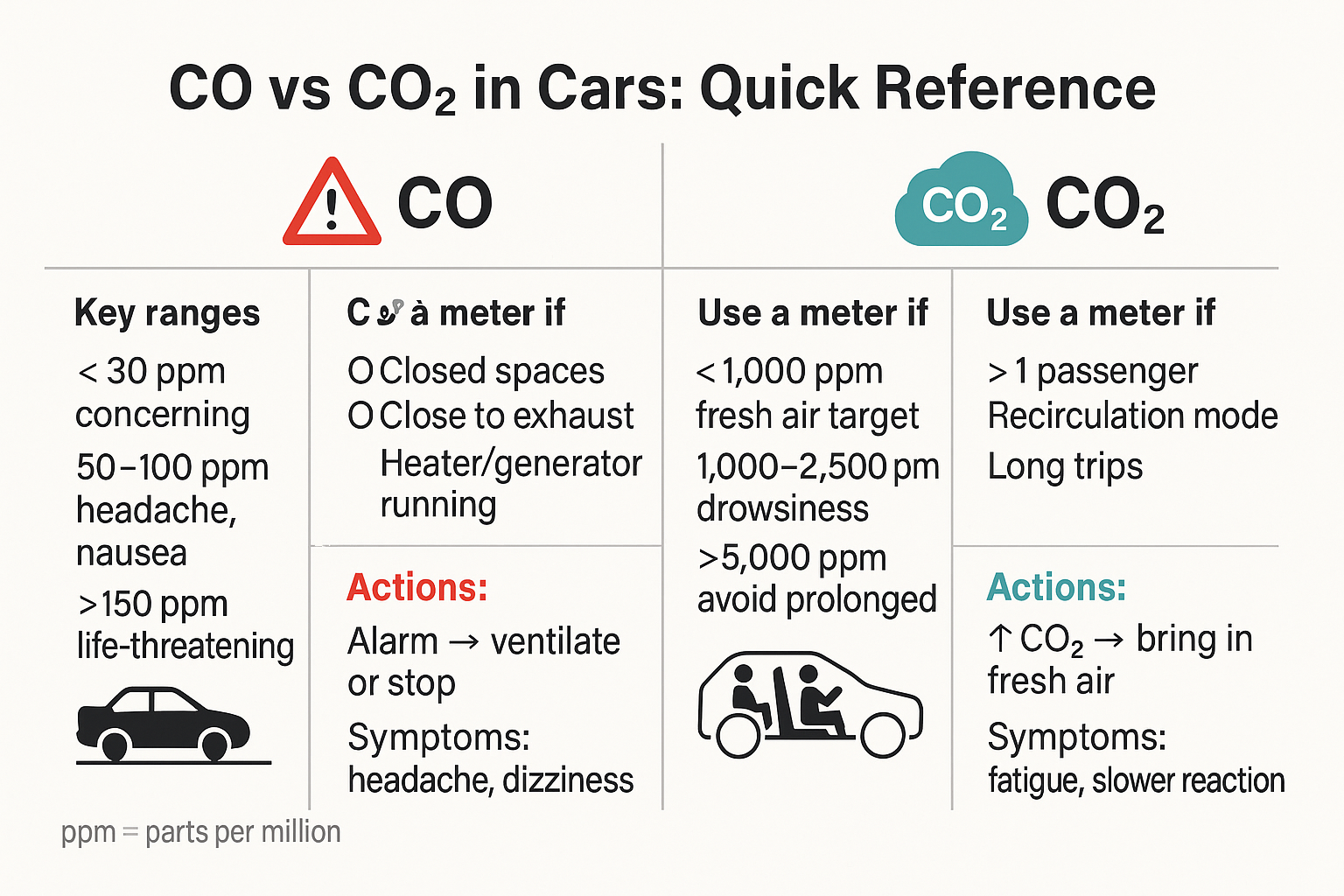
  • 🔥 Why You Still Feel Drowsy With the Heater On — Even in Fresh-Air Mode

    I Used to Blame Comfort — Until I Looked at the Air Itself

    I’ll be honest:

    For years, I assumed that if I switched to fresh-air mode while running the heater, that must be the best possible environment.

    Windows cracked open a bit.
    Warm air circulating.
    Fresh air coming in.

    “It’s perfect,” I’d think.

    Yet on long winter drives or cold RV nights, I still found myself:

    • feeling heavier
    • mentally dull
    • slightly “off” behind the wheel
    • more tired than expected

    It didn’t feel like sleepiness.
    It didn’t feel like discomfort.
    It just… crept in.

    I assumed it was the heater.
    Or the late night.
    Or maybe it was just me.

    But once I started paying attention to CO₂ and air exchange, everything clicked.

    Here’s what I discovered.


    Fresh Air + Heater Is Not the Same as Effective Ventilation

    At first, “fresh-air mode” seemed like a guarantee:

    “I’m bringing outside air in — I should stay sharp.”

    But in vehicles, especially when heating:

    • the heater warms available air
    • outside air may be cold, dense, and slow to mix
    • the HVAC doesn’t always bring in as much fresh air as it feels like

    So even though you’re technically in fresh-air mode, the effective air exchange rate can still be low — especially compared to airflow during cooling.

    In other words:

    Fresh air isn’t always flowing in fast enough to dilute CO₂ buildup — even if the system says it’s in fresh-air mode.


    Heat Changes Air Dynamics Inside a Cabin

    This was one of the big “aha” moments for me.

    Warm air behaves differently than cool air:

    🌡️ 1. Warm air rises

    In a small volume like a car or RV, layering effects can happen:

    • warm air at the top
    • cooler air at breathing level

    The HVAC doesn’t always mix these layers evenly.

    So even with fresh air coming in, the air around your face and in your breathing zone isn’t really being refreshed as effectively as you think.


    🔁 2. The Heater Reuses Air Too

    Heaters often recirculate warm air for efficiency.

    And if fresh-air mode isn’t giving you a strong intake flow — which is common in winter to preserve heat — then the cabin becomes a semi-closed hot loop, where:

    • temp feels good
    • airflow feels stable
    • CO₂ quietly climbs

    You feel warm and comfortable
    but your cognitive energy is quietly declining.


    CO₂ Doesn’t Announce Itself

    This is the part that surprised me the most.

    CO₂ has no:

    • smell
    • irritation
    • nasal warning
    • sensory signal

    You can feel warm, cozy, “not uncomfortable” —
    and still be breathing stale, reused air.

    That’s why:

    • you don’t immediately know it’s rising
    • you often attribute sleepiness to temperature
    • you blame comfort, not air chemistry

    CO₂ doesn’t shout.
    It whispers.

    And driving or camping in cold weather gives it a quiet stage.


    Why Warm Conditions Feel Sleepy Even When They Aren’t

    Comfort and alertness are separate things.

    When the temperature is:

    • warm
    • stable
    • cozy

    your body interprets that as rest rather than attention.

    Combine that with subtle CO₂ rise, and you get:

    • slower reactions
    • heavier thoughts
    • reduced mental sharpness
    • a “low-energy” feeling

    But not a dramatic one.

    It feels like “mellow” — not “danger.”

    That’s exactly what makes it sneaky.


    A Better Way to Think About It

    Here’s the mental model that finally made sense to me:

    Heater + fresh-air settings doesn’t equal actual air renewal.

    The car can be in fresh-air mode and still:

    • have low air exchange
    • run warm air in a semi-closed loop
    • recycle CO₂ quietly

    So instead of equating mode labels with actual airflow, I started thinking in terms of ventilation effectiveness.


    What I Do Now When Heating

    I don’t turn off the heater.
    I just manage ventilation more intentionally.

    Here’s my practical checklist:

    ✔ Ventilate Early

    Even if it feels cold at first, open airflow briefly before settling in.

    ✔ Mix Air Periodically

    Switch between fresh air and recirculation in short intervals.

    ✔ Don’t Rely on Sensation

    Warmth feels good —
    but it doesn’t tell you about CO₂.

    ✔ Use Air Exchange Routines

    A couple of minutes of intentional ventilation every so often prevents gradual buildup much better than random adjustments later.


    Final Thoughts

    Feeling drowsy with the heater on — even in fresh-air mode — isn’t a flaw in your body or your vehicle.

    It’s a quirk of how warm air behaves and how ventilation actually works.

    Heat feels good.
    Comfort feels inviting.
    CO₂ feels like nothing.

    And that’s exactly the paradox:

    You feel comfortable,
    but the air can still be stale.

    Once I understood that comfort and alertness are separate systems, I stopped blaming warmth for my mental slide.

    Instead, I started managing air — not just temperature.

    Because on a long drive or cold night,
    clarity matters as much as comfort — and both come from intentional air movement, not assumptions.

    View on Amazon

    Amazon is a trademark of Amazon.com, Inc. or its affiliates.
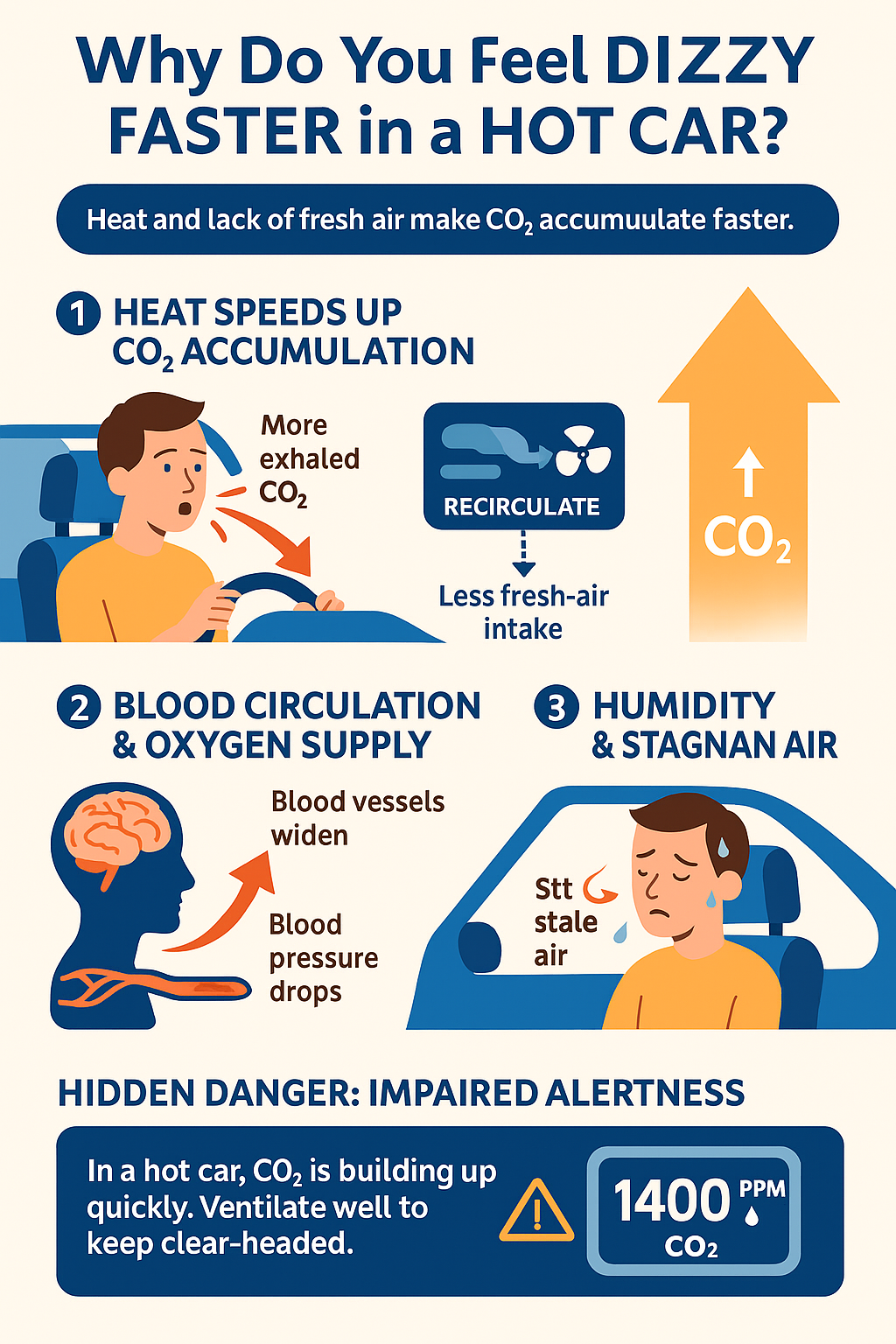
  • 🍳 Cooking Western Meals in Your RV With an Induction Stove — Does It Produce CO₂?

    I Switched to Induction and Assumed CO₂ Was No Longer an Issue. I Was Only Half Right.

    When I started cooking Western-style meals in my RV — pasta, steak, eggs, sautéed vegetables — I deliberately chose an induction stove.

    No flame.
    No gas.
    No combustion.

    So naturally, I thought:

    “Great — no CO₂ problem anymore.”

    That assumption felt logical.

    But after spending more time cooking, eating, and sleeping in the same small space, I realized the truth was a bit more nuanced.

    👉 Induction cooking does not produce CO₂ directly — but CO₂ can still rise in your RV while you’re cooking.

    Understanding why made a big difference in how I manage air while camping.


    First, the Clear Answer: Induction Itself Does NOT Produce CO₂

    Let’s get this part straight.

    An induction stove:

    • uses electricity
    • creates a magnetic field
    • heats cookware directly
    • involves no combustion

    That means:

    • ❌ no carbon burning
    • ❌ no exhaust gases
    • ❌ no direct CO₂ generation

    So compared to propane or gas stoves, induction is absolutely cleaner from a combustion standpoint.

    If your only question is:

    “Does the induction stove itself emit CO₂?”

    The answer is no.


    So Why Can CO₂ Still Rise While Cooking?

    This is where my understanding changed.

    Even without combustion, cooking in an RV changes the environment in ways that encourage CO₂ accumulation.

    Here’s how.


    1️⃣ Human Breathing Is Still the Primary CO₂ Source

    While cooking:

    • you’re standing
    • moving
    • talking
    • breathing a bit faster

    In a small RV, that alone matters.

    One person breathing continuously in a sealed space adds CO₂ every second — regardless of the stove type.

    Induction removes one source of CO₂, not all sources.


    2️⃣ Cooking Encourages Sealing the RV

    This is subtle but important.

    When cooking, especially Western meals:

    • heat builds up
    • smells stay inside
    • windows often stay closed
    • ventilation is reduced to keep temperature stable

    So even though CO₂ input is modest, air exchange often drops.

    That imbalance is enough to let levels rise over time.


    3️⃣ Cooking Is Usually Followed by Staying Inside

    After cooking:

    • you eat
    • you relax
    • you clean up

    Often with:

    • doors closed
    • windows closed
    • A/C or heater running

    CO₂ doesn’t spike instantly — it accumulates across the entire cooking + eating window.

    By the time you’re done, the air has been reused for quite a while.


    Why This Feels So Different From Gas Cooking

    When I used gas or propane:

    • there was flame
    • heat was obvious
    • ventilation felt necessary

    With induction:

    • everything feels “clean”
    • there’s no smell from combustion
    • no visible exhaust

    That cleanliness can create a false sense of air security.

    The air feels better —
    but freshness still depends on ventilation.


    CO₂ vs Other Cooking-Related Air Factors

    It’s important to separate issues:

    • CO₂ → mainly from breathing
    • VOCs / odors → food, oils, interior materials
    • Particles → frying, searing

    Induction helps with:

    • eliminating combustion CO₂
    • reducing byproducts

    But it doesn’t change the physics of a sealed space.

    Air still needs to be replaced.


    What I Do Differently Now When Cooking With Induction

    I didn’t abandon induction — I like it.

    I just adjusted my expectations.

    Now, when cooking in the RV:

    • I ventilate lightly before or during cooking
    • I don’t wait for the air to feel “bad”
    • I keep airflow going a bit after the meal
    • I avoid long, sealed cooking-and-eating sessions

    Small steps.
    No extremes.


    Why This Matters for RV Life

    Induction stoves are a great upgrade:

    • safer
    • cleaner
    • more controllable

    But they don’t eliminate the need to think about air.

    In RV life:

    • space is limited
    • time inside is long
    • air reuse is the default

    So even “clean” cooking benefits from intentional air management.


    Final Thoughts

    Cooking Western meals with an induction stove in your RV does not produce CO₂ the way gas cooking does.

    That’s a real advantage.

    But CO₂ levels can still rise — not because the stove is dirty, but because people and sealed spaces don’t stop producing CO₂ just because the flame is gone.

    Once I understood that, I stopped asking:

    “Does this appliance emit CO₂?”

    And started asking:

    “Has the air been refreshed recently?”

    That single shift made cooking feel lighter, clearer, and more comfortable —
    without giving up the convenience of induction.

    View on Amazon

    Amazon is a trademark of Amazon.com, Inc. or its affiliates.
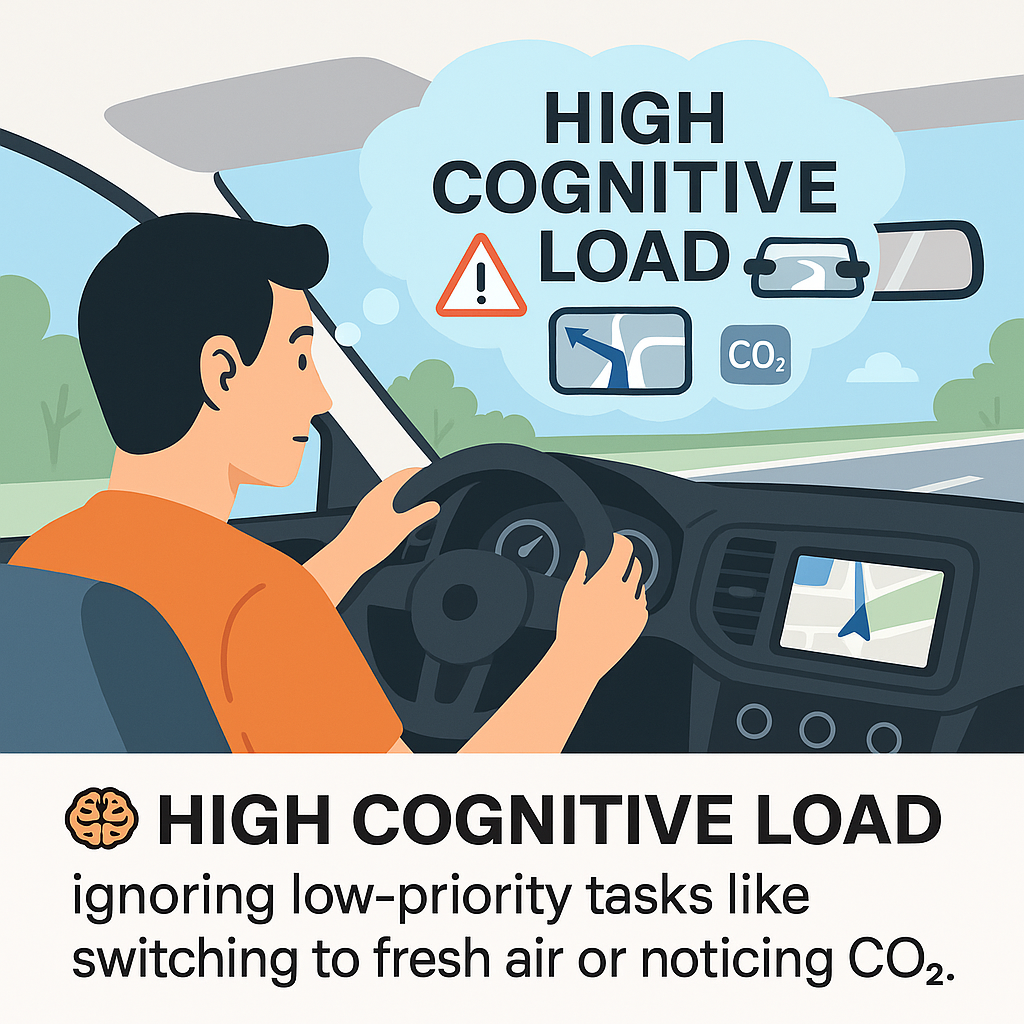
  • 🌞 Why You Feel Sleepy Driving at Noon — It’s Not Just Lunch

    I Used to Blame Food. Then I Looked at Everything Else.

    For years, I blamed lunch.

    That familiar heavy feeling around noon or early afternoon?
    Easy explanation.

    “Must be the food.”
    “Too many carbs.”
    “I should eat lighter.”

    Sometimes that’s true.

    But over time, I noticed something odd.

    On some days:

    • I ate lightly
    • skipped sugar
    • felt fine physically

    …and still felt unexpectedly sleepy while driving around noon.

    That’s when I realized lunch wasn’t the whole story.

    👉 Midday drowsiness while driving isn’t caused by one thing — it’s the overlap of biology, environment, and air quality.

    And CO₂ plays a quieter role than most people realize.


    The Midday Dip Is Real — and It’s Biological

    First, let’s clear something up.

    Humans naturally experience a circadian dip in alertness in the early afternoon.

    Even without lunch:

    • body temperature shifts
    • alertness slightly drops
    • the nervous system eases off peak intensity

    This happens to almost everyone.

    So feeling a bit less sharp at noon is normal.

    But that alone doesn’t explain why driving can suddenly feel harder.


    Why Driving Makes the Dip Feel Stronger

    Driving isn’t passive.

    It requires:

    • sustained attention
    • fast reaction
    • visual processing
    • decision-making

    During the midday dip, you’re already operating with slightly less margin.

    Anything that further reduces clarity suddenly matters more.

    That’s where environment comes in.


    The Overlooked Factor: CO₂ in the Car

    Around noon, many drivers:

    • close windows to keep cool
    • rely heavily on A/C
    • use recirculation mode
    • drive for long, uninterrupted stretches

    The cabin becomes stable, comfortable — and reused.

    CO₂ begins to rise quietly.

    Not enough to feel “bad.”
    Not enough to notice.

    But enough to compound the natural dip in alertness.


    Why You Don’t Notice CO₂ at Midday

    CO₂ is especially sneaky at noon because:

    • bright daylight masks fatigue
    • caffeine may already be in your system
    • the body expects a slight slowdown anyway

    So when clarity drops, your brain explains it away:

    “It’s lunch.”
    “It’s the sun.”
    “It’s just a slow hour.”

    CO₂ blends into that narrative.

    You don’t feel “wrong.”
    You just feel… heavier.


    Why Opening the Window Sometimes Helps Instantly

    Have you ever cracked a window at noon and felt:

    • slightly more alert
    • more awake
    • mentally clearer

    That’s not just imagination.

    Fresh air:

    • lowers CO₂
    • increases air exchange
    • stimulates the nervous system gently

    It doesn’t fight biology —
    it restores margin.


    Why Coffee Doesn’t Always Fix It

    Caffeine helps with:

    • perceived energy
    • alertness signals

    But it doesn’t change the air.

    So you can be:

    • stimulated
    • awake
    • caffeinated

    …and still operating in a slightly stale environment.

    That’s why coffee sometimes helps — and sometimes doesn’t.


    The Pattern I Finally Noticed

    Here’s what made everything click for me:

    Midday drowsiness while driving was strongest when:

    • the drive was long
    • windows stayed closed
    • recirculation ran continuously
    • traffic required steady attention

    It wasn’t about being tired.

    It was about losing clarity gradually.


    What I Do Differently Now

    I don’t fight noon fatigue aggressively.

    I manage it intelligently.

    Around midday, especially on longer drives:

    • I refresh the air earlier
    • I avoid long recirculation cycles
    • I ventilate before I feel dull
    • I treat noon as a low-margin window

    Small changes, timed correctly, make a big difference.


    A Better Way to Think About Noon Driving

    I stopped asking:

    “Why am I sleepy?”

    And started asking:

    “How much margin do I have right now?”

    At noon:

    • biological margin is lower
    • environmental margin matters more

    Air quality becomes part of driving strategy — not an afterthought.


    Final Thoughts

    Lunch can contribute to midday sleepiness.

    But it’s rarely the only cause.

    Driving at noon sits at the intersection of:

    • circadian rhythm
    • sustained attention
    • thermal comfort
    • air reuse

    CO₂ doesn’t cause the dip.

    It deepens it quietly.

    Once I understood that, noon driving stopped feeling mysterious.

    I didn’t need more caffeine.
    I didn’t need to skip meals.

    I just needed to stop ignoring the air.

    Because at noon,
    clarity isn’t lost suddenly — it fades quietly.

    And quiet problems are best solved early.

    View on Amazon

    Amazon is a trademark of Amazon.com, Inc. or its affiliates.
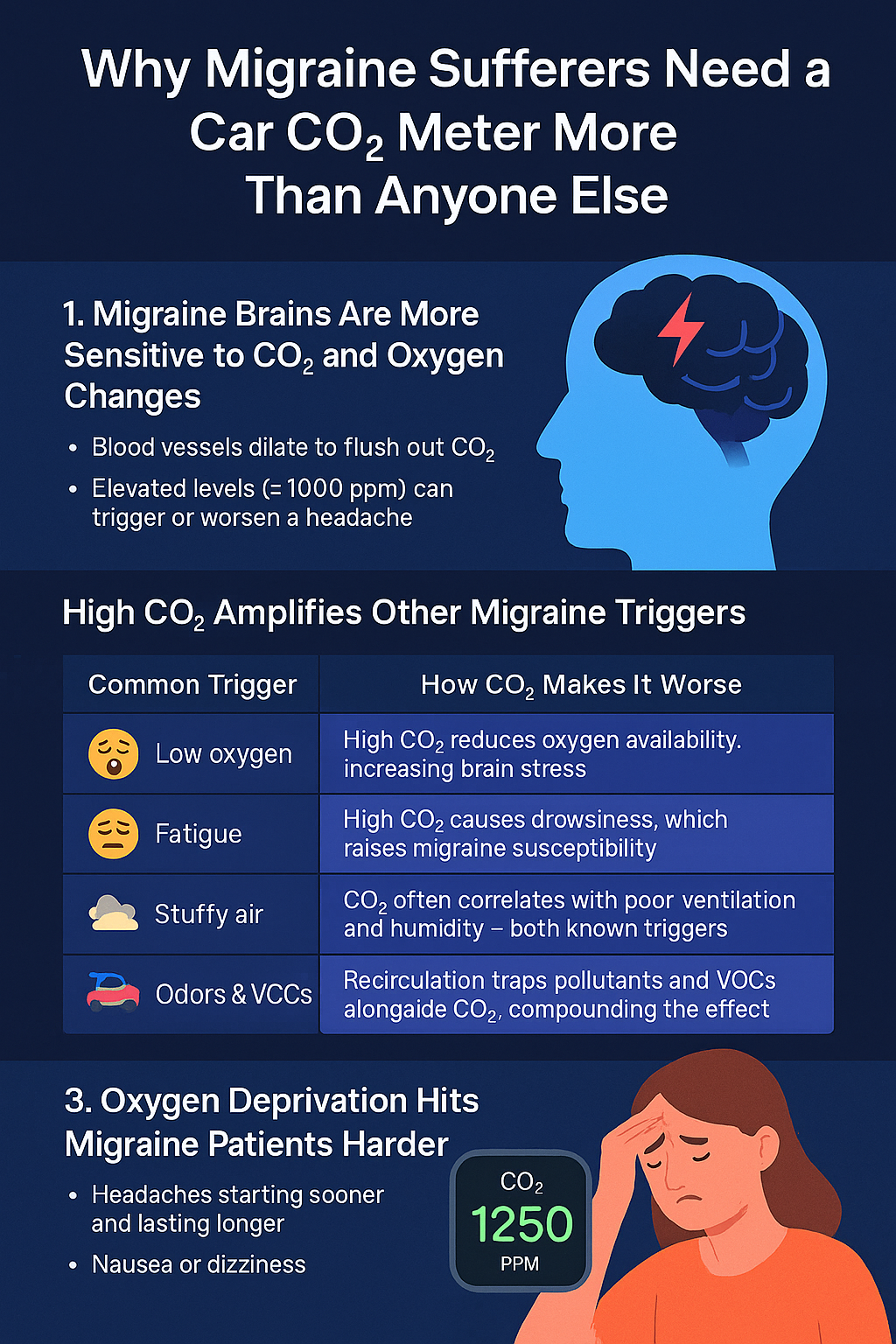
  • 🚗 EVO-CO2V: The Smart Way to Prevent Driver Drowsiness

    I Didn’t Feel Sleepy — I Just Felt Less Sharp

    For a long time, I associated driver drowsiness with obvious signs.

    Yawning.
    Heavy eyelids.
    Struggling to keep my eyes open.

    So if I wasn’t sleepy, I assumed I was fine.

    But over time, I started noticing something subtler during longer drives.

    I wasn’t falling asleep.
    I wasn’t uncomfortable.
    I wasn’t fighting fatigue.

    I was just… less sharp than I should have been.

    That’s when I realized something important:

    👉 Driver drowsiness doesn’t always begin with sleepiness.
    It often begins with reduced mental clarity.

    And that’s exactly where EVO-CO2V fits in.


    Why Traditional Signs of Drowsiness Come Too Late

    Most people wait for symptoms like:

    • yawning
    • eye strain
    • heavy fatigue

    But by the time those appear, alertness has already dropped significantly.

    CO₂ doesn’t make you suddenly tired.

    It does something quieter:

    • it slightly increases mental load
    • subtly reduces focus
    • lowers cognitive margin

    You’re still awake.
    Still driving.
    Still “fine.”

    Just operating with less buffer.


    The Invisible Factor Most Drivers Miss: CO₂

    Inside a car, especially on long drives:

    • windows are closed
    • climate control runs continuously
    • recirculation mode is common
    • breathing steadily adds CO₂

    None of this feels wrong.

    But over time, CO₂ rises — quietly.

    And because CO₂:

    • has no smell
    • causes no irritation
    • doesn’t trigger alarms

    drivers don’t notice when it starts affecting performance.


    Why “Feeling Fine” Isn’t a Reliable Indicator

    This was the biggest mental shift for me.

    Comfort tells you about:

    • temperature
    • airflow
    • noise

    It tells you almost nothing about:

    • air freshness
    • ventilation sufficiency
    • CO₂ accumulation

    So relying on sensation alone means reacting late — if at all.

    That’s not a character flaw.

    That’s how human perception works.


    What EVO-CO2V Changes

    EVO-CO2V doesn’t try to scare you.
    It doesn’t claim medical intervention.
    It doesn’t replace rest.

    What it does is much simpler — and more practical.

    👉 It makes an invisible performance factor visible.

    Instead of guessing, you know:

    • when the air has been reused too long
    • when ventilation has been insufficient
    • when it’s time to refresh the cabin

    That awareness comes before drowsiness appears.


    Why This Is a Smarter Way to Prevent Drowsiness

    Most drowsiness strategies focus on symptoms:

    • coffee
    • music
    • snacks
    • opening windows reactively

    Those help — temporarily.

    EVO-CO2V works earlier in the chain.

    It helps you manage:

    • air freshness
    • ventilation timing
    • cognitive margin

    So instead of fighting fatigue,
    you reduce one of the conditions that quietly contributes to it.


    How I Actually Use EVO-CO2V While Driving

    I don’t stare at the display.
    I don’t chase perfect numbers.

    I just let it do one thing:

    tell me when the air needs attention — before I do.

    When it alerts:

    • I switch to fresh-air mode
    • I ventilate briefly
    • I reset the cabin

    That’s it.

    No drama.
    No distraction.
    Just a small correction at the right time.


    Why This Matters Most on Long and Demanding Drives

    CO₂ awareness matters most when:

    • drives are long
    • traffic is heavy
    • it’s late at night
    • weather is poor
    • attention must stay high

    That’s when reduced clarity matters more than outright sleepiness.

    EVO-CO2V helps preserve that clarity.


    What EVO-CO2V Is — and Isn’t

    It’s important to be clear.

    EVO-CO2V is:

    • a preventive awareness tool
    • a ventilation guide
    • a performance margin protector

    It is not:

    • a medical device
    • a fatigue cure
    • a replacement for rest

    It works by helping you manage the environment — not override biology.


    Final Thoughts

    Driver drowsiness doesn’t always announce itself.

    Often, it starts as:

    • slower reactions
    • reduced sharpness
    • quieter fatigue

    CO₂ doesn’t cause that dramatically.
    It contributes quietly.

    EVO-CO2V doesn’t wait for you to feel tired.

    It helps you act before clarity slips, when small adjustments still make a big difference.

    For me, that’s what makes it smart.

    Not louder.
    Not scarier.

    Just earlier — and calmer.

    View on Amazon

    Amazon is a trademark of Amazon.com, Inc. or its affiliates.
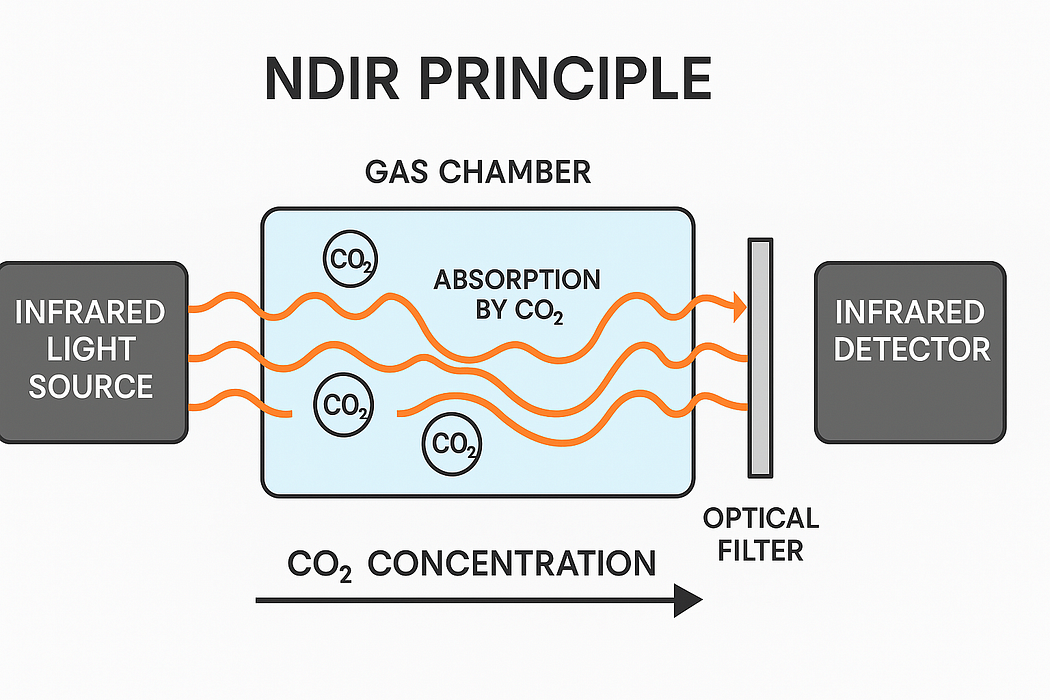
  • 🚗 How to Keep CO₂ Levels Safe During Long Trips

    What I Changed After Realizing “Feeling Fine” Wasn’t the Same as “Fresh Air”

    On short drives, I never thought about CO₂.

    You get in the car.
    You drive.
    You get out.

    Nothing has time to build up.

    But long trips are different.

    Hours on the road.
    Windows closed.
    Climate control running nonstop.
    Sometimes multiple people in the car.

    That’s when I started noticing something subtle — not dramatic, just persistent.

    I’d arrive feeling:

    • mentally dull
    • slightly tired for no clear reason
    • less sharp than expected

    At first, I blamed the drive itself.

    Eventually, I realized something else was happening quietly in the background:

    👉 CO₂ was accumulating simply because the trip was long.


    Why Long Trips Are a Perfect Setup for CO₂ Buildup

    Long drives combine several factors that don’t matter much on short ones:

    • extended time in a sealed cabin
    • consistent breathing from occupants
    • frequent use of recirculation mode
    • stable temperature (which discourages ventilation)

    Nothing is “wrong.”

    The system is just doing what it does best —
    keeping conditions steady.

    And steady conditions allow CO₂ to climb gradually.


    Why You Don’t Notice It While Driving

    This is what makes long-trip CO₂ buildup easy to miss.

    Driving provides constant stimulation:

    • visual focus
    • motor coordination
    • decision-making

    CO₂ doesn’t interrupt any of that.

    It doesn’t:

    • smell
    • cause irritation
    • trigger alarms

    So the drive feels normal — until you stop and realize how drained you are.

    That’s why many people only notice the effect after the trip ends.


    The Mistake I Used to Make

    I used to think:

    “If the air feels comfortable, it must be fine.”

    But comfort is about:

    • temperature
    • airflow
    • noise

    Freshness is about:

    • air replacement
    • ventilation
    • CO₂ dilution

    Those are not the same thing.

    Once I separated those concepts, managing long trips became much easier.


    How I Manage CO₂ on Long Trips Now

    I don’t obsess.
    I don’t micromanage every minute.

    I just follow a few simple principles.


    🌬️ 1. Treat Recirculation as Temporary

    Recirculation is useful:

    • faster cooling
    • blocking outside odors
    • maintaining temperature

    But on long trips, I no longer treat it as a default.

    If it’s on, I assume:

    “This is temporary.”

    That mindset alone prevents hours-long closed-loop driving.


    🔄 2. Reset the Air Periodically

    Instead of waiting until I feel tired, I:

    • switch to fresh-air mode periodically
    • ventilate during low-pollution stretches
    • refresh the cabin before fatigue sets in

    Think of it as an air “reset,” not a reaction.


    🕒 3. Use Time, Not Sensation, as the Trigger

    CO₂ doesn’t tell you when it’s rising.

    So I stopped using feeling as my indicator.

    Instead, I pay attention to:

    • how long the air has been reused
    • how long recirculation has been active

    Time is a more reliable signal than comfort.


    🚦 4. Ventilate During Natural Breaks

    Stops are perfect opportunities to refresh the cabin:

    • rest areas
    • fuel stops
    • food breaks

    I open the system briefly before getting back on the road.

    That way, the next driving segment starts with fresh air.


    🧠 5. Be Extra Mindful During High-Demand Driving

    CO₂ matters most when mental clarity matters most.

    I’m especially careful about ventilation during:

    • night driving
    • heavy traffic
    • bad weather
    • long final stretches

    That’s when small reductions in alertness matter more.


    What I Stopped Worrying About

    I stopped worrying about:

    • hitting a specific number
    • perfect air quality
    • constant ventilation

    Long trips don’t require perfection.

    They require avoiding long, sealed cycles.

    That’s it.


    Why This Matters More Than People Think

    Long-distance driving is already demanding.

    Anything that quietly:

    • reduces clarity
    • increases fatigue
    • slows reaction time

    deserves attention — even if it’s invisible.

    CO₂ isn’t dramatic.
    It doesn’t cause panic.
    It just quietly taxes the system over time.

    That’s why managing it during long trips is about maintaining margin, not avoiding danger.


    Final Thoughts

    On long trips, CO₂ buildup isn’t a failure of the car.

    It’s the natural result of:

    • time
    • sealing
    • comfort systems working well

    Once I accepted that, I stopped expecting the car to “handle it automatically” and started treating air refreshment like fuel, rest, and hydration — a routine part of the journey.

    Because on long drives,
    the goal isn’t just arriving — it’s arriving clear.

    View on Amazon

    Amazon is a trademark of Amazon.com, Inc. or its affiliates.
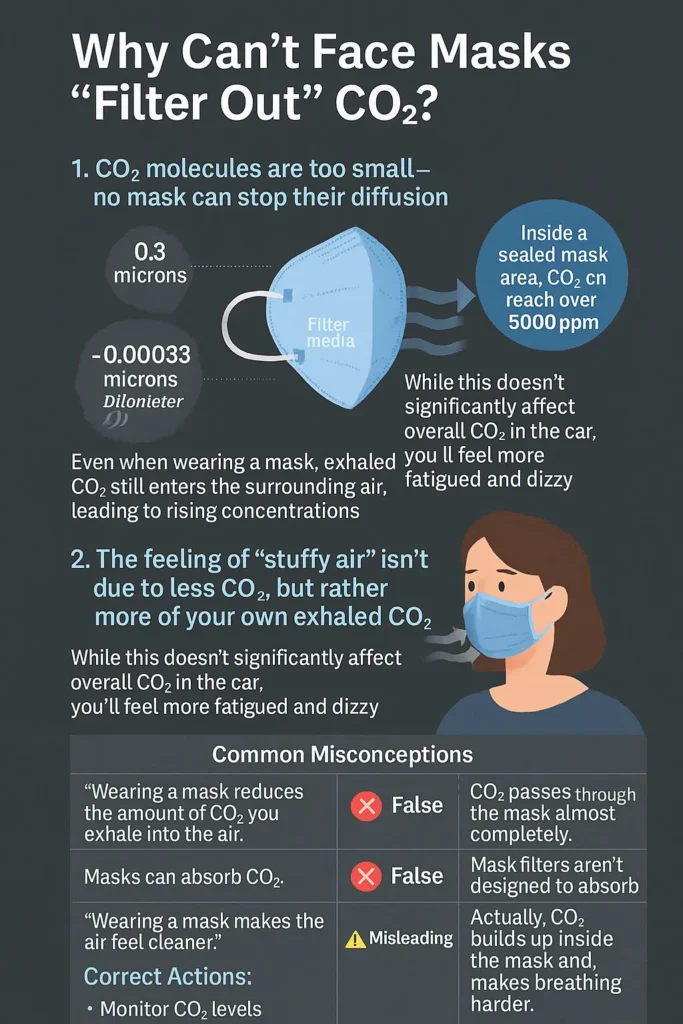
  • ⚠️ CO₂ vs CO: What’s the Difference in RV Safety?

    I Used to Confuse Them — Until I Realized Why That’s Dangerous in a Different Way

    For a long time, I treated CO₂ and CO as almost the same thing.

    They look similar.
    They’re both invisible.
    They’re both associated with combustion.

    So I assumed:

    “If I’m protected from CO, I’m probably fine.”

    That assumption turned out to be wrong — not because CO₂ and CO are equally dangerous, but because they pose completely different kinds of risks, and RV life exposes both in very different ways.

    Once I understood the distinction clearly, RV air safety stopped feeling confusing.


    First: CO₂ and CO Are Not the Same Gas

    This sounds obvious, but it’s where most confusion starts.

    🔹 Carbon Dioxide (CO₂)

    • chemical formula: CO₂
    • naturally present in air
    • produced by breathing
    • also produced by combustion
    • odorless, non-irritating
    • accumulates slowly in enclosed spaces

    CO₂ is about air freshness and ventilation.


    🔹 Carbon Monoxide (CO)

    • chemical formula: CO
    • toxic even at low concentrations
    • produced by incomplete combustion
    • binds to hemoglobin in blood
    • interferes with oxygen delivery
    • can be fatal without warning

    CO is about immediate poisoning risk.

    Same carbon.
    One missing oxygen atom.
    Completely different behavior.


    Why RVs Make This Distinction Especially Important

    RVs combine multiple risk factors:

    • small interior volume
    • combustion appliances (stoves, heaters)
    • generators nearby
    • long periods of sealed occupancy
    • sleeping inside the same space

    That means:

    • CO₂ accumulation is common
    • CO exposure is possible but less frequent

    And because both gases are invisible, people often lump them together.

    That’s where mistakes happen.


    What CO Detectors Are Designed to Do — and Not Do

    Most RVs have CO detectors, and that’s essential.

    But CO detectors:

    • only respond to carbon monoxide (CO)
    • do not detect CO₂
    • are designed for emergency conditions

    So if a CO detector is silent, that means:

    “There is no dangerous CO poisoning happening.”

    It does not mean:

    “The air quality is optimal.”

    This was a critical distinction for me.


    How CO₂ Can Be High While CO Is Zero

    This happens all the time in RVs.

    Common scenarios:

    • sleeping overnight with windows closed
    • multiple people inside
    • recirculation mode on
    • no combustion appliances running

    In these cases:

    • CO₂ can climb steadily
    • CO remains at zero
    • CO alarms stay silent

    Everything appears safe —
    yet the air is becoming increasingly stale and reused.

    This isn’t an emergency.
    But it can affect:

    • sleep quality
    • mental clarity
    • morning fatigue

    Why CO Is Dangerous — But Rare When Systems Work Properly

    CO exposure usually requires:

    • faulty appliances
    • blocked exhaust
    • poor combustion
    • generator fumes entering the cabin

    Modern RV systems and safety standards are designed to prevent this.

    When CO appears, it’s an urgent hazard.

    That’s why CO alarms are loud, aggressive, and unmistakable.

    CO demands immediate action.


    Why CO₂ Is Easier to Ignore — and Easier to Misunderstand

    CO₂ doesn’t:

    • cause pain
    • cause irritation
    • trigger alarms
    • wake you up

    It causes gradual performance degradation, not acute danger.

    So people assume:

    “If it mattered, I’d feel it.”

    That assumption is false.

    CO₂ affects the quality of living, not survival thresholds.

    And because it feels normal, it’s easy to dismiss.


    The Safety Mistake I Almost Made

    At one point, I caught myself thinking:

    “My CO alarm hasn’t gone off all night — the air must be fine.”

    That’s when it clicked:

    👉 CO alarms protect your life.
    CO₂ awareness protects your clarity and recovery.

    They serve different purposes.

    One doesn’t replace the other.


    A Simple Way I Separate Them Now

    Here’s the mental model I use:

    • CO = emergency hazard → alarm-based safety
    • CO₂ = environmental quality → ventilation-based management

    If I ever smell exhaust or hear a CO alarm:
    → immediate action.

    If CO₂ rises slowly overnight:
    → intentional ventilation.

    Different responses.
    Different time scales.
    Different risks.


    Final Thoughts

    CO and CO₂ share letters — not meaning.

    In RV safety:

    • CO is rare but dangerous
    • CO₂ is common but subtle

    Ignoring CO is deadly.
    Ignoring CO₂ is cumulative.

    Once I stopped confusing them, RV air management stopped feeling contradictory.

    I no longer ask:

    “Is this air safe or unsafe?”

    I ask two better questions:

    1. Is there an immediate hazard? (CO)
    2. Is the air being refreshed enough? (CO₂)

    That distinction is what turns RV air safety from anxiety into understanding.

    View on Amazon

    Amazon is a trademark of Amazon.com, Inc. or its affiliates.
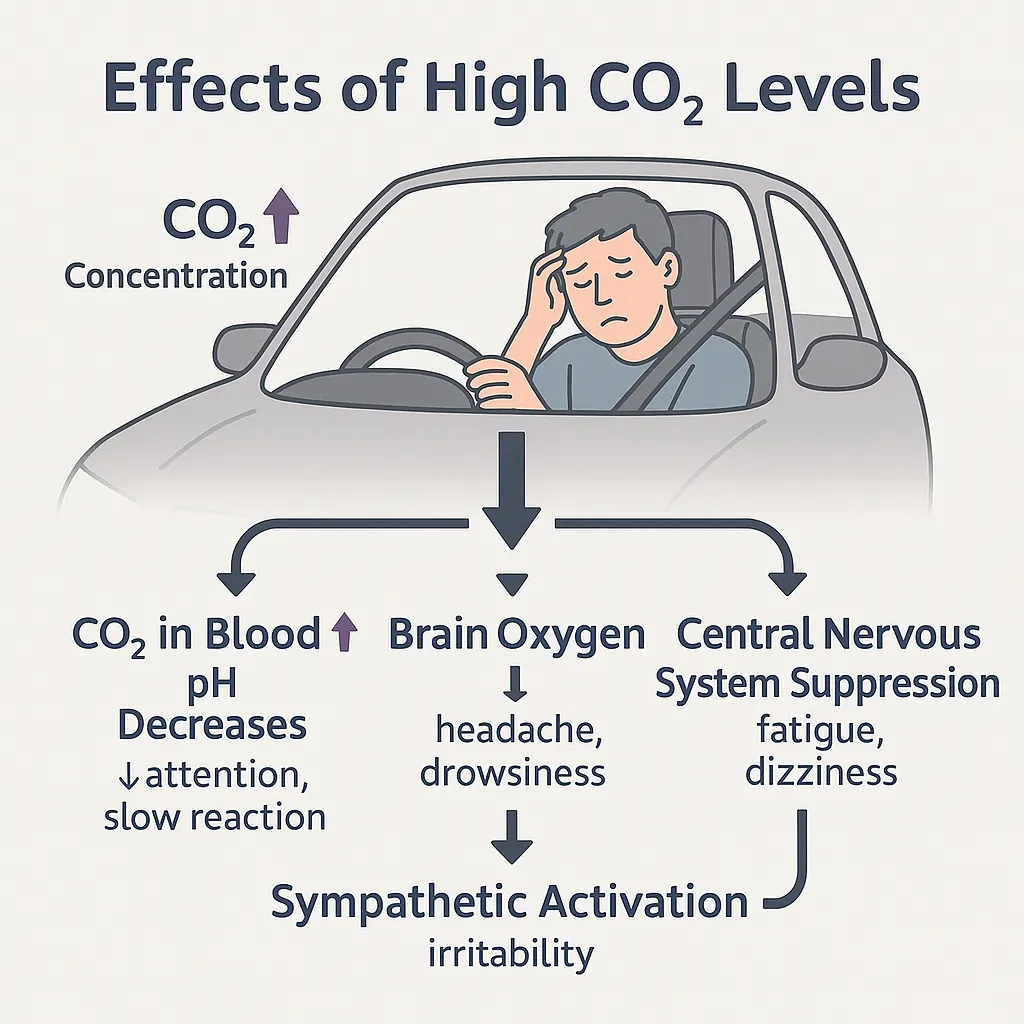
  • 🌬️ The Hidden Danger of Fresh-Air Mode in RVs

    🌬️ The Hidden Danger of Fresh-Air Mode in RVs

    I Used to Think “Fresh Air” Was Always the Safer Choice

    For a long time, I treated fresh-air mode in my RV as a universal solution.

    If the air felt stale, I switched it on.
    If CO₂ was rising, I switched it on.
    If something felt off, I trusted fresh air to fix it.

    It felt obvious.

    But after spending more time living, cooking, and sleeping inside an RV, I realized something uncomfortable:

    👉 Fresh-air mode solves one problem — but can quietly create others if you don’t understand when and how to use it.

    The danger isn’t dramatic.
    It’s subtle, situational, and easy to miss.


    Why “Fresh Air” Feels Like the Right Answer

    Fresh-air mode sounds inherently safe because it promises:

    • air exchange
    • lower CO₂
    • less reuse of cabin air

    And in many cases, it does help.

    But RVs are not houses — and they’re not cars in motion either.

    They sit still for long periods, often in environments where “outside air” isn’t as clean or stable as we assume.


    Fresh Air Doesn’t Mean Clean Air

    This was the first mental shift I had to make.

    In an RV, outside air may contain:

    • vehicle exhaust from nearby campers
    • generator fumes
    • dust or pollen
    • wildfire smoke
    • cold or humid air

    Fresh-air mode doesn’t filter these out by default.

    It simply pulls them inside.

    So while CO₂ may drop, other pollutants can quietly increase.


    Why This Matters More When Parked

    When driving, fresh air is constantly changing.

    But when parked:

    • air around the RV can stagnate
    • exhaust sources may remain nearby
    • wind may be minimal

    Fresh-air mode can repeatedly draw in the same contaminated air.

    This creates a false sense of safety:

    • CO₂ numbers look better
    • air feels cooler or fresher
    • but overall air quality may degrade

    The tradeoff isn’t obvious unless you’re looking for it.


    Temperature and Comfort Side Effects

    Another hidden cost of constant fresh air in RVs is thermal instability.

    Fresh-air mode can:

    • dump cold air into the cabin at night
    • increase heating or cooling demand
    • cause temperature swings
    • disrupt sleep

    So people often respond by:

    • sealing the RV again
    • turning fresh air off abruptly
    • letting CO₂ climb overnight

    This on-off cycle is common — and inefficient.


    Why Fresh Air Can Mask Other Problems

    Here’s a subtle issue I didn’t expect.

    Fresh air can feel good enough to:

    • mask VOC buildup from interior materials
    • hide uneven airflow zones
    • reduce awareness of ventilation timing

    So instead of managing air intentionally, it’s easy to rely on a single mode and assume everything is fine.

    But RV air quality isn’t binary.

    It’s layered.


    The Real Risk: Treating Fresh Air as “Set and Forget”

    The danger isn’t fresh air itself.

    The danger is thinking:

    “If fresh-air mode is on, I don’t need to think about air anymore.”

    In RVs, air quality depends on:

    • duration
    • surroundings
    • weather
    • occupancy
    • activity (sleeping, cooking, idling)

    Fresh air without context can:

    • lower CO₂ but raise pollutants
    • improve numbers but reduce comfort
    • fix one metric while ignoring others

    How I Use Fresh-Air Mode Now

    I didn’t stop using it.

    I just stopped over-trusting it.

    Here’s what changed:

    • I treat fresh air as a tool, not a default
    • I use it periodically, not constantly
    • I consider where the RV is parked
    • I pair fresh air with filtration when possible
    • I avoid long, unattended fresh-air cycles

    Fresh air works best when it’s intentional.


    A Better Mental Model

    This is how I think about it now:

    • Fresh air controls CO₂
    • Filtration controls pollutants
    • Timing controls comfort
    • Context controls safety

    No single mode handles everything.


    Final Thoughts

    Fresh-air mode in an RV isn’t dangerous by nature.

    What’s dangerous is assuming it’s always the right answer — regardless of context.

    In small, sealed, stationary spaces:

    • outside air isn’t always better
    • CO₂ isn’t the only variable
    • comfort can hide imbalance

    Once I understood that, I stopped chasing a single “safe” setting and started managing air like any other RV resource — deliberately, calmly, and with awareness.

    Because in RV life,
    good air isn’t automatic — it’s managed.

    View on Amazon

    Amazon is a trademark of Amazon.com, Inc. or its affiliates.

  • 🚐 Why CO₂ Builds Up So Fast Inside RVs

    🚐 Why CO₂ Builds Up So Fast Inside RVs

    I Used to Think It Was Just “Bad Ventilation” — It’s More Than That

    The first time I noticed CO₂ climbing quickly inside an RV, I assumed something was wrong.

    Maybe:

    • the windows were too tight
    • the vents weren’t working
    • the RV design was flawed

    But the more time I spent inside different RVs, the clearer it became:

    👉 CO₂ builds up fast in RVs not because something is broken — but because RVs are designed to do exactly what they’re good at.

    And what they’re good at is sealing space.


    RVs Are Small Spaces With Big Occupancy Time

    The first factor is simple physics.

    An RV has:

    • far less air volume than a house
    • fewer rooms to dilute air
    • one shared sleeping and living space

    At the same time, RVs are used in a very specific way:

    • people stay inside for long, continuous periods
    • especially at night
    • often with doors and windows closed

    So CO₂ input (from breathing) is steady, while air replacement is minimal.

    That imbalance alone explains a lot.


    CO₂ Input Is Continuous — Ventilation Is Not

    This was the key shift in how I understood the problem.

    Inside an RV:

    • breathing adds CO₂ every second
    • ventilation is usually intermittent or off

    That means CO₂ doesn’t spike suddenly — it ramps up.

    And because CO₂ is a stable gas, it doesn’t:

    • decay
    • settle
    • get absorbed by materials

    It stays in the air until it’s replaced.

    Time, not activity, becomes the main driver.


    RVs Are Designed to Be Airtight (On Purpose)

    Modern RVs are built to:

    • retain heat in cold weather
    • keep cool air in during summer
    • block noise and dust
    • improve energy efficiency

    All of that requires tight sealing.

    That’s great for comfort.

    But it also means:

    • fewer passive air leaks
    • less natural air exchange
    • slower dilution of exhaled CO₂

    What feels like comfort is also containment.


    Sleeping Is the Perfect CO₂ Accumulation Scenario

    At night, everything aligns for CO₂ buildup:

    • long, uninterrupted occupancy
    • minimal movement
    • ventilation often turned off
    • windows fully closed
    • steady breathing for hours

    Nothing dramatic happens.

    But hour by hour, CO₂ climbs.

    And because nothing smells or feels wrong, it goes unnoticed until morning — if at all.


    Cooking and Heating Add to the Problem

    Sleeping isn’t the only contributor.

    Inside RVs, CO₂ can also rise quickly during:

    • cooking (especially propane or gas)
    • heating with combustion-based systems
    • multiple people inside during bad weather

    Each of these adds CO₂ faster than normal breathing alone.

    And they often happen when windows are least likely to be opened.


    Why Fans and Vents Often Don’t Solve It

    I used to assume:

    “If I have a vent fan, I’m fine.”

    But many RV fans are designed for:

    • moisture control
    • odor removal
    • short-term airflow

    Not sustained air exchange.

    If:

    • the fan isn’t running continuously
    • intake air has no clear path
    • the system recirculates internally

    CO₂ still accumulates.

    Air has to be replaced, not just moved.


    Why You Don’t Feel CO₂ Rising

    This is what makes RV CO₂ buildup so deceptive.

    CO₂:

    • has no smell
    • causes no irritation
    • doesn’t wake you up
    • doesn’t trigger alarms

    So even when levels rise significantly, your body doesn’t complain.

    You might wake up tired.
    Or foggy.
    Or slightly off.

    But you won’t feel a clear “air problem.”


    The Mental Model That Finally Made Sense

    Here’s how I think about it now:

    An RV is a sealed container where air is slowly reused unless you deliberately refresh it.

    CO₂ buildup isn’t a sign of failure.

    It’s the default outcome of:

    • small volume
    • tight sealing
    • long occupancy

    Once I accepted that, the problem stopped feeling mysterious.


    What Changed After I Understood This

    I stopped asking:

    “Why is this happening?”

    And started asking:

    “How long has the air been reused?”

    That single question changed how I approach:

    • ventilation timing
    • overnight airflow
    • cooking habits
    • sleeping comfort

    The solution wasn’t extreme.
    It was intentional.


    Final Thoughts

    CO₂ builds up fast inside RVs because:

    • the space is small
    • the air is sealed
    • breathing is constant
    • ventilation is optional
    • CO₂ is stable

    None of this is a defect.

    It’s the physics of enclosed living.

    Once I understood that, I stopped expecting the RV to “handle it automatically” and started treating air exchange as part of the lifestyle — just like power, water, and temperature.

    Because in an RV,
    air is a resource too.

    View on Amazon

    Amazon is a trademark of Amazon.com, Inc. or its affiliates.

  • 💤 How CO₂ Levels Affect Sleep Quality in RVs

    I Slept Through the Night — and Still Woke Up Tired

    The first few times I slept in an RV, I thought everything went well.

    I didn’t wake up repeatedly.
    I wasn’t hot or cold.
    There was no noise, no smell, no obvious discomfort.

    And yet, in the morning, something felt off.

    Not dramatic.
    Not alarming.
    Just… heavier than usual.

    At first, I blamed the mattress.
    Then the unfamiliar space.
    Then travel fatigue.

    It took a while before I realized something else was quietly shaping my sleep:

    👉 CO₂ levels inside the RV were changing all night long — even while I was asleep.


    Why RVs Are a Special Case for Sleep and Air

    An RV at night is very different from a house.

    It has:

    • a much smaller air volume
    • tighter sealing
    • fewer air leaks
    • long, uninterrupted occupancy
    • very limited natural ventilation

    Once the doors are closed and the windows are up, the air inside becomes a closed system.

    And during sleep, that system runs for hours.


    What Actually Happens to CO₂ While You Sleep

    While sleeping, nothing feels active — but biologically, things continue.

    Throughout the night:

    • you keep breathing
    • CO₂ is continuously exhaled
    • the air is rarely exchanged
    • ventilation is often minimal or off

    Because CO₂ is a stable gas, it doesn’t:

    • decay
    • settle
    • disappear

    It accumulates evenly throughout the cabin.

    By morning, levels can be far higher than when you went to bed — without waking you once.


    Why CO₂ Doesn’t Wake You Up

    This was the most surprising part for me.

    CO₂ doesn’t:

    • smell
    • irritate
    • cause pain
    • trigger coughing

    So your body doesn’t treat it like an emergency.

    Instead of waking you up, elevated CO₂ tends to:

    • subtly fragment sleep
    • increase light sleep phases
    • reduce deep restorative sleep
    • make the brain work a bit harder to regulate breathing

    You stay asleep — but the quality of that sleep quietly changes.


    The Difference Between “Sleeping” and “Recovering”

    This distinction changed how I think about sleep in an RV.

    You can:

    • sleep through the night
    • have no memory of waking
    • feel “fine” while asleep

    …and still wake up feeling:

    • less refreshed
    • mentally foggy
    • slightly drained

    CO₂ doesn’t usually cause awakenings.

    It affects how restorative the sleep is.


    Why Morning Fatigue Feels So Confusing

    Because nothing obvious happened overnight, morning fatigue feels mysterious.

    You might think:

    • “Maybe I didn’t sleep long enough.”
    • “Maybe travel tired me out.”
    • “Maybe RV sleep just isn’t great.”

    But often, the environment — not the duration — is the issue.

    High overnight CO₂ doesn’t announce itself.

    It simply reduces recovery efficiency.


    Why Ventilation at Night Feels Risky (But Matters)

    Many RV sleepers avoid ventilation because:

    • it lets in cold air
    • it brings in noise
    • it affects temperature control

    That hesitation makes sense.

    But completely sealing the cabin creates another tradeoff:

    • thermal comfort improves
    • air freshness declines

    The challenge isn’t choosing one extreme.

    It’s finding a balance.


    What I Do Differently Now

    I don’t sleep with everything wide open.

    But I also don’t seal the RV completely.

    Instead, I focus on gentle, intentional air exchange:

    • small, continuous ventilation
    • brief fresh-air periods before sleep
    • avoiding long, fully closed cycles
    • thinking ahead, not reacting in the morning

    Even small changes in air exchange make a noticeable difference by morning.


    Why This Matters More on Long Trips

    One night of slightly reduced sleep quality is easy to ignore.

    But over multiple nights:

    • fatigue compounds
    • mental clarity drops
    • recovery never quite catches up

    In an RV lifestyle, sleep quality isn’t optional.

    It’s foundational.

    CO₂ isn’t the only factor — but it’s one of the easiest to overlook.


    Final Thoughts

    CO₂ doesn’t ruin sleep by waking you up.

    It does something quieter.

    It changes:

    • how deeply you sleep
    • how well your brain recovers
    • how refreshed you feel in the morning

    That’s why RV sleep can feel “fine” at night and disappointing in the morning.

    Once I understood that, I stopped blaming the bed or the space.

    I started managing the air.

    Not aggressively.
    Not anxiously.

    Just intentionally.

    And that made RV sleep feel less like a compromise —
    and more like real rest.

    View on Amazon

    Amazon is a trademark of Amazon.com, Inc. or its affiliates.

  • 🍳 Cooking in Your RV? Your CO₂ May Be Skyrocketing

    I Didn’t Smell Anything Wrong — That’s What Made It Easy to Miss

    The first time I cooked inside an RV, everything felt normal.

    The stove worked.
    The space warmed up quickly.
    The food smelled great.

    Nothing felt “off.”

    So I assumed the air must be fine.

    But when I later looked at the CO₂ levels during cooking, I realized something that completely changed how I think about indoor air in small spaces:

    👉 Cooking inside an RV can cause CO₂ levels to rise rapidly — even when there’s no smell, no smoke, and no obvious discomfort.

    That’s what makes it easy to overlook.


    Why Cooking Is a Perfect CO₂ Generator

    Cooking combines several CO₂ sources at once:

    • Combustion (gas stoves, propane burners)
    • Human breathing (often multiple people)
    • Heat (which encourages sealing windows)
    • Small interior volume

    In an RV, these factors stack fast.

    Unlike a house, there’s:

    • far less air volume
    • far less natural ventilation
    • far more reliance on closed spaces

    So the same activity has a much bigger impact.


    “But I Have a Vent Fan — Isn’t That Enough?”

    This was my first assumption too.

    Vent fans help — but they don’t solve everything.

    Here’s why:

    • many RV fans are sized for moisture, not gas exchange
    • airflow may not reach the stove area effectively
    • fans are often turned off once cooking ends
    • recirculation can continue long after

    CO₂ doesn’t disappear when the flame goes out.

    It stays until it’s replaced.


    Why You Don’t Notice CO₂ While Cooking

    This part surprised me the most.

    Cooking gives you strong sensory signals:

    • heat
    • smell
    • sound
    • activity

    Those signals dominate your attention.

    CO₂, on the other hand:

    • has no smell
    • causes no irritation
    • rises gradually

    So your brain focuses on the food — not the air.

    Even as CO₂ climbs, nothing tells you:

    “Something is changing.”

    That’s why cooking is one of the easiest ways to miss it.


    Gas vs Electric Cooking in an RV

    Not all cooking methods behave the same.

    🔥 Gas / Propane Cooking

    • produces CO₂ directly through combustion
    • raises CO₂ faster
    • adds heat and water vapor

    This is the fastest way to push levels up in a sealed RV.


    ⚡ Electric Cooking

    • doesn’t add combustion CO₂
    • but still involves people, heat, and sealing
    • CO₂ still rises from breathing

    Even without a flame, cooking still contributes — just more slowly.


    Why CO₂ Can Stay High Long After Cooking Ends

    This was another thing I underestimated.

    Once cooking stops:

    • windows are often closed again
    • fans are turned off
    • temperature stabilizes

    But CO₂ doesn’t “settle” or decay.

    Because it’s a stable gas:

    • it stays evenly mixed in the air
    • it only leaves through air exchange

    So the peak often happens after the meal is done.


    What I Do Differently Now

    I don’t panic.
    I don’t cook with doors wide open.

    I just cook intentionally.

    Here’s what changed for me:

    • I ventilate before cooking, not after
    • I keep a fan or vent running through the entire process
    • I continue ventilation for a while after cooking ends
    • I avoid sealing the RV immediately once food is done

    Most importantly, I stopped using “smell” as my air-quality indicator.

    It’s not reliable.


    Why This Matters More Than People Think

    Cooking is:

    • routine
    • comforting
    • familiar

    That’s exactly why it’s easy to ignore its impact.

    In a small space like an RV:

    • CO₂ can climb quietly
    • cognitive clarity can drop subtly
    • fatigue can appear without an obvious cause

    None of this is dramatic.
    But it adds up — especially on long trips.


    Final Thoughts

    Cooking in an RV isn’t dangerous by default.

    But it is one of the fastest ways to change the air without noticing.

    CO₂ doesn’t announce itself.
    It doesn’t smell.
    It doesn’t sting your eyes.

    It just accumulates — silently — while you’re focused on something else.

    Once I understood that, I didn’t stop cooking inside my RV.

    I just started respecting the air as much as the meal.

    And that small shift made the space feel better long after the dishes were done.

    View on Amazon

    Amazon is a trademark of Amazon.com, Inc. or its affiliates.

  • 🧠 Why You Don’t Feel Anything Even When CO2 Reaches 5000 ppm

    And That’s Exactly What Makes It Tricky

    When I first started paying attention to CO₂ inside cars, I kept waiting for a warning sign — something my body would notice.

    I assumed:

    “If the air gets bad enough, I’ll feel it.”

    After all, with smoke, exhaust, heat, or cold — my body speaks loud and clear.

    But CO₂ doesn’t work that way.

    Even when levels reach 5000 ppm — a concentration many people would consider very high — most people don’t feel anything obvious at all.

    That was one of the most surprising things I learned.

    Here’s why.


    CO₂ Has No Smell, No Irritation — No Sensory Cue at All

    CO₂ is:

    • odorless
    • colorless
    • non-irritating
    • invisible

    Your nose doesn’t register it.
    Your skin doesn’t react to it.
    Your eyes don’t detect it.

    Many pollutants trigger physical sensations:

    • smoke makes you cough
    • exhaust smells bad
    • humidity feels sticky

    But CO₂ quietly blends into the background.

    So even when it’s high, your body doesn’t shout:

    “Something is wrong!”

    Instead, it whispers.


    The Real Effects Are Internal and Subtle

    At 5000 ppm, research shows CO₂ doesn’t make you feel sick in an obvious way — but it does influence your physiology.

    Here’s what actually happens:

    📉 1. Your Thinking Becomes Less Sharp

    CO₂ doesn’t cause immediate pain — it affects how efficiently your brain processes information.
    That’s not a dramatic signal — it’s a subtle reduction in cognitive clarity.

    😴 2. You May Feel Slightly Duller

    Not sleepy in a toxic way — just less mentally crisp than you usually are.

    🧠 3. Your Brain Adjusts, Not Alarms

    Your body doesn’t trigger pain or alarm systems — it just keeps working in a slightly less efficient state.

    Because there’s no sensory “alarm bell,” you don’t notice the change until after the fact — or not at all.


    Why “Feeling Fine” Isn’t the Same as “Being Fine”

    This was a key shift in how I think about in-car air:

    👉 You can feel “comfortable” and still be in a state that subtly affects performance.

    Comfort doesn’t equal freshness.
    Silence doesn’t equal safety.
    Lack of irritation doesn’t equal air quality.

    CO₂ affects the internal state — not the sensory state.

    That’s why drives can feel normal —
    even as CO₂ climbs into ranges people normally associate with reduced cognitive performance.


    CO₂ Doesn’t Trigger the Body’s Alarm Systems

    The body has clear alarm responses for:

    • pain
    • heat
    • cold
    • physical irritation
    • strong smells

    These are signals that demand attention.

    CO₂ doesn’t:

    • irritate
    • burn
    • smell
    • poke
    • wave a flag

    Instead, it affects internal regulation — the balance of oxygen and carbon dioxide in the bloodstream — without ever activating the sensory warning circuits.

    That means by the time your performance is slightly degraded, your body is still not beeping at you.


    Common Misconceptions I Had at First

    Here are a few things I believed before I learned the science:

    ❌ “If something is bad, I’ll notice it.”
    False — only some bad things trigger sensation.

    ❌ “Comfort equals safe air.”
    Not true — comfort can mask invisible accumulation.

    ❌ “CO₂ must get intense to matter.”
    No — subtle levels affect performance before discomfort.

    Those were eye-opening realizations.


    Why 5000 ppm Feels Normal

    At 5000 ppm:

    • there’s no sharp physiological protest
    • no sensory feedback
    • no biological scream

    Just a gradual shift in efficiency.

    It’s like being in a room with soft music that slowly gets slightly louder over an hour.
    If you’re not paying attention, you barely notice the change — until someone points it out.

    CO₂ works much the same way.


    The Difference Between Feeling and Performance

    This is the most important distinction I had to learn:

    👉 Lack of sensation doesn’t mean lack of effect.

    Your body only complains when:

    • something reaches threshold danger
    • receptors are triggered
    • survival systems are engaged

    CO₂ at moderate levels — even high levels like 5000 ppm — never hits those thresholds.

    Instead, it quietly affects:

    • reaction time
    • mental clarity
    • complex thinking
    • sustained attention

    None of these are screaming alarms.

    They’re quiet degradations.

    And that’s exactly why they’re easy to miss.


    Final Thoughts

    CO₂ doesn’t warn you.
    It doesn’t announce itself.
    It doesn’t demand attention.

    It slips in quietly, and your nervous system happily adapts.

    That’s why even at 5000 ppm, most people don’t feel anything.

    Not because nothing is happening —
    but because the type of effect CO₂ has simply doesn’t trigger sensation.

    Understanding that doesn’t make CO₂ scary.

    It just makes it something worth paying attention to.

    Because when the only indicator of change is performance,
    seeing the number matters more than feeling the change.

    View on Amazon

    Amazon is a trademark of Amazon.com, Inc. or its affiliates.

  • 🧪 Why Carbon Dioxide (CO₂) Is a Stable Molecule

    🧪 Why Carbon Dioxide (CO₂) Is a Stable Molecule

    Understanding This Changed How I Think About Air, Not Just Chemistry

    For a long time, I thought of CO₂ as something temporary.

    We breathe it out.
    Plants absorb it.
    Ventilation removes it.

    So in my mind, CO₂ felt fleeting — like something that comes and goes easily.

    That assumption turned out to be wrong.

    What I eventually learned is this:

    👉 Carbon dioxide (CO₂) is a remarkably stable molecule — and that stability explains almost everything about how it behaves in real environments.

    Once I understood that, a lot of questions suddenly made sense.


    What “Stable” Really Means in Chemistry

    When chemists say a molecule is stable, they don’t mean:

    • harmless
    • inactive
    • unimportant

    They mean something very specific:

    👉 The molecule does not easily break apart, react, or transform under normal conditions.

    CO₂ is stable because:

    • its atoms are strongly bonded
    • its structure is energetically favorable
    • it requires significant energy to change

    That stability defines how CO₂ behaves in air.


    The Molecular Structure That Makes CO₂ Stable

    At a molecular level, CO₂ is simple — but elegant.

    It consists of:

    • one carbon atom
    • two oxygen atoms

    Arranged in a straight line:
    O = C = O

    Those double bonds are strong.

    They:

    • lock the atoms in place
    • lower the molecule’s energy
    • make spontaneous reactions unlikely

    Under everyday conditions — room temperature, normal pressure — CO₂ just exists.

    It doesn’t decay.
    It doesn’t react.
    It doesn’t disappear.


    Why CO₂ Doesn’t “Break Down” in Air

    This was a key realization for me.

    Many people intuitively assume:

    “If CO₂ builds up, won’t it eventually dissipate or neutralize itself?”

    But chemistry doesn’t work that way.

    Because CO₂ is stable:

    • it doesn’t decompose on its own
    • it doesn’t react with oxygen or nitrogen
    • it doesn’t get filtered out by most materials

    Unless something actively removes or converts it, CO₂ simply accumulates.

    That “something” can be:

    • ventilation (air exchange)
    • photosynthesis (in plants)
    • industrial chemical processes

    But not time alone.


    Why Air Purifiers Don’t Remove CO₂

    Understanding molecular stability made this obvious in hindsight.

    Air purifiers are designed to:

    • trap particles
    • adsorb reactive gases
    • capture large or polar molecules

    CO₂ is:

    • small
    • non-reactive
    • chemically satisfied

    So it passes straight through most filters.

    It’s not because purifiers are bad —
    it’s because CO₂ doesn’t want to stick to anything.

    Its stability makes it slippery.


    Stability Is Why CO₂ Accumulates Indoors

    This is where chemistry meets daily life.

    In enclosed spaces:

    • cars
    • bedrooms
    • offices
    • RVs

    CO₂ is constantly added by breathing.

    Because it’s stable:

    • it doesn’t decay
    • it doesn’t neutralize
    • it doesn’t get “used up”

    So concentration rises until fresh air replaces it.

    The molecule’s stability turns small continuous inputs into large accumulated effects.


    Stability ≠ Danger — But Stability ≠ Irrelevance

    This distinction matters.

    CO₂ is stable, but that doesn’t mean:

    • it’s toxic at normal levels
    • it’s dangerous in small amounts

    At the same time, stability means:

    • it persists
    • it accumulates
    • its effects are cumulative

    CO₂ doesn’t cause alarm.
    It causes gradual change.

    And gradual change is exactly what humans are worst at noticing.


    Why Nature Treats CO₂ Differently

    One reason CO₂ feels “natural” is because nature knows how to handle it.

    Plants use energy from sunlight to:

    • break CO₂’s stable bonds
    • convert it into sugars

    But that process:

    • requires energy
    • takes time
    • only happens under the right conditions

    Inside a car or room, that pathway doesn’t exist.

    So CO₂ stays as it is.


    The Shift in How I Think About CO₂ Now

    I no longer think of CO₂ as something that:

    “Goes away if I wait.”

    I think of it as something that:

    Only changes when I actively change the air.

    That’s the practical implication of molecular stability.

    Ventilation isn’t optional.
    It’s the only mechanism that works in everyday spaces.


    Final Thoughts

    CO₂ is stable because:

    • its molecular bonds are strong
    • its structure is energetically efficient
    • it doesn’t react under normal conditions

    That stability is why:

    • it accumulates
    • it resists filtration
    • it requires ventilation
    • it quietly shapes indoor air quality

    Once I understood that CO₂ is stable by design, not by accident,
    I stopped expecting it to behave like smells, dust, or pollutants.

    It’s not noisy.
    It’s not dramatic.

    It’s persistent.

    And understanding persistence changes how you manage air — calmly, intentionally, and without misunderstanding what chemistry is actually doing.

    View on Amazon

    Amazon is a trademark of Amazon.com, Inc. or its affiliates.

  • 🌲 How to Combine Air Circulation and a Purifier to Reduce CO₂ and VOCs While Car Camping

    What Finally Worked After I Stopped Treating Them as Separate Problems

    When I first started car camping, my focus was simple:
    stay warm, stay cool, and sleep comfortably.

    Air quality came later — usually after a night that looked fine on the surface but left me waking up tired, foggy, or slightly uncomfortable.

    At first, I tried to fix everything with a single solution:

    • sometimes more fresh air
    • sometimes just an air purifier

    Neither worked consistently.

    What finally changed things was this realization:

    👉 CO₂ and VOCs are two different problems, and car camping amplifies both.
    They can’t be managed with a single switch or a single device.

    Once I stopped treating them as one issue, the solution became much clearer.


    Why Car Camping Makes Air Quality Tricky

    A car at night is a perfect storm for air accumulation:

    • very small air volume
    • windows usually closed
    • long, continuous occupancy
    • minimal air exchange
    • interior materials releasing VOCs
    • human breathing raising CO₂

    The cabin may feel calm and quiet — but chemically, things are slowly changing.

    And because nothing smells “wrong,” it’s easy to miss.


    Step One: Understand the Division of Labor

    Before talking about how to combine tools, this distinction matters:

    • Air circulation controls air replacement → mainly CO₂
    • Air purifiers control air cleanliness → mainly VOCs and particles

    One does not replace the other.

    Fresh air lowers CO₂ but can bring in pollution.
    A purifier cleans air but does not remove CO₂.

    Car camping requires both.


    How I Actually Combine Them (Practically)

    I stopped thinking in modes and started thinking in cycles.

    🌬️ Step 1: Use Air Circulation as the CO₂ Reset

    CO₂ builds up continuously while sleeping.

    So instead of leaving ventilation decisions to habit, I now:

    • introduce fresh air intentionally
    • do it before the air feels “bad”
    • treat ventilation as periodic, not constant

    This might be:

    • briefly switching to fresh-air mode
    • cracking windows for a short interval
    • allowing outside air in every so often

    The goal isn’t perfect air —
    it’s breaking the closed loop.


    🌀 Step 2: Use the Purifier to Control VOCs and Particles

    When fresh air enters:

    • it may carry outdoor pollutants
    • it may stir up interior VOCs

    This is where the purifier matters.

    I run it:

    • continuously at low speed
    • or intermittently after ventilation

    The purifier’s job is not to refresh the air —
    it’s to clean what remains.

    Especially in a parked car, VOCs from:

    • plastics
    • upholstery
    • adhesives

    don’t disappear on their own.


    🔄 Step 3: Alternate, Don’t Compete

    The mistake I made early on was trying to do everything at once:

    • windows open
    • purifier on high
    • constant airflow

    That often made things worse — noisy, cold, inefficient.

    Now I alternate:

    1. ventilate briefly → lower CO₂
    2. close the cabin → stabilize temperature
    3. purifier runs → reduce VOCs
    4. repeat as needed

    It’s calmer and more effective.


    Why Constant Fresh Air Isn’t Always the Answer

    It’s tempting to think:

    “Why not just keep windows open all night?”

    In practice:

    • outside air may be cold, humid, or polluted
    • airflow may be uneven
    • sleep quality may suffer

    Car camping is about balance, not extremes.

    Strategic ventilation works better than constant exposure.


    Why a Purifier Alone Isn’t Enough

    I learned this the hard way.

    With only a purifier:

    • the air smelled clean
    • VOCs dropped
    • but CO₂ kept rising

    The cabin felt “nice,” but my sleep didn’t.

    That’s when I understood:
    👉 Purifiers make air cleaner, not fresher.

    Freshness requires exchange.


    The Simple Mental Model I Use Now

    I think of it this way:

    • CO₂ = how often air is replaced
    • VOCs = how dirty the air is

    Car camping means:

    • low replacement
    • ongoing emissions

    So I manage both axes.


    What Changed After I Did This Consistently

    Once I combined circulation and purification intentionally:

    • I woke up clearer
    • sleep felt deeper
    • morning fatigue dropped
    • the cabin felt calmer, not stuffy

    Nothing dramatic.
    Just fewer “off” mornings.

    And that’s exactly what I want from car camping.


    Final Thoughts

    Car camping doesn’t require perfect air.

    It requires managed air.

    CO₂ and VOCs behave differently.
    They accumulate differently.
    They need different tools.

    When air circulation and a purifier are used together — deliberately, not randomly — they stop working against each other and start working as a system.

    Once I stopped looking for a single switch to solve everything,
    sleeping in the car stopped feeling like a compromise
    and started feeling intentional.

    And for me, that’s what good car camping is really about.

    View on Amazon

    Amazon is a trademark of Amazon.com, Inc. or its affiliates.

  • 🌬️ How to Use an Air Purifier and a CO₂ Meter Together

    I Used to Think One Could Replace the Other — I Was Wrong

    For a long time, I treated air purifiers and CO₂ meters as if they were competing solutions.

    If I had an air purifier running, I assumed:

    “The air should be good enough.”

    If I looked at CO₂ numbers, I wondered:

    “Do I even need a purifier?”

    That way of thinking turned out to be the real problem.

    What finally changed my understanding was this simple realization:

    👉 Air purifiers and CO₂ meters solve two completely different problems — and they work best when used together.

    Once I stopped expecting one device to do the other’s job, everything started to make sense.


    The Core Mistake Most People Make

    The mistake isn’t technical.

    It’s conceptual.

    We tend to think:

    “Air quality is one thing.”

    But air quality is actually made of multiple layers, and no single device covers them all.

    An air purifier answers:

    • What is in the air?

    A CO₂ meter answers:

    • How fresh is the air?

    Those are not the same question.


    What an Air Purifier Is Really Good At

    Air purifiers are excellent at removing particles and certain gases.

    Depending on the filter type, they can reduce:

    • dust
    • pollen
    • smoke
    • PM2.5 / PM10
    • some odors
    • some VOCs

    When I turn on an air purifier, I’m addressing:

    contamination inside the air.

    And that matters — especially in polluted environments or allergy-sensitive spaces.

    But there’s one thing an air purifier does not remove.


    What an Air Purifier Cannot Remove: CO₂

    CO₂ molecules are:

    • extremely small
    • chemically stable
    • not captured by standard HEPA filters
    • not absorbed by typical activated carbon filters

    So even with the purifier running at full speed:

    • the air can be clean
    • odor-free
    • particle-free

    …and still be stale.

    This was the moment my assumption broke.

    👉 Clean air is not automatically fresh air.


    What a CO₂ Meter Actually Tells You

    A CO₂ meter doesn’t clean anything.

    What it does is reveal something invisible:

    How much of the air you’re breathing has already been breathed.

    High CO₂ means:

    • air exchange is low
    • ventilation is insufficient
    • the same air is being reused

    Low CO₂ means:

    • fresh air is entering
    • the space is being refreshed

    CO₂ is not about pollution.
    It’s about air replacement.


    Why Using Only One Is Incomplete

    Here’s what happens if you rely on only one tool:

    ❌ Only an Air Purifier

    • air feels clean
    • smells are gone
    • CO₂ quietly rises
    • mental clarity may drop
    • no obvious warning appears

    ❌ Only a CO₂ Meter

    • you know when air is stale
    • but particles, allergens, and pollutants may remain
    • ventilation alone may not remove everything

    Each device sees only half the picture.


    How I Use Them Together (Practically)

    Once I understood their roles, my approach became simple.

    Step 1: Use the CO₂ Meter as the Trigger

    I watch CO₂ to decide:

    • when to ventilate
    • when fresh air is needed
    • when recirculation has gone on too long

    The CO₂ number answers when to act.


    Step 2: Use the Air Purifier as the Cleaner

    While ventilating or after fresh air enters, the purifier:

    • cleans incoming air
    • removes particles brought in from outside
    • maintains low PM and VOC levels

    The purifier answers how to keep the air clean once it’s refreshed.


    Step 3: Think in Cycles, Not Modes

    I stopped thinking in terms of:

    “Purifier ON or OFF”
    “Fresh air or closed space”

    Instead, I think in cycles:

    1. CO₂ rises → ventilate
    2. Fresh air enters → purifier cleans
    3. CO₂ stabilizes → maintain
    4. Repeat as needed

    This rhythm feels natural and requires very little attention once established.


    Why This Works Especially Well in Cars, Homes, and Offices

    In enclosed spaces:

    • cars
    • bedrooms
    • home offices
    • RVs

    Pollution and staleness behave differently.

    Purifiers handle what accumulates.
    CO₂ meters reveal what isn’t being replaced.

    Together, they cover both dimensions.


    The Mental Shift That Made the Biggest Difference

    I no longer ask:

    “Is my air clean?”

    I ask two separate questions:

    1. Is the air clean? → purifier
    2. Is the air fresh? → CO₂ meter

    Once those questions are separated, the solution becomes obvious.

    No device is overworked.
    No false sense of security.
    No guessing.


    Final Thoughts

    Air purifiers don’t fail because they don’t remove CO₂.

    CO₂ meters don’t fail because they don’t remove particles.

    They were never meant to do each other’s jobs.

    When used together:

    • one tells you when air needs to change
    • the other ensures the air you keep is worth breathing

    That combination doesn’t just improve air quality.

    It restores clarity, confidence, and control over an environment that is otherwise invisible.

    And once I experienced that difference, I stopped choosing between tools —
    and started using them as a system.

    View on Amazon

    Amazon is a trademark of Amazon.com, Inc. or its affiliates.

  • 🚗 Fresh Air or Recirculation in an Underground Parking Garage?

    🚗 Fresh Air or Recirculation in an Underground Parking Garage?

    I Used to Think the Answer Was Obvious — It Isn’t

    For a long time, I thought this was a simple question.

    Underground parking garage?
    Of course I should use recirculation, right?

    After all:

    • there are exhaust fumes
    • cars are idling
    • the air smells “dirty”

    Fresh air felt like the wrong choice.

    But once I started paying closer attention to how air actually behaves in enclosed spaces, I realized something important:

    👉 In underground garages, “fresh air” doesn’t always mean clean air — and recirculation doesn’t always mean safer air.

    The right choice depends on what problem you’re actually trying to avoid.


    Why Underground Garages Feel So Uncomfortable

    Underground parking garages share several characteristics that make air quality tricky:

    • limited natural ventilation
    • accumulated vehicle exhaust
    • higher CO₂ levels than outdoors
    • slow air exchange
    • multiple emission sources close together

    Even when a garage is mechanically ventilated, air movement is often uneven.

    Some zones are better.
    Some are worse.

    And your car moves through all of them.


    The First Instinct: “Block Outside Air”

    My instinct was always:

    “Outside air here must be worse than inside air.”

    So I’d switch to recirculation automatically.

    That does make sense for certain pollutants:

    • strong exhaust odors
    • particulate matter
    • NOₓ and hydrocarbons

    Recirculation can reduce how much of that you pull directly into the cabin.

    But that’s only half the story.


    What Recirculation Quietly Does in a Garage

    When recirculation is on:

    • the cabin becomes a closed loop
    • outside pollutants are reduced
    • CO₂ from passengers accumulates faster
    • air refresh rate drops sharply

    In a short garage pass, that’s usually fine.

    But in situations like:

    • waiting for a spot
    • queuing at an exit
    • idling in traffic inside the garage
    • sitting in the car while parked

    CO₂ can rise faster than people expect.

    And unlike exhaust smell, CO₂ gives no warning.


    Why “Fresh Air” Isn’t Truly Fresh in a Garage

    Here’s the uncomfortable truth I had to accept:

    👉 Air drawn from an underground garage is still garage air.

    Fresh-air mode in this context means:

    • air from the garage space
    • not outdoor ambient air
    • often higher CO₂ than outside
    • often mixed with exhaust

    So switching to fresh air doesn’t magically solve everything.

    It trades:

    • lower cabin CO₂ buildup
      for
    • increased exposure to garage pollutants

    Neither option is perfect.


    The Real Question Isn’t “Fresh or Recirculation”

    The real question is:

    How long am I in this environment — and what risk matters more right now?

    I now think of it in time scales.


    My Practical Rule of Thumb

    Here’s how I handle it now:

    ⏱️ Short Pass Through the Garage

    • driving in or out
    • no waiting
    • no stopping

    👉 Recirculation is usually fine.
    You minimize exhaust intake, and CO₂ doesn’t have time to build up.


    🚦 Slow Traffic or Waiting Inside the Garage

    • queuing
    • idling
    • searching for parking
    • waiting in the car

    👉 I prioritize periodic fresh air.
    Even though the air isn’t ideal, breaking the closed loop matters.


    🅿️ Sitting Parked in the Garage

    • engine on
    • A/C running
    • windows closed

    👉 This is where awareness really matters.
    Recirculation for long periods is the easiest way to let CO₂ climb unnoticed.

    In this case, I either:

    • ventilate intermittently
    • open windows briefly if safe
    • or leave the car sooner

    Why There’s No Perfect Setting

    Underground garages are compromise spaces.

    You’re choosing between:

    • chemical pollutants
    • reused air

    That’s not a failure of your car.
    It’s the nature of enclosed infrastructure.

    The goal isn’t perfection.

    It’s minimizing the dominant problem for the time you’re there.


    What Changed My Mindset

    I stopped asking:

    “Which mode is correct?”

    And started asking:

    “What is the air doing right now — and how long will I be here?”

    That single shift made my decisions calmer and more consistent.

    No panic.
    No rigid rules.
    Just situational awareness.


    Final Thoughts

    In underground parking garages:

    • “fresh air” isn’t truly fresh
    • recirculation isn’t automatically safer
    • CO₂ and exhaust behave differently
    • time matters more than mode

    The mistake I used to make was treating this as a binary choice.

    It isn’t.

    It’s a temporary strategy for a temporary environment.

    Once I understood that, I stopped relying on habit
    and started relying on context.

    And in spaces where air quality is inherently compromised,
    context is the most reliable guide you have.

    View on Amazon

    Amazon is a trademark of Amazon.com, Inc. or its affiliates.

  • 🔥 Gasoline Combustion: Why CO₂ Is the Invisible Passenger in Every Car

    🔥 Gasoline Combustion: Why CO₂ Is the Invisible Passenger in Every Car

    I Used to Think CO₂ Was a Ventilation Issue — Until I Looked at Combustion

    For a long time, I thought of CO₂ in cars as a ventilation problem.

    Something caused by:

    • closed windows
    • recirculation mode
    • too many people inside

    That’s partly true.

    But it wasn’t the whole story.

    What finally changed my perspective was realizing this:

    👉 Every car that runs on gasoline produces CO₂ continuously — even when everything is working perfectly.

    CO₂ isn’t a malfunction.
    It isn’t a leak.
    It isn’t a warning sign.

    It’s an inevitable byproduct of combustion.

    And that makes it the most invisible passenger in every gasoline-powered car.


    What Gasoline Combustion Really Produces

    At a basic level, gasoline combustion is a chemical reaction.

    Fuel + oxygen → energy.

    But the reaction doesn’t disappear into motion alone.

    It produces byproducts — mainly:

    • carbon dioxide (CO₂)
    • water vapor (H₂O)

    This happens:

    • at idle
    • at low speed
    • at highway speed
    • in traffic
    • during warm-up

    As long as fuel is being burned, CO₂ is being created.

    That’s not a flaw.
    That’s chemistry.


    “But Exhaust Goes Outside — Not Inside”

    This was my first reaction.

    And technically, it’s correct.

    Modern cars are designed so that:

    • exhaust gases exit the tailpipe
    • the cabin is sealed from direct exhaust intrusion

    CO₂ from combustion does not normally leak directly into the cabin.

    But here’s the part I didn’t consider at first:

    👉 The cabin doesn’t exist in isolation from the environment the car creates.


    The Cabin Lives in a CO₂-Rich Bubble

    When a gasoline car is operating, especially in real-world conditions, several things happen at once:

    • the vehicle produces CO₂ externally
    • surrounding air (traffic, tunnels, parking structures) often has higher CO₂
    • ventilation systems draw from that environment
    • recirculation reduces air exchange
    • occupants add their own CO₂ through breathing

    So even though combustion CO₂ is “outside,”
    it still shapes the air context the cabin lives in.

    The car moves through its own emissions footprint.

    And over time, that matters.


    Why CO₂ Is So Easy to Ignore

    This is why CO₂ remains invisible in everyday driving:

    • no smell
    • no irritation
    • no immediate discomfort
    • no warning light

    Unlike heat, noise, or vibration, CO₂ provides no sensory feedback.

    The car feels normal.
    The air feels fine.
    The drive continues.

    That’s why most people never think about it.

    Not because it isn’t there —
    but because it doesn’t announce itself.


    Combustion Is Continuous — So Is CO₂ Presence

    One insight helped everything click for me:

    CO₂ exposure in cars isn’t an event.
    It’s a background condition.

    It doesn’t spike suddenly.
    It accumulates slowly.

    And accumulation is exactly the kind of change humans are worst at noticing.

    Especially when:

    • the cabin is quiet
    • temperature is stable
    • airflow feels smooth

    Comfort masks accumulation.


    This Isn’t About Blame or Fear

    It’s important to be clear:

    CO₂ from gasoline combustion:

    • does not mean the car is unsafe
    • does not imply toxic exhaust exposure
    • does not indicate engine problems

    Modern vehicles are remarkably good at controlling dangerous gases like carbon monoxide.

    CO₂ is different.

    It’s not a danger signal.
    It’s a performance and awareness signal.


    Why This Matters for Everyday Driving

    Once I understood CO₂ as an unavoidable companion of combustion, I stopped thinking in extremes.

    Not:

    • “Is this dangerous?”
      But:
    • “Is the air being refreshed enough for sustained clarity?”

    Driving is a task that relies on:

    • attention
    • reaction time
    • decision-making

    Anything that quietly taxes those systems deserves awareness — even if it’s normal and expected.


    The Shift in How I Think About Ventilation

    I no longer see ventilation as:

    “Something to use when it feels stuffy.”

    I see it as:

    “A way to manage an unavoidable byproduct of motion itself.”

    Gasoline combustion doesn’t stop.
    So awareness shouldn’t either.

    Fresh air isn’t a correction.
    It’s a balance.


    Final Thoughts

    CO₂ isn’t a problem created by bad driving habits.

    It’s created by:

    • chemistry
    • energy
    • motion

    Every time a gasoline engine runs, CO₂ is produced.
    Every time we sit inside a moving car, we share space with its consequences.

    Most of the time, that’s perfectly manageable.

    But manageable doesn’t mean irrelevant.

    CO₂ is the invisible passenger in every car —
    quiet, constant, and easy to forget.

    And once I understood that, I stopped ignoring it
    and started managing it — calmly, intentionally, and without fear.

    View on Amazon

    Amazon is a trademark of Amazon.com, Inc. or its affiliates.

  • 📚 Scientific References: How High CO₂ Levels Affect the Human Body

    📚 Scientific References: How High CO₂ Levels Affect the Human Body

    What the Research Says — and How I Learned to Read It Correctly

    When people talk about CO₂, the conversation often goes in two extremes.

    Either:

    • “CO₂ is harmless — we breathe it out all the time.”
      or
    • “High CO₂ is dangerous and deadly.”

    Neither framing is particularly helpful.

    So instead of guessing or repeating headlines, I decided to look at what controlled scientific research actually says — especially about moderately elevated CO₂ levels, the kind that occur indoors, in offices, classrooms, bedrooms, and car cabins.

    What I found was far more nuanced — and far more relevant to everyday life — than I expected.


    First, a Critical Clarification

    CO₂ is not a poison in the same way carbon monoxide (CO) is.

    CO₂:

    • is a natural metabolic byproduct
    • is continuously present in the air
    • is regulated by human respiration

    But “not toxic” does not mean “has no effect.”

    Most modern research does not focus on lethal CO₂ levels.
    It focuses on cognitive, neurological, and physiological performance at moderately elevated concentrations.

    That distinction matters.


    What Science Considers “Elevated” CO₂

    Outdoor air typically contains:

    • ~400–420 ppm CO₂

    Many indoor environments regularly reach:

    • 800–1200 ppm
    • sometimes 1500–2500 ppm
    • occasionally higher in sealed spaces

    These levels are:

    • far below toxicity thresholds
    • far below emergency levels
    • but high enough to measurably affect the body

    This is where most modern research is focused.


    1️⃣ Cognitive Performance and Decision-Making

    One of the most cited studies in this area comes from Harvard T.H. Chan School of Public Health and SUNY Upstate Medical University.

    Key finding:

    Even at 1000–2500 ppm, CO₂ was associated with measurable reductions in cognitive performance, particularly in:

    • decision-making
    • information use
    • strategic thinking
    • crisis response

    📌 Reference:
    Allen et al., Environmental Health Perspectives, 2016
    “Associations of Cognitive Function Scores with Carbon Dioxide, Ventilation, and Volatile Organic Compounds”

    What stood out to me wasn’t panic — it was precision.

    Participants didn’t feel “sick.”
    They felt less sharp.

    That distinction matters for real-world environments like driving.


    2️⃣ Attention, Alertness, and Mental Fatigue

    Other controlled studies show that elevated CO₂ can:

    • increase perceived mental effort
    • accelerate fatigue
    • reduce sustained attention

    This doesn’t happen suddenly.

    It happens gradually — exactly the kind of change humans are bad at noticing.

    📌 Reference:
    Satish et al., Environmental Health Perspectives, 2012
    “Is CO₂ an Indoor Pollutant? Direct Effects of Low-to-Moderate CO₂ Concentrations on Human Decision-Making Performance”

    This helped me understand why CO₂ often goes unnoticed:

    • no smell
    • no irritation
    • no alarm response

    Just quiet cognitive load.


    3️⃣ Respiratory and Physiological Effects

    At moderately elevated levels, CO₂ can influence:

    • breathing regulation
    • blood gas balance
    • respiratory drive

    The body compensates automatically — but compensation requires effort.

    For most healthy adults, this is subtle.
    For sensitive individuals (asthma, migraines, anxiety-prone nervous systems), it can be felt earlier.

    📌 Reference:
    NIOSH / OSHA physiological guidance on hypercapnia (non-emergency ranges)

    Again, the key word is effort, not danger.


    4️⃣ Sleep Quality and Recovery (Indirect Effects)

    CO₂ does not directly cause sleep disorders, but research suggests:

    • elevated CO₂ can fragment sleep
    • increase micro-arousals
    • reduce perceived sleep quality

    This is especially relevant in:

    • bedrooms
    • RVs
    • car camping
    • sealed sleeping environments

    📌 Reference:
    Strøm-Tejsen et al., Indoor Air, 2016
    “The effects of bedroom air quality on sleep and next-day performance”

    This helped me understand why people often wake up tired without knowing why.


    What These Studies Do Not Say

    This is just as important.

    The research does not say:

    • CO₂ at these levels is acutely dangerous
    • CO₂ causes permanent damage
    • CO₂ is comparable to CO poisoning

    The effects are:

    • reversible
    • context-dependent
    • exposure-time dependent

    Ventilation lowers CO₂ quickly.
    The body recovers quickly.

    That’s why awareness matters more than fear.


    Why This Science Is Often Misunderstood

    Most public discussions focus on:

    • safety thresholds
    • emergency limits
    • occupational exposure caps

    But performance research lives in a different category.

    It asks:

    • “How well does the brain function?”
    • “How much effort does regulation require?”
    • “How does subtle load affect complex tasks?”

    Driving, studying, working, and decision-making live in that space.


    How I Interpret This as a Non-Scientist

    Here’s the mental model I use now:

    CO₂ doesn’t hurt the body suddenly.
    It taxes the system quietly.

    It doesn’t trigger alarms.
    It reduces margin.

    And margin matters most in:

    • driving
    • complex thinking
    • fatigue-prone situations

    Final Thoughts

    The scientific consensus is not alarming — but it is clear.

    Moderately elevated CO₂:

    • affects cognition before it affects comfort
    • affects performance before it affects health
    • matters more over time than in moments

    That’s why CO₂ awareness isn’t about danger.

    It’s about maintaining clarity in environments where clarity matters.

    Science doesn’t tell us to panic.

    It tells us to ventilate.

    View on Amazon

    Amazon is a trademark of Amazon.com, Inc. or its affiliates.

  • 🚗 Why We Easily Forget to Switch Back to Fresh Air Mode

    🚗 Why We Easily Forget to Switch Back to Fresh Air Mode

    A Driver Habit I Never Knew I Had — Until I Paid Attention

    For years, I didn’t think much about the air circulation mode in my car.

    I’d turn on recirculation mode to cool down faster, block outside smells, or just get comfortable —
    and then completely forget about it.

    Minutes passed…
    sometimes an hour…
    sometimes the whole drive.

    At first, I thought it was just me being forgetful.

    “I should remember to switch it back,”
    I’d tell myself.

    But once I started paying attention — instead of blaming myself — I realized something important:

    👉 Forgetting to switch back to fresh-air mode isn’t just forgetfulness — it’s human nature.

    And once I understood why, it made me rethink how I actually use my car’s ventilation system.


    The Decision That Has No Natural Ending

    Here’s the thing:

    Turning on recirculation solves an immediate problem
    — hot air outside, unpleasant odors, slow cooling.

    But turning it off doesn’t present the same clear signal.

    There’s no:

    • discomfort
    • smell
    • urgent cue
    • sensory feedback

    to tell your brain,

    “Hey — now’s the time to fix it.”

    So you put recirculation on for a reason, and the car stays that way…
    not because you forgot — but because there was nothing to remind you to switch back.

    That’s why it happens again and again.


    Comfort Quietly Hides the Problem

    This is the part that surprised me most.

    Recirculation often feels good:

    • the cabin cools faster
    • the fan feels steady
    • the air feels pleasant

    So your brain interprets that as:

    “Everything is fine.”

    And because recirculation doesn’t hurt,
    your nervous system doesn’t register a problem.

    Unlike heat or cold —
    CO₂ doesn’t make us uncomfortable in an obvious way.

    It doesn’t:

    • burn your eyes
    • make you cough
    • trigger an instinctive reaction

    It just quietly accumulates.

    And your brain happily ignores it.


    Modern Cars Make It Even Easier to Forget

    In older cars, I could tell when ventilation changed:

    • the airflow sounded different
    • the fan changed pitch
    • the indicator light was right there

    But modern cars?
    They’re quieter.
    Softer.
    More seamless.

    Sometimes the air-circulation status is buried in menus or tiny icons.

    That means when the car switches between recirculation and fresh air automatically, most of us never even notice —
    because the system never told us in a way that mattered.


    Why Our Brains Aren’t Built to Track This

    I finally realized something about how humans pay attention:

    Our brains are wired to notice things that:
    ✔ hurt
    ✔ smell
    ✔ feel bad
    ✔ demand a response

    But CO₂ doesn’t.
    It’s invisible.
    No smell, no irritation — just a subtle cognitive drag you don’t consciously notice until later.

    So unless something dramatically changes the environment, we simply don’t track it.

    That’s normal human behavior — not careless driving.


    The Change That Made a Real Difference

    What finally helped me wasn’t forcing myself to remember.

    It was creating a trigger I actually notice.

    Instead of thinking:

    “I should remember to switch back,”

    I now pay attention to:

    • how the air feels neurologically
    • whether I suddenly feel dull
    • whether my focus feels lower
    • the CO₂ number (if I’m using a meter)

    When I notice that shift first — before discomfort sets in
    switching to fresh-air mode becomes an active choice, not an afterthought.


    A Simpler Way to Think About It

    Here’s a habit I developed that helps:

    👉 Treat recirculation as a temporary tool — not a mode.

    When I switch it on, I immediately tell myself:

    “This is temporary.”

    This simple mental label makes it easier to remember later.

    Not because I’m disciplined —
    but because now the mind categorizes the action differently.

    Temporary → reversible → noticeable.

    It’s subtle, but it works.


    Final Thoughts

    Forgetting to switch back to fresh-air mode isn’t a flaw.
    It’s a predictable result of:

    • solving a problem that disappears quickly
    • having no sensory alert when the hidden problem (CO₂) builds up
    • modern cars hiding circulation feedback
    • brains that ignore invisible, slow changes

    And once I stopped beating myself up for forgetting, everything changed.

    Instead of hoping I’ll remember,
    I now understand why I don’t
    and I design my habits around that reality.

    Because when the driver stops blaming memory and starts designing attention, the air in the car becomes something you manage — not something you hope is fine.s — but only a CO₂ meter can tell you when to open them again.

    View on Amazon

    Amazon is a trademark of Amazon.com, Inc. or its affiliates.

  • 🚗 Modern EVs Hide Air-Circulation Status — That’s Why a CO₂ Meter Matters

    🚗 Modern EVs Hide Air-Circulation Status — That’s Why a CO₂ Meter Matters

    I Didn’t Realize This Until I Tried to Find the Button

    When I switched to driving an EV more regularly, I expected everything to feel more transparent.

    EVs show you:

    • energy flow
    • battery usage
    • regenerative braking
    • efficiency graphs

    So I assumed something basic — like whether fresh air is coming in or not — would be obvious.

    It wasn’t.

    In fact, in many modern EVs, air-circulation status is barely visible, buried in menus, or not shown at all.

    That realization changed how I think about in-car air quality.


    The Moment I Noticed Something Was Missing

    I remember driving on Auto climate mode, feeling perfectly comfortable.

    Quiet cabin.
    Smooth ride.
    Cool air.

    But I couldn’t tell:

    • was the car using fresh air?
    • was it recirculating?
    • had it switched modes five minutes ago?

    There was no clear indicator.
    No persistent icon.
    No obvious feedback.

    The car felt “smart” — but also strangely opaque.


    Why EVs Hide Air-Circulation Status

    Once I stepped back, the design logic made sense.

    🔇 1. EVs Are Designed to Be Quiet and Minimal

    Modern EV interiors prioritize:

    • clean screens
    • minimal icons
    • reduced visual clutter

    Air-circulation indicators are considered non-essential noise.

    If nothing feels wrong, the system assumes you don’t need to know.


    ⚡ 2. Efficiency Is Prioritized Over Transparency

    EV climate systems constantly optimize for:

    • energy efficiency
    • battery range
    • thermal stability

    Recirculation saves energy.
    So the system uses it often — and quietly.

    But the driver isn’t always told when or how long.


    🤖 3. “Auto” Is Meant to Remove Decisions

    EV design philosophy increasingly says:

    “Don’t make the driver think.”

    So Auto mode:

    • switches circulation automatically
    • hides the logic
    • removes manual cues

    The result is comfort —
    but also loss of awareness.


    The Problem: CO₂ Doesn’t Care About Design Philosophy

    Here’s the uncomfortable truth I had to accept:

    👉 CO₂ rises whether or not the UI tells you what the HVAC is doing.

    CO₂:

    • doesn’t affect temperature
    • doesn’t affect humidity
    • doesn’t affect airflow sensation

    So from the EV’s perspective:

    “Everything is fine.”

    From a cognitive perspective:

    “The air may be quietly getting stale.”

    And because the system hides circulation status, I can’t even guess reliably.


    Why This Matters More in EVs Than ICE Cars

    EVs unintentionally create the perfect conditions for unnoticed CO₂ buildup:

    • extremely tight cabin sealing
    • quiet operation (no auditory cues)
    • efficient recirculation use
    • long, uninterrupted drives
    • fewer physical HVAC controls

    In older cars, I could:

    • hear airflow changes
    • feel temperature swings
    • see simple buttons

    In modern EVs, the system works so smoothly that feedback disappears.

    And when feedback disappears, awareness goes with it.


    How a CO₂ Meter Changed This for Me

    Once I added a CO₂ meter, something clicked immediately.

    I no longer needed to know:

    • which mode the HVAC was in
    • what the UI decided
    • whether Auto had switched states

    I could see the result directly.

    When CO₂ rose:

    • I ventilated
    • regardless of what the screen said

    The meter didn’t care about design minimalism.
    It cared about the air.


    Why This Isn’t a Criticism of EVs

    I don’t think EVs are poorly designed.

    They’re incredibly well designed —
    just optimized for different priorities.

    They optimize for:

    • efficiency
    • comfort
    • quietness

    Not for:

    • cognitive air quality
    • air reuse awareness

    That’s not negligence.
    It’s a blind spot.


    The New Mental Model I Use

    I no longer ask:

    “Is my EV bringing in fresh air?”

    I ask:

    “What does the CO₂ number say?”

    Because that’s the only signal that actually reflects:

    • how much air has been reused
    • how sealed the cabin has been
    • how long I’ve been breathing the same air

    It cuts through hidden modes, menus, and assumptions.


    Final Thoughts

    Modern EVs are so good at comfort that they hide the very signals we used to rely on.

    Air circulation used to be:

    • audible
    • tactile
    • visible

    Now it’s abstracted away.

    CO₂ doesn’t care.

    It keeps rising quietly if fresh air doesn’t come in —
    whether the UI shows it or not.

    That’s why, in modern EVs especially,
    a CO₂ meter isn’t redundant — it’s revealing.

    It restores awareness that minimalist design took away.

    And once I had that awareness back,
    every drive felt clearer — not just quieter.

    View on Amazon

    Amazon is a trademark of Amazon.com, Inc. or its affiliates.

  • 🌬️ Why Cooling Feels Weaker When You Switch from Recirculation to Fresh Air

    And Why That Doesn’t Mean Fresh Air Is “Less Effective”

    For a long time, this confused me:

    When I switch from recirculation mode to fresh-air mode, the cabin often feels like it gets warmer, slower, or weaker — even though, in theory, it’s still the same air conditioning system doing the work.

    At first I thought:

    “Is something wrong with the A/C?”

    But once I understood why it feels weaker, it changed how I use ventilation — especially when I’m trying to manage CO₂ without losing comfort.

    Here’s the real reason behind that sensation.


    The Key Thing I Didn’t Realize at First

    👉 Air temperature and air replacement are two different things.

    Recirculation mode and fresh-air mode both work with the same HVAC — but they operate in different environments:

    • Recirculation mode: cools the same air repeatedly
    • Fresh-air mode: pulls in new air from outside — then cools that

    That difference changes how the air feels — even if the system output is the same.


    Why Recirculation Feels Stronger at First

    When you’re in recirculation mode:

    • the cabin air has already been cooled
    • the initial temperature is lower
    • the system doesn’t fight outside heat
    • A/C efficiency feels instant and powerful

    So when you press recirculation:
    ✔ the cabin cools faster
    ✔ airflow feels stronger
    ✔ the air hitting your skin feels colder

    It’s not that the A/C is doing extra work —
    it’s cooling air that’s already been cooled.

    That’s why recirculation feels stronger.


    What Changes When You Switch to Fresh Air

    When you switch to fresh-air mode, several things happen at once:

    🌡️ 1. Outside air is often warmer

    Fresh air tends to be closer to outside temperature — which is usually higher than the recirculated cabin air.

    So the system has to:

    • cool warmer air from scratch
    • work harder to bring it down
    • mix fresh air with cooled interior air

    That makes the cooling feel weaker — even though the A/C is working just as hard.


    💧 2. The volume of air the system handles changes

    Fresh air means:

    • constant replacement
    • constant mixing
    • slightly more energy needed per unit of air

    It’s like cooling a room with the door open vs. the door closed —
    the feeling of coolness is less immediate.


    🌀 3. Your sensory perception adapts quickly

    Comfort is partly perception.

    Warm incoming air feels like “less cold,”
    even if the temperature difference is only a few degrees.

    Your body interprets that as weaker cooling —
    even though the physics hasn’t changed as much as it feels like.


    So Does Fresh Air Actually Cool Worse?

    Not really.

    It just cools differently.

    Here’s how I think about it now:

    • Recirculation → faster initial cooling, feels strong
    • Fresh air → more sustainable air quality, slower feeling

    It’s a trade-off, not a flaw.

    Fresh air doesn’t make the system less effective —
    it just makes the cooling feel less immediate because it’s conditioning air that hasn’t been cooled yet.


    Why I Still Use Fresh Air — Even if It Feels “Weaker”

    Once I understood the difference, I stopped treating fresh air like a compromise.

    Now I think:

    • recirculation = comfort fast
    • fresh air = comfort that supports alertness

    And for long drives — especially when CO₂ matters —
    I choose fresh air before I feel tired or dull.

    The fact that it doesn’t feel as powerful is just part of the physics, not a sign that it’s “worse.”


    A Metaphor That Helped Me

    It’s like:

    • Cooling the same room repeatedly vs. cooling a room with an open window.

    With the window closed, the air feels chilly fast.
    With the window open, you still get cool air — it just feels less abrupt because warm air is constantly entering.

    The system isn’t broken —
    the context changed.


    Final Thoughts

    The reason fresh air feels weaker than recirculation is:

    📌 Recirculation cools already-cooled air
    while fresh air cools new, warmer air.

    That’s it.

    Nothing is wrong with your A/C.
    Nothing is malfunctioning.

    It’s just how air physics works.

    Once I understood that, I stopped feeling like I was sacrificing comfort for air quality —
    and just started thinking of ventilation as intentional climate management.

    Because fresh, well-exchanged air is worth the slightly slower feel — especially when it keeps me clearer and sharper on the road.

    View on Amazon

    Amazon is a trademark of Amazon.com, Inc. or its affiliates.

  • 🚘 TVOC ≠ CO₂ — Why Your Car’s “Air Quality” Display Isn’t Telling the Whole Story

    🚘 TVOC ≠ CO₂ — Why Your Car’s “Air Quality” Display Isn’t Telling the Whole Story

    I Trusted That Screen… Until I Realized What It Wasn’t Showing

    For a long time, I felt reassured by my car’s air-quality display.

    It showed:

    • green when things were “good”
    • yellow or red when something was “bad”

    Sometimes it even proudly said “Air Quality: Excellent.”

    So I assumed:

    “If the screen says it’s clean, the air must be fine.”

    But once I started learning what that display was actually measuring, I realized something important — and a little uncomfortable:

    👉 Most in-car air-quality systems are measuring TVOC, not CO₂.
    And those are not the same thing.


    The Assumption Almost Everyone Makes

    The mistake I made — and I see others make too — is this:

    “Air quality is air quality.
    One good number means everything is fine.”

    But air quality isn’t a single thing.

    It’s a collection of different variables that behave very differently.

    And TVOC and CO₂ are two of the most commonly confused.


    What TVOC Actually Measures

    TVOC stands for Total Volatile Organic Compounds.

    In a car, TVOCs usually come from:

    • interior plastics
    • adhesives
    • upholstery
    • dashboard materials
    • cleaners or fragrances
    • outside pollution

    That “new car smell”?
    That’s TVOCs.

    So when your car’s air-quality system reacts to:

    • a strong odor
    • outside exhaust
    • chemical smells

    …it’s doing exactly what it was designed to do.

    And that’s useful.

    But it’s only part of the picture.


    What CO₂ Actually Measures

    CO₂ is completely different.

    CO₂ comes from:

    • you
    • your passengers
    • breathing

    It doesn’t come from materials.
    It doesn’t come from smells.
    It doesn’t come from pollution outside.

    And here’s the key point:

    👉 CO₂ rises even when the air smells clean and feels comfortable.

    Especially in:

    • sealed cabins
    • recirculation mode
    • long drives
    • modern, quiet cars

    CO₂ is a reuse-of-air indicator, not a contamination indicator.


    Why the Display Can Say “Excellent” While CO₂ Is Rising

    This was the moment everything clicked for me.

    Your car’s display might say:

    • low TVOC
    • clean air
    • no pollution detected

    And all of that can be true.

    At the same time:

    • CO₂ can be climbing
    • fresh air intake can be minimal
    • the same air can be reused again and again

    So the screen isn’t lying.

    It’s just not measuring the thing you think it is.


    Why Cars Chose TVOC — Not CO₂

    Once I looked at it from the car manufacturer’s perspective, the choice made sense.

    TVOC sensors:

    • respond to odors and pollution
    • align with “new car smell” concerns
    • match customer expectations
    • tie into filtration and recirculation logic

    CO₂ sensors:

    • don’t affect smell
    • don’t affect temperature
    • don’t trigger obvious discomfort
    • aren’t regulated for in-car use

    So TVOC fits neatly into comfort and marketing.

    CO₂ doesn’t.


    Why This Matters in Real Driving

    Here’s where the gap becomes important.

    TVOC affects:

    • irritation
    • odor
    • chemical exposure

    CO₂ affects:

    • alertness
    • reaction time
    • mental clarity

    If you only look at TVOC:

    • you know whether the air smells or contains chemicals

    If you look at CO₂:

    • you know whether the air is being refreshed

    Both matter.
    But they answer different questions.


    The Mistake I Don’t Make Anymore

    I no longer assume:

    “Green = everything is fine.”

    Now I ask:

    • Is the air clean? (TVOC)
    • Is the air fresh? (CO₂)

    Those are not the same thing.

    A cabin can be:

    • chemically clean
    • odor-free
    • filtered

    …and still be:

    • stale
    • reused
    • high in CO₂

    That realization changed how I think about in-car air quality completely.


    Final Thoughts

    TVOC and CO₂ aren’t competitors.

    They’re different lenses.

    TVOC tells you about what’s in the air.
    CO₂ tells you about how often the air is replaced.

    Most cars only show one of those.

    So when your dashboard says “air quality is good,” it’s telling a truth
    just not the whole truth.

    Once I understood that, I stopped relying on a single green icon
    and started thinking more clearly about what my lungs — and my brain — were actually breathing.

    Because in a modern car,
    clean air and fresh air are not always the same thing.

    View on Amazon

    Amazon is a trademark of Amazon.com, Inc. or its affiliates.

  • 🚗 Why Most Cars Still Don’t Have CO₂ Sensors — And Why Only a Few Do

    I Thought This Was an Obvious Feature… Until I Looked Closer

    Once I became aware of CO₂ inside cars, one question wouldn’t leave me alone:

    “If CO₂ affects alertness and comfort, why don’t cars already measure it?”

    Modern vehicles track everything:

    • tire pressure
    • seat occupancy
    • lane position
    • driver attention
    • cabin temperature and humidity

    So why not CO₂?

    At first, I assumed the answer was technical.

    It wasn’t.


    The First Assumption I Got Wrong

    I thought:

    “Maybe CO₂ sensors are too expensive, too big, or too unreliable.”

    But that hasn’t been true for years.

    CO₂ sensors are:

    • small
    • affordable
    • widely used indoors
    • mature technology

    So the real reason had to be something else.


    The Real Reason: Cars Are Designed Around Comfort, Not Cognition

    This was the key insight for me.

    Most automotive HVAC systems are designed to optimize:

    • temperature
    • humidity
    • noise
    • energy efficiency

    Not:

    • mental clarity
    • alertness
    • cognitive performance

    CO₂ doesn’t affect:

    • cabin temperature
    • airflow noise
    • humidity readings

    So from the car’s perspective, nothing appears “wrong.”

    The system thinks:

    “The cabin is comfortable. Mission accomplished.”

    Even if CO₂ is quietly climbing.


    CO₂ Is Invisible to Traditional HVAC Logic

    Here’s the uncomfortable truth:

    👉 Most cars literally don’t know CO₂ exists inside the cabin.

    They don’t have:

    • CO₂ sensors
    • logic tied to breathing or occupancy
    • alerts related to reused air

    Auto mode reacts to:

    • heat
    • cold
    • moisture
    • defogging needs

    CO₂ has no temperature signature.
    No smell.
    No humidity fingerprint.

    Without a dedicated sensor, the system is blind to it.


    Why Only a Few Cars Include CO₂ Sensors

    The few vehicles that do include CO₂ sensors usually fall into specific categories:

    🚐 1. Commercial or Passenger Transport

    • buses
    • coaches
    • vans
    • people movers

    These vehicles:

    • carry many occupants
    • operate for long periods
    • have regulations or guidelines tied to air renewal

    CO₂ matters more on paper in these use cases.


    🚘 2. Some High-End or Experimental Models

    A handful of premium cars include CO₂ sensing as part of:

    • advanced air-quality packages
    • experimental comfort features
    • marketing differentiation

    But even then, the sensor often:

    • influences ventilation quietly
    • doesn’t show a number
    • doesn’t alert the driver clearly

    It’s hidden — not empowered.


    ⚖️ 3. Regulation Hasn’t Caught Up

    This is the biggest factor.

    There are:

    • regulations for CO (carbon monoxide)
    • regulations for emissions outside the car
    • regulations for cabin materials

    But almost no regulations for in-cabin CO₂ during driving.

    No mandate means:

    • no requirement
    • no standard
    • no incentive

    So manufacturers focus elsewhere.


    The Irony That Finally Clicked for Me

    Here’s the irony I couldn’t ignore:

    Cars are quieter, tighter, and more sealed than ever —
    exactly the conditions where CO₂ builds up fastest.

    Modern design:

    • removes noise feedback
    • removes airflow sensation
    • removes discomfort signals

    So CO₂ becomes less noticeable just as it becomes more likely.

    And because drivers don’t complain loudly about something they can’t sense, it stays invisible in design decisions.


    Why This Isn’t Negligence — Just a Blind Spot

    I don’t think automakers are careless.

    They design for:

    • what customers complain about
    • what regulations demand
    • what’s measurable without adding complexity

    CO₂ sits in an awkward middle ground:

    • not dangerous like CO
    • not obvious like heat
    • not regulated
    • not perceptible

    So it gets ignored.

    Not because it doesn’t matter —
    but because it doesn’t announce itself.


    Why External CO₂ Meters Exist at All

    Once I understood this, external car CO₂ meters finally made sense.

    They exist because:

    • cars don’t measure this themselves
    • drivers can’t feel it reliably
    • the effect is gradual, not dramatic

    A separate device fills a gap the dashboard doesn’t cover.

    Not to replace the car —
    but to complement it.


    Final Thoughts

    Most cars don’t have CO₂ sensors because:

    • they weren’t designed to monitor cognition
    • CO₂ doesn’t affect comfort metrics directly
    • regulations don’t require it
    • drivers don’t complain about what they can’t sense

    Only a few cars include them —
    and even then, quietly.

    As cabins become more sealed and drives become longer, that blind spot becomes more relevant — not less.

    CO₂ doesn’t need to be feared.

    But it does need to be seen.

    And until cars make it visible themselves,
    someone else has to.

    View on Amazon

    Amazon is a trademark of Amazon.com, Inc. or its affiliates.

  • 🌬️ Why People With Sensitivities Are More Affected by CO₂ in Cars

    🌬️ Why People With Sensitivities Are More Affected by CO₂ in Cars

    This Made Sense Once I Stopped Asking “Is It Dangerous?” and Started Asking “Is It Subtle?”

    For a long time, I struggled to explain something that felt very real to me.

    Some car rides felt perfectly fine.
    Others felt oddly draining.

    Nothing obvious was wrong:

    • the temperature was comfortable
    • the cabin was quiet
    • the air didn’t smell bad

    Yet I felt:

    • mentally tired
    • overstimulated
    • slightly uneasy
    • “off” in a way I couldn’t describe

    If you’re someone with sensitivities — sensory, neurological, respiratory, or simply heightened awareness — you probably recognize this feeling.

    What I eventually realized was this:

    👉 People with sensitivities don’t need extreme conditions to feel an effect.
    They react to small, invisible changes that others adapt to without noticing.

    CO₂ in cars is one of those changes.


    What I Mean by “Sensitivities”

    When I say sensitivities, I don’t mean illness.

    I mean people who:

    • notice environmental changes quickly
    • feel overstimulation sooner
    • have lower tolerance for subtle stressors
    • are more affected by light, sound, smell, or air quality

    This includes:

    • migraine sufferers
    • people with asthma or mild respiratory issues
    • those sensitive to sensory overload
    • people prone to anxiety or fatigue
    • anyone whose nervous system reacts early

    These aren’t weaknesses.
    They’re traits.

    And traits change how environments feel.


    Why CO₂ Hits Sensitive People First

    CO₂ doesn’t announce itself.

    It:

    • has no smell
    • causes no irritation
    • rises slowly
    • feels “normal” while it’s changing

    For many people, the brain simply adapts.

    But sensitive nervous systems are less forgiving of slow, invisible drift.

    🧠 1. Sensitive Brains Detect “Off” Before “Bad”

    Most people notice problems only when something becomes uncomfortable.

    Sensitive people often notice:

    • subtle imbalance
    • reduced clarity
    • low-grade mental strain

    CO₂ doesn’t make the air feel bad —
    it makes thinking feel slightly harder.

    And sensitive brains pick that up early.


    🫁 2. Breathing Effort Matters More

    Even small increases in CO₂ can:

    • change breathing rhythm
    • affect perceived air quality
    • increase awareness of respiration

    For someone sensitive to bodily signals, this can feel distracting or uncomfortable — even when others feel nothing at all.


    🧩 3. Small Stressors Add Up Faster

    A car already contains:

    • noise
    • motion
    • visual input
    • constant attention demands

    CO₂ adds another subtle load.

    For someone without sensitivities, that extra load blends into the background.

    For someone with sensitivities, it stacks.

    And stacking is where problems begin.


    Why Cars Are a Special Challenge

    Cars are almost designed to amplify this issue:

    • small enclosed space
    • tight sealing
    • long exposure times
    • recirculation mode
    • quiet cabins that remove feedback

    The air feels calm.
    The ride feels smooth.

    But internally, conditions are slowly changing.

    Sensitive people don’t need an alarm to notice.
    They feel the drift.


    The Mistake I Used to Make

    I used to think:

    “If others are fine, the problem must be me.”

    That thinking kept me from adjusting the environment.

    Once I understood CO₂, the narrative changed.

    It wasn’t that I was overreacting.
    It was that I was reacting earlier.

    And earlier reactions are often protective, not irrational.


    What Changed Once I Paid Attention to CO₂

    When I stopped guessing and started observing, patterns emerged:

    • longer recirculation → faster mental fatigue
    • sealed cabin → more overstimulation
    • early ventilation → clearer head
    • fresh air → improved tolerance to noise and light

    Nothing dramatic.

    Just fewer bad drives.


    Why a CO₂ Meter Helps Sensitive People More

    Sensitive people don’t need more reassurance.

    They need clarity.

    A CO₂ meter:

    • externalizes an invisible variable
    • confirms what the body already suspects
    • removes self-doubt
    • allows early, gentle correction

    Instead of pushing through discomfort, I can adjust the air before it becomes a problem.

    That’s not fragility.
    That’s self-regulation.


    Final Thoughts

    CO₂ in cars doesn’t affect everyone the same way.

    For people with sensitivities, it doesn’t have to be “high” to matter.
    It just has to be persistent.

    Sensitive systems notice:

    • small imbalances
    • slow changes
    • invisible loads

    And in a car — where you can’t easily leave — those things matter.

    Once I stopped asking,

    “Is this dangerous?”

    and started asking,

    “Is this making things harder than they need to be?”

    the answer became obvious.

    Managing CO₂ isn’t about fear.

    For sensitive people, it’s about creating an environment that supports — rather than quietly drains — the nervous system.

    And that awareness makes every drive gentler.

  • 🧠 Why Migraine Sufferers Need a Car CO₂ Meter More Than Anyone Else

    This Finally Explained Triggers I Could Never Quite Name

    For a long time, I couldn’t explain why certain drives felt different.

    Same route.
    Same car.
    Same music.

    But sometimes, halfway through the trip, something would start creeping in:

    • pressure behind the eyes
    • a tightening in my head
    • that familiar sense of “something isn’t right”

    If you’ve ever had migraines, you know that feeling.

    What frustrated me most was that there was no obvious trigger.
    No bright sun.
    No loud noise.
    No strong smell.

    Just… a slow build.


    The Assumption I Used to Make

    I used to think migraine triggers had to be dramatic:

    • flashing lights
    • strong odors
    • dehydration
    • stress

    Those are real, of course.

    But I eventually realized something uncomfortable:

    👉 Migraine brains don’t need dramatic triggers.
    They react strongly to subtle changes other people barely notice.

    And one of those changes turned out to be the air itself.


    Why CO₂ Matters More for Migraine-Prone Brains

    CO₂ doesn’t cause pain directly.
    It doesn’t smell.
    It doesn’t irritate.

    But it changes the environment your brain is working in.

    When CO₂ rises in a car:

    • oxygen delivery feels less efficient
    • mental clarity drops slightly
    • the nervous system works a bit harder to stay balanced

    For many people, that just feels like mild fatigue.

    For someone prone to migraines, that extra load can be enough to tip things in the wrong direction.

    Not immediately.
    Not dramatically.

    But gradually.


    The Part That Finally Clicked for Me

    Here’s what made everything make sense:

    Migraine sufferers are often sensitive to changes, not extremes.

    Light doesn’t have to be blinding.
    Noise doesn’t have to be loud.
    Air doesn’t have to feel “bad.”

    It just has to be slightly off for too long.

    CO₂ is exactly that kind of trigger:

    • invisible
    • odorless
    • slow
    • easy to normalize

    By the time I noticed discomfort, the buildup had already happened.


    Why Cars Are a Perfect Storm for Migraines

    Cars combine several things migraine sufferers already struggle with:

    • small enclosed space
    • long exposure time
    • recirculation mode
    • limited fresh air
    • constant cognitive demand (driving)

    Add rising CO₂, and you get:

    • subtle mental strain
    • reduced tolerance to light and sound
    • increased likelihood of headache onset

    Nothing feels “wrong” — until it does.


    Why a CO₂ Meter Changed My Driving Experience

    Once I started watching CO₂ instead of guessing, a pattern emerged.

    When the number climbed:

    • my head felt heavier
    • my patience dropped
    • light felt harsher
    • the drive felt longer

    When I ventilated early:

    • pressure eased
    • my head stayed clearer
    • I arrived less drained

    The biggest difference wasn’t dramatic relief.

    It was prevention.


    Why Migraine Sufferers Benefit More Than Others

    Most people can tolerate slow environmental drift.

    Migraine sufferers often can’t.

    We’re better served by:

    • early signals
    • objective feedback
    • prevention instead of recovery

    A CO₂ meter doesn’t treat migraines.
    It doesn’t promise anything medical.

    What it does is remove one invisible variable from the equation.

    And when your brain is already sensitive, removing even one variable matters.


    How I Use This Information Now

    I don’t wait until I feel pressure.

    I:

    • ventilate earlier
    • avoid long recirculation periods
    • trust numbers more than sensations
    • treat unexplained discomfort as information, not weakness

    That alone reduced the number of drives that ended badly.


    Final Thoughts

    Migraine sufferers aren’t fragile.

    We’re sensitive — and there’s a difference.

    Sensitivity means:

    • we notice changes earlier
    • small stressors add up faster
    • invisible factors matter more

    CO₂ is one of those invisible factors.

    And in a car — a place where you can’t simply step away — awareness matters.

    For me, a car CO₂ meter didn’t add anxiety.
    It removed uncertainty.

    And when you live with migraines,

    View on Amazon

    Amazon is a trademark of Amazon.com, Inc. or its affiliates.

  • 🚗 Why Auto Mode Switches Between Recirculation and Fresh Air — And Why It’s Not Because of CO₂

    🚗 Why Auto Mode Switches Between Recirculation and Fresh Air — And Why It’s Not Because of CO₂

    For the longest time, I assumed Auto mode in a car’s climate control was doing something smarter than I gave it credit for.

    I pictured it as this invisible air quality guardian —
    quietly deciding when to bring in fresh air, when to recirculate, and keeping the cabin just right.

    What surprised me most was when I started thinking seriously about CO₂ inside the car — and then watching how Auto mode actually behaves.

    Here’s the honest conclusion:

    👉 Auto mode does not switch between fresh air and recirculation because it detects CO₂ levels.
    That’s not what it’s designed to do.

    Instead, Auto mode is optimizing things like temperature, comfort, humidity, and efficiency — not CO₂ concentration.


    What Auto Mode Actually Cares About

    When a car is in Auto, the system is juggling a few key goals:

    🔥 1. Temperature Control

    If it’s hot outside, Auto will often start with recirculation because:

    • it cools the cabin faster
    • the air feels more comfortable sooner

    Once the temperature stabilizes, it may blend in outside air simply because the system’s logic changes — not because it “smelled” or measured CO₂.


    💨 2. Humidity and Dew Prevention

    Auto mode also tries to control humidity — because too much moisture can:

    • fog up windows
    • make the air feel sticky
    • reduce comfort

    Sometimes it brings in outside air to help balance humidity — even if CO₂ is high or low — simply because that improves the moisture balance.


    🌡️ 3. Energy and Fuel Efficiency

    This is especially true in EVs and hybrids:

    • recirculation saves energy when heating or cooling
    • outside air can force the system to work harder

    Auto mode often prioritizes efficiency —
    not alertness or air recycling logic tied to breathing.

    So if outside air would cool or heat more efficiently, it might bring it in — even though CO₂ isn’t being measured.


    Why Auto Mode Isn’t a CO₂ Monitor

    This is the part that finally clicked for me:

    CO₂ doesn’t have a temperature or humidity signature that typical HVAC sensors can detect.

    There’s:

    • no smell
    • no heat change
    • no moisture change
    • no simple physical property for an HVAC to “sense” without a dedicated CO₂ sensor

    Most cars simply don’t have CO₂ sensors in their HVAC loops —
    so Auto mode has no way to know whether CO₂ is high or low.

    If the system “decides” to switch between recirculation and fresh air, it’s because of:

    • temperature goals
    • humidity balancing
    • outside air temperature
    • energy optimization
    • defogging logic

    Not CO₂.


    What That Feels Like in Practice

    This explains things that used to confuse me:

    • On a cool day, Auto stays in fresh-air mode longer
      → because the temperature is easy to maintain
    • In heavy traffic, Auto might stay in recirculation
      → because outside temperature + recirc logic = comfort
    • Near pollution or exhaust, Auto doesn’t instantly pull fresh air
      → because it doesn’t know about contamination without a sensor

    So while Auto seems like it’s managing air quality intelligently, what it’s really doing is managing comfort and energy efficiency.


    How I Think About It Now

    Once I stopped assuming Auto was protecting me from CO₂, I had to rethink how I use ventilation:

    👉 Auto optimizes comfort.
    I optimize air quality.

    That means:

    • I stopped expecting Auto to fix CO₂ buildup
    • I manually switch to fresh air when I notice dullness or rising CO₂
    • I don’t assume a quiet cabin = fresh cabin
    • I treat CO₂ management as a driver’s decision, not a car’s job

    Auto mode is a convenience.
    CO₂ awareness is a conscious choice.


    Final Thoughts

    Auto mode is good at what it was designed for — keeping temperature and humidity comfortable.

    But it’s not designed to monitor or respond to CO₂.

    So next time your car switches between recirculation and fresh air, don’t assume it’s reacting to the invisible gas your body isn’t smelling or sensing.

    It’s reacting to:

    • heat
    • humidity
    • energy logic
    • comfort algorithms

    And that’s fine — as long as you know the difference.

    Because when it comes to CO₂,
    you need awareness — not assumptions.e wheel — a dedicated CO2 meter is not optional. It’s essential.

    View on Amazon

    Amazon is a trademark of Amazon.com, Inc. or its affiliates.

  • 🤧 Why People With Asthma Should Avoid High CO₂ Levels in Cars

    🤧 Why People With Asthma Should Avoid High CO₂ Levels in Cars

    I Didn’t Think It Mattered — Until I Experienced It Firsthand

    I used to think that CO₂ buildup in a car was mostly a comfort issue.

    A little dullness here.
    A mild fogginess there.

    No big deal, right?

    But once I started paying attention — especially after driving with people who really breathe differently — I realized something important:

    👉 High CO₂ doesn’t hit everyone the same way — and people with asthma can feel it much earlier and more intensely.

    That insight changed how I think about ventilation and air quality every time someone with asthma is in the car.


    What I Used to Assume

    Driving and air quality used to feel straightforward:

    • fresh air = good
    • stale air = uncomfortable
    • windows off = recirculation

    But I didn’t connect airflow with breathing sensitivity.

    I thought:

    “If I can sit here comfortably, others probably can too.”

    That assumption started to fall apart once I understood how the lungs of someone with asthma respond to subtle changes.


    Why CO₂ Matters More for People With Asthma

    Here’s the first thing I learned:

    👉 High CO₂ doesn’t have to be dramatic to be disruptive.
    It just has to increase the effort required to breathe clearly.

    For people with asthma, that matters a lot.

    🫁 1. Their Airways Are More Sensitive

    Asthma isn’t just about wheezing —
    it’s about airways that resist smooth airflow.

    When CO₂ rises:

    • the air composition shifts subtly
    • breathing regulation becomes a bit harder
    • lungs have to work a bit more

    For someone with asthma, that small extra effort can feel like a real burden.


    😤 2. CO₂ Changes Irregular Breathing Patterns

    Even modestly elevated CO₂ can:

    • affect breathing rhythm
    • reduce effective oxygen exchange
    • increase the sense of breathlessness

    For a person already struggling with airflow regulation, this makes normal breathing feel heavier — even if they don’t consciously know why.


    🚗 3. Subtle Effects Add Up Faster

    A healthy person might interpret rising CO₂ as:

    • mild fatigue
    • slight mental dullness
    • “just a bit stale”

    Someone with asthma might experience:

    • subtle tightness
    • increased breath awareness
    • mild discomfort
    • feeling “off” without an obvious trigger

    Those sensations don’t always register as danger, but they do register as uncomfortable — and can exacerbate asthma symptoms.


    What I Noticed When I Paid Attention

    Once I began observing high CO₂ conditions around people with asthma, a pattern emerged:

    They didn’t have dramatic reactions.

    Instead, they showed:

    • shallower breathing
    • increased focus on respiration
    • more frequent sighs
    • an urge to open a window sooner

    Without a meter, I might have dismissed it.
    With a meter, the numbers confirmed the experience.

    And the correlation was too clear to ignore.


    Why Fresh Air Helps So Much

    Fresh air doesn’t just feel better.

    It actually:

    • lowers CO₂ concentration
    • increases oxygen availability
    • reduces the effort needed to breathe
    • stabilizes breathing rhythm

    For someone with asthma, that’s not a subtle benefit — it’s a meaningful relief.


    A Simple Rule I Use Now

    I don’t wait for anyone to say they feel uncomfortable.

    Instead, I treat CO₂ like a precautionary measure:

    👉 If CO₂ is rising — ventilate.
    Earlier than you think you need to.

    This simple shift helps:

    • keep breathing easier
    • avoid creeping tightness
    • reduce the chance of mild respiratory stress
    • make the ride more comfortable for sensitive lungs

    Final Thoughts

    High CO₂ levels in cars aren’t dramatic — and that’s exactly why they’re easy to overlook.

    But for people with asthma:

    • even minor shifts in air composition
    • even subtle increases in respiratory effort
    • even gentle changes in breathing rhythm

    can feel disproportionately real.

    The goal isn’t to avoid driving, blame the car, or create anxiety.

    It’s simply this:

    Air should support healthy breathing — not make it harder.

    Once I saw how CO₂ affected people with asthma, I stopped assuming “comfortable” meant “safe.”

    And that’s made all the difference in how I manage in-car air quality.

    View on Amazon

    Amazon is a trademark of Amazon.com, Inc. or its affiliates.

  • 🐶 Why High CO₂ Is Especially Dangerous for Dogs in Cars and RVs

    🐶 Why High CO₂ Is Especially Dangerous for Dogs in Cars and RVs

    This Hit Me Hard Once I Looked at It From Their Perspective

    I’ve always been careful about heat when it comes to dogs in cars.

    We all hear the warnings:

    • never leave a dog in a hot car
    • crack a window
    • watch the temperature

    But for a long time, I didn’t think about CO₂ at all.

    That changed when I realized something uncomfortable:

    👉 Dogs experience high CO₂ very differently than humans — and they have far fewer ways to cope with it.

    Once I understood that, I couldn’t ignore it anymore.


    Dogs Don’t Get a Choice About the Air They Breathe

    When CO₂ rises in a car or RV, I can:

    • feel slightly dull
    • decide to open a window
    • switch to fresh air
    • step outside

    A dog can’t do any of that.

    They can’t:

    • understand what’s happening
    • change ventilation settings
    • recognize that the air itself is the problem

    They just stay there and adapt — until they can’t.


    Why CO₂ Builds Up Faster With Dogs Present

    This surprised me at first.

    Dogs:

    • breathe faster than humans
    • exhale more frequently
    • produce CO₂ continuously
    • are often closer to the floor, where airflow is weaker

    In a small, sealed space like a car or RV:

    • every breath matters
    • added respiration accelerates CO₂ buildup
    • especially if windows are closed or recirculation is on

    Even one dog can noticeably change cabin air over time.


    Why Dogs Are More Vulnerable Than Humans

    This is the part most people don’t realize.

    🫁 1. Dogs Have Different Respiratory Regulation

    Dogs rely heavily on breathing to regulate:

    • oxygen balance
    • stress
    • temperature

    Elevated CO₂ interferes with that balance more quickly for them.


    🐾 2. Panting Makes It Worse — Not Better

    When CO₂ rises or stress increases, dogs often pant.

    Panting:

    • increases breathing rate
    • increases CO₂ exchange
    • can actually accelerate CO₂ accumulation in a closed space

    So the body’s natural response can unintentionally make the environment worse.


    🧠 3. Dogs Can’t Interpret Subtle Symptoms

    A human might think:

    “I feel a bit off — maybe the air is stale.”

    A dog just feels:

    • uneasy
    • stressed
    • restless
    • uncomfortable

    Without understanding why.

    That stress alone can increase breathing rate, creating a feedback loop.


    Why This Is Especially Risky in Cars and RVs

    Cars and RVs share a few dangerous traits:

    • small or medium air volume
    • good sealing
    • long occupancy times
    • reliance on recirculation or closed windows

    Add a dog, and you now have:

    • another constant CO₂ source
    • an animal sensitive to respiratory imbalance
    • limited airflow near floor level

    And unlike temperature, CO₂ gives no obvious warning signs.

    No smell.
    No visible signal.
    No alarm.


    The Mistake I Used to Make

    I used to think:

    “If the dog seems calm, everything must be fine.”

    But calm doesn’t mean safe.

    High CO₂ often causes:

    • lethargy
    • reduced responsiveness
    • quiet behavior

    Which can look like relaxation —
    when it’s actually reduced alertness.

    That realization was sobering.


    What I Do Differently Now

    I don’t panic — but I’m intentional.

    When traveling with a dog, especially in a car or RV, I now:

    • prioritize fresh-air mode over recirculation
    • ventilate earlier, not later
    • avoid sealing the cabin completely
    • ensure airflow reaches lower areas of the cabin
    • treat unexplained lethargy as a signal, not a mood

    CO₂ management becomes part of pet care — just like temperature and water.


    Why This Matters Even More During Rest Stops and Overnight Stays

    This is especially important when:

    • parked
    • resting
    • sleeping
    • running A/C quietly
    • assuming “everything is stable”

    CO₂ doesn’t stop accumulating just because the vehicle isn’t moving.

    And dogs don’t wake you up to tell you the air is bad.


    Final Thoughts

    Heat gets all the attention — and rightly so.

    But air composition matters too, especially for animals that:

    • breathe faster
    • regulate stress through respiration
    • can’t communicate subtle distress

    High CO₂ isn’t dramatic.
    It doesn’t cause panic.
    It causes quiet impairment.

    And for dogs in cars and RVs, quiet problems are the most dangerous ones.

    Once I started thinking about air quality from their perspective —
    not mine —
    I realized it’s not just about comfort.

    It’s about responsibility.

    View on Amazon

    Amazon is a trademark of Amazon.com, Inc. or its affiliates.

  • 🧠 Does High CO₂ Cause More Dreams?

    🧠 Does High CO₂ Cause More Dreams?

    My Honest Take After Thinking About CO₂, Sleep, and the Brain

    This is the kind of question that sounds like a quirky late-night thought:

    “I slept in my car last night… my dreams were weird… was it because of high CO₂?”

    I had the same thought once — especially after car camping and waking up feeling like my brain had been in a weird place overnight.

    But here’s what I learned when I dug into it:

    👉 There’s no solid scientific evidence that high CO₂ directly causes more dreams.
    However, CO₂ can affect sleep quality and brain state, which may change how you remember or experience dreams.

    Let me explain how that works — in practical, real-world terms.


    🧠 First: Dreams Happen in REM Sleep

    Dreams almost always occur during Rapid Eye Movement (REM) sleep, the stage when the brain is most active and the body is most relaxed.

    Whether you remember dreams depends on:

    • how long you stay in REM
    • how often you wake up during or after REM
    • how deep your sleep cycles were
    • factors that affect brain oxygenation and alertness

    So anything that changes sleep architecture — even subtly — might change how dreams are experienced or remembered.


    💤 So Where Does CO₂ Come In?

    High CO₂ doesn’t directly “cause dreams,” but it can influence factors linked to dream experience:

    1. Difficulty Getting Deep Sleep

    Elevated CO₂ is linked to:

    • reduced oxygenation perception
    • subtle physiological stress
    • sleep fragmentation
      If your brain senses even mild respiratory imbalance, it can move you out of deep, restorative sleep more often.

    That means:

    • less slow-wave sleep
    • more frequent transitions
    • potentially more frequent REM awakenings

    Waking up near or during REM makes dreams easier to remember — which can feel like “more dreaming.”

    But it’s memory, not creation.


    2. Increased Light Sleep and Fragmentation

    High CO₂ can subtly interfere with breathing regulation.

    Even if you don’t fully wake up, your nervous system may:

    • increase micro-arousals
    • raise brain activity slightly
    • shift sleep stages more often

    That makes REM episodes more accessible to awareness.
    Not more dreams — just more recall.


    3. Subtle Physiological Stress

    CO₂ doesn’t irritate or smell. It doesn’t trigger alarm signals.

    Instead, it influences:

    • blood gas balance
    • respiratory drive
    • neural regulation

    While it doesn’t act like a poison (like carbon monoxide), it can make the sleep environment slightly suboptimal — and the body notices.

    The result?
    Your brain may:

    • cycle differently
    • enter or leave REM more frequently
    • generate more vivid dream recall

    Not because CO₂ creates dreams — but because it changes the context your brain is sleeping in.


    🧠 But Does CO₂ Increase the Number of Dreams?

    Here’s the honest conclusion:

    High CO₂ does not create more dreams as a direct cause.
    Dreams are generated by brain activity in REM sleep — and CO₂ doesn’t trigger REM onset.

    High CO₂ may alter sleep architecture enough that you experience or remember dreams differently.
    That’s why some people report “weirder” dreams, “more vivid” dreams, or “feeling like I dreamed more” after nights in enclosed spaces.

    But this is about sleep quality and transitions, not CO₂ creating dreams.


    🛌 So What Does High CO₂ Actually Do During Sleep?

    From what I’ve gathered and experienced personally:

    • makes sleep feel less deep
    • increases light sleep phases
    • may increase waking near REM
    • can subtly affect oxygen regulation
    • leads to more dream recall, not more dream production

    In simple terms:

    👉 You don’t dream more —
    you wake up in ways that make dreams stick with you.

    That’s a big difference in experience, even if the brain’s actual dream count stays the same.


    🧠 My Personal Experience

    After sleeping in a closed car with limited ventilation, I noticed:

    • dreams felt more “vivid”
    • I remembered more of them
    • I woke up feeling less refreshed
    • the night felt more “fragmented” in hindsight

    That felt like dreaming more — but once I tracked air quality and sleep quality together, the pattern made sense:

    Poor air exchange → subtle sleep disruption → more REM proximity on waking → stronger dream memory.

    Not “CO₂ causes dreams.”


    🧡 Final Thoughts

    High CO₂ doesn’t directly cause more dreams.

    But it can influence the conditions of your sleep — and that can change how your brain cycles through sleep stages and how vivid or memorable your dreams feel when you wake up.

    So if you’ve ever woken up from a night in a closed car and thought:

    “Wow, I had so many dreams last night!”

    …that’s probably your sleep architecture reacting to the environment — not CO₂ pouring dream energy into your brain.

    And that’s an important distinction.

    View on Amazon

    Amazon is a trademark of Amazon.com, Inc. or its affiliates.

  • ⚠️ CO₂ vs. CO in Cars — Same Letters, Very Different Risks

    ⚠️ CO₂ vs. CO in Cars — Same Letters, Very Different Risks

    I Used to Mix These Up Too. That Was a Mistake.

    For a long time, I avoided talking about CO₂ in cars because of one reason:

    People kept confusing it with CO.

    Same letters.
    Similar names.
    Completely different risks.

    And the more I paid attention, the more I realized this confusion isn’t harmless — it actually prevents people from understanding both problems properly.

    So I want to explain this the way it finally made sense to me.


    The Critical Difference I Didn’t Fully Understand at First

    Here’s the sentence that changed everything for me:

    CO₂ affects how well your brain works.
    CO affects whether your blood can carry oxygen at all.

    They are not variations of the same danger.
    They are fundamentally different gases with different behaviors.


    What CO₂ (Carbon Dioxide) Really Is in a Car

    CO₂ is a natural byproduct of breathing.

    Inside a car, CO₂ comes from:

    • you
    • your passengers
    • your pets

    That’s it.

    CO₂ rises when:

    • the cabin is small and sealed
    • recirculation mode is used
    • fresh air intake is limited
    • time passes

    It does not come from the engine or exhaust.

    What CO₂ Does

    At elevated levels, CO₂:

    • reduces alertness
    • slows reaction time
    • dulls thinking
    • increases mental fatigue

    It does this quietly.
    No smell.
    No pain.
    No warning.

    CO₂ is about cognitive performance, not poisoning.


    What CO (Carbon Monoxide) Really Is in a Car

    CO is a toxic gas produced by combustion.

    In cars, CO comes from:

    • exhaust leaks
    • engine problems
    • running a vehicle in enclosed spaces

    Modern cars are designed to keep CO out of the cabin — and under normal driving conditions, they usually succeed.

    What CO Does

    CO:

    • binds to hemoglobin in your blood
    • blocks oxygen transport
    • deprives organs of oxygen
    • can cause serious injury or death

    CO is a medical emergency gas.

    It’s not about comfort or alertness — it’s about survival.


    Why Confusing CO₂ and CO Is So Dangerous

    Here’s where things go wrong.

    When people hear “CO₂ in cars,” they sometimes think:

    “Isn’t that the deadly one?”

    So they either:

    • panic unnecessarily
    • dismiss the topic entirely
    • assume it’s already regulated like CO

    Both reactions miss the point.

    CO₂ doesn’t replace CO as a danger.
    And CO doesn’t make CO₂ irrelevant.

    They are two separate risks, handled in different ways.


    Why Cars Warn You About CO — But Not CO₂

    This finally clicked for me:

    Cars warn about CO because:

    • it’s sudden
    • it’s dangerous
    • it requires immediate action

    Cars don’t warn about CO₂ because:

    • it rises gradually
    • it doesn’t cause acute distress
    • it affects performance, not survival

    But driving is exactly where performance matters.

    Just because something isn’t lethal doesn’t mean it’s irrelevant.


    The Table That Helped Me Remember

    This mental comparison helped me stop mixing them up:

    • CO₂ → breathing, buildup, alertness, fatigue
    • CO → combustion, malfunction, poisoning, emergency

    Different sources.
    Different timelines.
    Different consequences.


    Why CO₂ Still Deserves Attention in Cars

    Once I separated CO₂ from CO in my mind, I stopped asking:

    “Is CO₂ dangerous like CO?”

    And started asking the better question:

    “Do I want to drive while my brain is operating below its best?”

    That’s what CO₂ is about.

    Not fear.
    Not toxicity.
    Not emergency alarms.

    Just awareness.


    Final Thoughts

    CO₂ and CO share letters, not meaning.

    One dulls your thinking quietly.
    The other steals oxygen aggressively.

    Confusing them helps no one.

    Once I learned to treat them as separate, unrelated risks, I finally understood why:

    • CO alarms exist
    • CO₂ monitoring still matters
    • and modern cars can be safe and mentally demanding at the same time

    Understanding the difference doesn’t make driving scarier.

    It makes it clearer.

    And clarity — especially while driving — is always worth having.

    View on Amazon

    Amazon is a trademark of Amazon.com, Inc. or its affiliates.

  • Why Do You Feel Dizzy Faster in a Hot Car? The Hidden Role of CO₂

    Why Do You Feel Dizzy Faster in a Hot Car? The Hidden Role of CO₂

    Many drivers notice that when the temperature inside the car is high, they feel dizzy, fatigued, or “foggy” much faster than when the cabin is cool. Why does this happen? The answer lies in the combined effects of heat, air circulation, and rising carbon dioxide (CO₂) levels.


    1. Heat Speeds Up CO₂ Accumulation

    When the car is hot, people breathe faster and their metabolism rises, releasing more CO₂. At the same time, drivers often use recirculation mode or lower the fan speed to keep cool, which reduces fresh-air intake. Together, this makes CO₂ build up much faster than in cooler conditions.


    2. Blood Circulation and Oxygen Supply

    High temperatures cause blood vessels to expand and blood pressure to drop. As a result, the brain receives less oxygenated blood. Even if the CO₂ level in the cabin is the same as in cooler conditions, the body is more sensitive to oxygen shortage, leading to dizziness and fatigue.


    3. Humidity and Air Stagnation

    Heat usually comes with higher humidity inside the car, especially from breathing and sweating. Humid, stagnant air makes the cabin feel “stuffy” and harder to breathe in, amplifying the effects of elevated CO₂. Unlike temperature or odors, CO₂ has no smell or taste, so drivers don’t notice the problem until symptoms set in.


    4. The Hidden Danger: Impaired Alertness

    Studies show that even at 1,000–1,500 ppm of CO₂, drivers can start experiencing slower reaction times and reduced focus. In a hot car, these symptoms arrive sooner and feel stronger. This is why long drives on warm days can be particularly risky without proper ventilation.


    ✅ How EVO-CO2V Helps

    Our EVO-CO2V CO₂ Meter gives drivers real-time visibility into cabin air quality.

    • Audible alerts when CO₂ exceeds safe levels.
    • Helps you decide when to switch from recirculation to 100% fresh-air intake.
    • Keeps you sharp, focused, and safer on the road — even on the hottest days.

    🚗 Takeaway

    Feeling dizzy in a hot car isn’t just about the heat. It’s a sign that CO₂ is accumulating faster than you think. With real-time monitoring, you can stay clear-headed, protect your health, and drive more safely.

    View on Amazon

    Amazon is a trademark of Amazon.com, Inc. or its affiliates.

  • 🚘 High CO₂ in a New Car — Does It Also Mean High Formaldehyde?

    I Asked This Because I Was Confused Too

    When I first noticed elevated CO₂ levels inside a brand-new car, my immediate thought was:

    “If CO₂ is high… does that mean other harmful gases are high too?”

    Formaldehyde came to mind right away.

    New car smell.
    Plastics.
    Adhesives.
    Off-gassing.

    It felt logical to assume they rise together.

    But after digging into it, I realized something important:

    👉 High CO₂ and high formaldehyde are often talked about together — but they come from completely different sources and don’t automatically rise at the same time.

    Understanding that difference cleared up a lot of unnecessary anxiety for me.


    Why This Confusion Is So Common

    I think the confusion happens because both issues:

    • occur more often in new cars
    • are invisible
    • are worse in sealed cabins
    • improve with ventilation

    So our brains connect them.

    But correlation doesn’t mean causation.


    What High CO₂ in a Car Actually Means

    High CO₂ in a car usually means just one thing:

    👉 People are breathing in a small, sealed space with limited fresh air.

    CO₂ comes from:

    • human respiration
    • pets
    • long drives
    • recirculation mode
    • tight cabin sealing (especially in modern cars)

    It has nothing to do with:

    • plastics
    • upholstery
    • adhesives
    • car materials

    You could have:

    • a 10-year-old car
    • zero “new car smell”
    • and still hit high CO₂ levels on a long drive

    CO₂ is a human-presence indicator, not a material-emission indicator.


    Where Formaldehyde Comes From (And Why New Cars Are Different)

    Formaldehyde is a VOC (volatile organic compound).

    In cars, it mainly comes from:

    • interior plastics
    • foam
    • resins
    • adhesives
    • seat fabrics
    • dashboards

    New cars tend to have higher formaldehyde because:

    • materials are freshly manufactured
    • off-gassing is strongest early on
    • heat accelerates release
    • sealed cabins trap emissions

    This is what causes that familiar “new car smell.”

    Importantly:
    👉 Formaldehyde does not come from breathing.

    So a cabin full of people doesn’t create formaldehyde the way it creates CO₂.


    The Key Insight That Helped Me

    Here’s the distinction that finally made things click:

    CO₂ tells you how much air is being reused.
    Formaldehyde tells you how much material is off-gassing.

    They are:

    • different gases
    • from different sources
    • with different health effects
    • that just happen to coexist in cars

    Sometimes they rise together.
    Sometimes they don’t.


    When They Might Overlap

    There are situations where both can be elevated at the same time — but not because one causes the other.

    For example:

    • a brand-new car
    • hot weather
    • windows closed
    • recirculation on
    • multiple passengers

    In that case:

    • CO₂ rises due to breathing
    • formaldehyde accumulates due to off-gassing + poor ventilation

    Same condition (sealed cabin), different causes.

    That’s an important difference.


    Why High CO₂ Doesn’t Automatically Mean Chemical Danger

    This was reassuring for me to learn.

    High CO₂:

    • affects alertness and cognition
    • is reversible quickly with fresh air
    • drops fast once ventilated

    It does not mean:

    • the car is “toxic”
    • chemicals are off the charts
    • materials are unsafe

    Likewise, a car can have:

    • noticeable new-car odor
    • VOCs present
    • but perfectly normal CO₂ levels

    They’re independent variables.


    What I Actually Do in a New Car Now

    I stopped lumping everything together.

    Instead, I think in layers:

    • CO₂ management → frequent ventilation, less recirculation
    • VOC management → airing out when parked, avoiding heat buildup
    • Comfort → A/C, temperature, humidity

    Fresh air helps both — but for different reasons.

    And that’s the key takeaway.


    Final Thoughts

    High CO₂ in a new car does not automatically mean high formaldehyde.

    They share:

    • the same space
    • the same solution (ventilation)

    But not the same origin.

    Once I separated those ideas, I stopped worrying unnecessarily —
    and started managing the cabin air more intelligently.

    Because in a modern car,
    not all invisible gases mean the same thing — and not all numbers tell the same story.

    View on Amazon

    Amazon is a trademark of Amazon.com, Inc. or its affiliates.

  • 🚘 How EVO-CO₂V Quietly Elevates the Class of Your Car

    Not Louder. Not Flashier. Just Smarter.

    When people talk about a “high-class” car, they usually mean obvious things:

    • leather seats
    • big screens
    • ambient lighting
    • smooth acceleration

    Those things are visible.
    They’re easy to notice.

    But over time, I’ve realized that real class in a car isn’t about what you show — it’s about what you manage.

    And that’s where EVO-CO₂V fits in.


    What “Car Class” Means to Me Now

    To me, a truly refined car experience feels like this:

    • I arrive less tired
    • my head stays clear on long drives
    • the cabin feels calm, not heavy
    • everything works before I notice a problem

    It’s not dramatic.
    It’s subtle.

    Just like good engineering.

    EVO-CO₂V didn’t make my car look expensive —
    it made my driving experience feel more intentional.


    Modern Cars Are Smart — But Still Missing One Thing

    Today’s cars already monitor:

    • speed
    • fuel or battery
    • tire pressure
    • temperature
    • sometimes even air particles

    But there’s one thing they still don’t show:

    👉 What the air inside the cabin is doing to your brain.

    CO₂ is invisible.
    Silent.
    Ignored by most dashboards.

    And yet it directly affects:

    • alertness
    • reaction time
    • mental sharpness

    Adding EVO-CO₂V felt less like adding a gadget —
    and more like completing an unfinished dashboard.


    Why This Feels “Premium” Instead of Technical

    What surprised me most is how quiet the experience is.

    EVO-CO₂V:

    • doesn’t demand attention
    • doesn’t beep constantly
    • doesn’t overload me with data

    It just:

    • shows a simple number
    • changes color
    • gently alerts me at the right moment

    That restraint feels premium.

    High-end design isn’t about adding more —
    it’s about knowing exactly when to intervene.


    The 1400 ppm Moment Changed My Perspective

    The first time EVO-CO₂V warned me at 1400 ppm, nothing felt wrong.

    The cabin was cool.
    The ride was smooth.
    The music was on.

    But I ventilated anyway.

    And within moments, my head felt clearer.

    That contrast taught me something important:

    Luxury isn’t waiting until something feels bad.
    Luxury is preventing it from happening at all.


    It Changed How I Use My Car — Quietly

    Since using EVO-CO₂V, I’ve noticed small behavioral shifts:

    • I ventilate earlier
    • I don’t overuse recirculation
    • I trust numbers over vague feelings
    • I arrive less mentally drained

    No one else sees this.

    But I feel it.

    And that’s what real refinement is about.


    Why This Matters Even More in EVs and New Cars

    Modern cars are:

    • quieter
    • better insulated
    • more sealed
    • more comfortable

    Ironically, those are the exact conditions where CO₂ can build up unnoticed.

    So EVO-CO₂V doesn’t fight against modern car design —
    it complements it.

    It adds awareness where insulation removes sensation.


    Not a Safety Alarm — A Driving Companion

    I don’t see EVO-CO₂V as a warning device.

    I see it as:

    • situational awareness
    • cognitive hygiene
    • invisible comfort management

    The same way good suspension manages the road
    and good sound insulation manages noise,
    EVO-CO₂V manages something even quieter: mental clarity.


    Final Thoughts

    A high-class car isn’t just about horsepower or screens.

    It’s about:

    • how you feel after an hour behind the wheel
    • how alert you stay when nothing seems wrong
    • how smoothly small problems are handled before they surface

    EVO-CO₂V didn’t change my car’s appearance.

    It changed my relationship with the space inside it.

    And that, to me, is the most refined upgrade there is.

    View on Amazon

    Amazon is a trademark of Amazon.com, Inc. or its affiliates.

  • 😴 Why You Wake Up Tired After Sleeping in Your Car — What I Learned the Hard Way

    I used to think it was just part of car camping.

    You sleep upright or on uneven surfaces, your body doesn’t get the best rest, and of course you feel tired the next morning — right?

    Turns out, that’s only part of the story.

    There’s a hidden factor I didn’t consider at all at first —
    the air you’re actually breathing while you sleep.

    And once I understood it, everything clicked.


    The First Night I Noticed Something Strange

    I remember waking up after a long overnight in the car feeling:

    • groggy
    • heavier-headed than usual
    • like I didn’t get deep sleep
    • and surprisingly foggy for a person who slept 7+ hours

    To be honest, I blamed:

    • sleeping position
    • stiff neck
    • late dinner
    • poor mattress setup

    Turns out, the air inside the car played a bigger role than I ever realized.


    CO₂: The Invisible Culprit

    The big revelation for me was this:

    👉 CO₂ can quietly build up inside a closed car cabin overnight — and you don’t feel it as discomfort while you sleep.
    You feel it when you wake up tired.

    Here’s why:

    While you sleep:

    • you’re still breathing
    • you’re not adjusting settings
    • windows and ventilation stay mostly off
    • no fresh air is being brought in
    • CO₂ accumulates minute by minute

    Your body never sends a “danger” signal
    — because high CO₂ doesn’t smell, hurt, or trigger physical alarms —
    it just subtly affects how your brain functions.


    Why Your Body Feels Tired (Even With Enough Hours)

    CO₂ doesn’t make you sick.

    It does something more sneaky:

    🧠 1. It reduces oxygen effectiveness

    High CO₂ changes how oxygen is processed during respiration —
    your brain and body aren’t getting oxygen as efficiently as they should.

    😴 2. It dulls your nervous system

    CO₂ affects your alertness pathways —
    your brain doesn’t feel refreshed even after hours of rest.

    🌡️ 3. It creates a false sense of comfort

    The air may feel cool, humid, or “fine,” but your body is experiencing subtle oxygen imbalance.

    So instead of waking up restored, you wake up with:

    • a heavy feeling in your head
    • fuzzy thinking
    • lower mental clarity
    • that “I didn’t sleep well” sensation

    Why You Don’t Notice the Air Getting Bad

    This was the part that surprised me the most:

    CO₂ doesn’t:

    • smell
    • irritate
    • make you cough
    • trigger a pain response

    Instead, it creeps up slowly.

    So you might think you slept fine —
    until the morning hits and your body tells a different story.

    It’s not heat.
    Not noise.
    Not uncomfortable posture.

    It’s subtle chemical change in the air you breathed all night.


    The Difference Between “Sleepiness” and “Air-Driven Fatigue”

    Let’s be honest:

    We’ve all woken up tired sometimes.

    But when I started monitoring air quality while sleeping in my car, patterns emerged:

    • Worse air quality → worse morning clarity
    • Better ventilation → clearer head on waking
    • More CO₂ buildup → mental drag

    Those weren’t coincidences.

    And once I understood that, my approach to overnight sleeping in the car changed entirely.


    What You Can Do About It

    Here’s what actually helped me wake up feeling better:

    🌬️ 1. Ventilate a bit

    Crack a window slightly — even 1–2 cm lets fresh air in.

    🌊 2. Let air move

    A small fan (USB or battery) keeps air circulating instead of stagnant.

    🔄 3. Avoid full SEALING

    Total airtight comfort traps your CO₂.
    A tiny gap in the window or vent makes a big difference.

    📊 4. Track air quality

    Once I used a CO₂ meter, it gave me numbers — not guesses — so I could see how bad the buildup was.


    My Honest Takeaway

    Sleeping in your car doesn’t have to ruin your sleep quality.

    But if you treat it the same as sleeping in a room — with sealed air and zero oxygen exchange — your body pays for it without warning.

    Tiredness after car sleeping isn’t just about posture or mattress shape —
    it’s about what your lungs were breathing all night.

    Once I started managing airflow intentionally, I stopped assuming my tiredness was just “how car camping is.”

    And that made every road trip — and every camping night — feel clearer, fresher, and genuinely restorative.

    View on Amazon

    Amazon is a trademark of Amazon.com, Inc. or its affiliates.

  • 🌙 How I Learned to Keep CO₂ Low While Sleeping in My Car — And What Actually Works

    When I first started car camping, I didn’t think much about air quality.
    I figured as long as the windows were cracked a bit and the car wasn’t completely sealed, air would “take care of itself.”

    I was wrong.

    Over time, I realized that CO₂ can build up overnight in a car much faster than most people expect, even when it feels comfortable. And because CO₂ has no smell and no obvious warning signs, you don’t notice it until you wake up feeling groggy or foggy — or sometimes not at all.

    So I started paying attention.
    And here’s what I actually do now to keep CO₂ levels low while I sleep in my car.


    🧠 First, Understanding the Problem

    When you sleep in a small, enclosed space:

    • you’re breathing continuously
    • you’re not reacting to subtle air quality changes
    • ventilation systems (A/C or heater) are off or in recirculation
    • windows may be closed or barely cracked for comfort or privacy

    That means CO₂ accumulates gradually — and if there’s not enough fresh air exchange, levels can rise high enough to impact how well you sleep and how you feel the next day.

    So the key is air exchange, not just comfort.


    🪟 Rule #1 — Don’t Seal the Car Tightly

    This is the most important habit I adopted.

    Instead of keeping windows fully closed, I:

    • crack one or two windows slightly
    • leave one just an inch or two open
    • use rain guards if it’s wet

    A tiny opening makes a huge difference in air exchange without letting bugs or too much noise in.

    Even 1–2 cm of gap lets fresh air creep in throughout the night.


    🌬️ Rule #2 — Let Air Move

    Stagnant air lets CO₂ build up faster.
    Moving air delays that buildup.

    So I also use:

    • a small USB/battery fan
    • ventilation vents (if I run the engine occasionally)
    • wind-driven vent covers

    Even a gentle breeze keeps air turning over better than total silence. When I do this, the air feels cooler and clearer even if the CO₂ levels are lower only slightly.


    🔄 Rule #3 — Mix Air Instead of Recirculating

    If I’m using climate control before sleep (A/C or heater), I make sure it’s in outside-air mode, not recirculation.

    Recirculation keeps the same air inside — which is OK briefly — but it doesn’t help overnight.

    So before settling in, I switch to fresh-air mode until the air feels stable, then crack windows and turn the system off.


    📏 Rule #4 — Don’t Rely on “Feeling” the Air

    CO₂ doesn’t smell.
    It doesn’t make you cough.
    It doesn’t sting your eyes.

    It just quietly slows your thinking and alertness.

    That means:

    • air can feel “fine”
    • comfort can feel normal
    • but CO₂ can still be high

    So instead of trusting comfort alone, I make ventilation intentional.


    📌 Simple Step-by-Step Night Routine

    Here’s the routine that works for me:

    1. Before turning in, switch ventilation to outside-air mode for a few minutes.
    2. Crack one or two windows slightly (just enough for airflow).
    3. Turn on a small fan pointed lightly toward an open window/vent.
    4. If I wake up, I crack windows a bit more rather than closing them tighter.
    5. In the morning, I air out the car fully before driving.

    This routine keeps the CO₂ buildup much slower and helps me wake up feeling clearer.


    💤 Why This Matters for Sleep

    When CO₂ climbs high overnight, even if you never wake up from discomfort, your body still reacts:

    • sleep quality declines
    • deep sleep is harder to reach
    • you wake up feeling heavier
    • your thinking feels slower in the morning

    That’s not just “sleep quality” —
    it’s air quality affecting your physiology.

    Fresh air helps with oxygen balance and makes sleep feel deeper and more refreshing — even if the temperature isn’t perfect.


    🧡 My Real Takeaway

    Comfort isn’t the same as ventilation.

    A sealed, cool, quiet car can feel cozy —
    but cozy air can be stale and high in CO₂.

    So while I still love car camping for its simplicity and freedom, I now think about it a little differently:

    👉 Fresh air is part of sleep comfort — not separate from it.

    Once I started managing airflow intentionally instead of waiting for discomfort, my sleep improved — and I wake up feeling genuinely rested instead of just tired.

    View on Amazon

    Amazon is a trademark of Amazon.com, Inc. or its affiliates.

  • 🌙 The Hidden Danger of CO₂ While Car Camping — What I Wish I Knew Sooner

    I used to think car camping was just about finding a quiet place to sleep, opening all the windows, and drifting off in peace.

    After all, it feels safe — you’re inside your own vehicle, protected from weather and bugs, with a comfy place to stretch out.

    But there’s a hidden danger that almost no one talks about until it actually affects them.

    👉 Carbon dioxide (CO₂) can build up in a parked, closed car overnight — and you won’t smell it, see it, or notice it until it affects your sleep and awareness. EvoDevice

    And unlike discomfort, CO₂ doesn’t announce itself loudly. It creeps up quietly — because it’s invisible and odorless.


    Why CO₂ Buildup Happens During Car Camping

    Think about what’s going on when you’re sleeping in a car:

    • You’re in a very small enclosed space (much smaller than a tent or a room)
    • You and your travel companions are breathing continuously
    • The ventilation system is usually off
    • Windows may be closed or barely open to keep out cold, noise, or insects

    That combination is a recipe for CO₂ accumulation.

    CO₂ doesn’t come from smoke or fumes — it comes from breathing. Every inhale brings in oxygen, every exhale releases CO₂. In a sealed space, there’s nowhere for that CO₂ to go — so it builds up over time. EvoDevice


    What the Numbers Can Look Like

    Studies and real user tests show that in a very small, sealed environment like a car cabin:

    • One person sleeping overnight can easily push levels to 1500–2000 ppm
    • Two people can cause even faster increases
    • With no ventilation, levels can stay high for hours

    Those levels don’t make you unconscious — but they do affect your body and brain. Instagram


    The “Hidden” Part: You Don’t Feel It Until Later

    Here’s the dangerous part:

    CO₂ doesn’t trigger dramatic discomfort.
    You won’t say:

    “Wow, this smells bad!”

    Instead you might wake up feeling:

    • unusually tired
    • foggy-headed
    • with a dull headache
    • not quite refreshed
    • slower to react in the morning

    That’s because elevated CO₂ affects your respiration and oxygen balance — subtle but real effects — without ever causing a sensation that screams “danger.” Instagram

    It feels like bad sleep — but it isn’t just sleep quality. It’s air quality you never sensed.


    Why It’s Especially Sneaky While Sleeping

    When you’re awake, your body and brain help you respond to subtle changes:

    • you adjust a window
    • you switch fresh air mode
    • you wake up earlier
    • you breathe deeper

    At night, your instincts are asleep too.

    You don’t wake up because of rising CO₂.
    You just stay asleep — and your body adjusts quietly. That means you can go hours without knowing the air is stale.


    What Makes CO₂ Different From Other Gases

    This can’t be overstated:

    👉 You can’t smell CO₂.
    You can’t taste it.
    You can’t feel it on your skin.

    That’s exactly why it’s “hidden.” There’s no natural alarm.

    Other gases like carbon monoxide (CO) — which side note is a completely different and dangerous gas linked to combustion — are also invisible and odorless, but the cause and risks are different. American Camp Association

    CO₂ is simply a respiratory byproduct that becomes a problem in confined, unventilated spaces — like a sealed car overnight.


    What I Do Now When Car Camping

    Once I understood this, I completely changed how I camp in a car:

    🪟 Always ventilate

    I crack windows a tiny amount, enough for airflow but not enough for bugs or cold drafts.

    🌬 Run a small fan

    Even a battery/USB fan helps keep air moving, reducing CO₂ buildup.

    📏 Don’t seal the car

    Not completely — even small gaps improve air exchange dramatically.

    📊 Use a CO₂ meter

    Because you literally can’t sense this yourself — a monitor tells you what your body cannot.


    Final Thought

    Car camping is amazing — cozy, peaceful, simple.
    But the biggest dangers while camping in a car aren’t always obvious.

    CO₂ doesn’t scream danger.

    It whispers.

    And while you’re asleep, that whisper can affect your sleep quality — and how you feel when you wake up.

    Once I started thinking of uncomfortable air as something measurable rather than something I should feel, car camping nights became safer and more refreshing.

    Sleep well. Breathe well. Wake up clear-headed.

    View on Amazon

    Amazon is a trademark of Amazon.com, Inc. or its affiliates.

  • 🚙 Do People Actually Use a Car’s A/C While Sleeping During Car Camping?

    I Asked This Question After Seeing It Happen More Than Once

    Before I started paying attention to in-car air quality, I honestly thought this wasn’t a real thing.

    Sleeping in a car with the A/C on?
    All night?

    It sounded uncomfortable, noisy, and unnecessary.

    But the more I talked to people who camp, road-trip, or live part-time in their cars, the more I realized:

    👉 Yes — a lot of people do sleep in their cars with the A/C running.
    And for some, it’s the only way they can sleep at all.


    Why People Do It (It’s Not Hard to Understand)

    Once I stopped judging the idea and started listening, the reasons made sense.

    🌙 Heat Is the Biggest Driver

    In warm climates or summer nights, a parked car turns into a heat trap.

    Even with windows cracked:

    • air barely moves
    • humidity builds
    • sleep becomes miserable

    For many people, A/C isn’t about comfort — it’s about being able to fall asleep at all.


    🛌 Safety and Privacy Matter

    A surprising number of people don’t want to:

    • sleep with windows open
    • expose themselves to insects
    • invite attention in parking areas

    Running the A/C with windows closed feels:

    • quieter
    • more private
    • more secure

    Especially in urban or roadside car-camping situations.


    🔋 EVs Changed the Equation

    This is where things really shifted.

    With EVs and hybrids:

    • the engine doesn’t idle constantly
    • climate control can run efficiently
    • “camp mode” exists

    For many EV owners, sleeping with A/C on is now normal and expected, not extreme.


    The Part That Made Me Pause

    Once I accepted that people really do this, a different question came up:

    “If someone is sleeping for hours in a sealed car with A/C on… what’s happening to the air?”

    Because sleeping means:

    • slower breathing
    • less awareness
    • no active ventilation decisions

    And A/C often means:

    • recirculation mode
    • windows closed
    • long periods without fresh air

    That combination matters.


    Why CO₂ Becomes Relevant During Car Sleeping

    This is where my thinking changed.

    When you’re awake and driving:

    • you notice discomfort
    • you adjust settings
    • you might open a window

    When you’re asleep:

    • you don’t notice rising CO₂
    • you don’t react
    • you don’t reset the air

    Even one person sleeping in a car is:

    • continuously exhaling CO₂
    • in a very small air volume
    • often with limited fresh-air intake

    It’s not about danger or panic —
    it’s about air renewal over long, quiet hours.


    What People Think the A/C Is Doing

    A lot of people assume:

    “The A/C is running, so the air must be fresh.”

    But as I’ve learned:

    • A/C cools and dries air
    • it moves air
    • it filters particles

    It does not automatically replace air.

    So the cabin can feel cool and comfortable —
    while CO₂ quietly accumulates in the background.


    My Personal Take After Understanding This

    I don’t think people are wrong to use A/C while sleeping in a car.

    In many cases, it’s the only practical option.

    But I do think most people overestimate what A/C actually provides.

    Cooling ≠ ventilation.
    Comfort ≠ fresh air.

    If someone plans to sleep in a car for hours, especially in warm weather, I now believe it’s important to think about:

    • periodic fresh-air intake
    • ventilation strategy
    • awareness of air quality, not just temperature

    What I’d Do If I Were Car Camping

    If I were sleeping in my car overnight, I’d want at least one of these:

    • fresh-air mode enabled if possible
    • scheduled ventilation breaks
    • a cracked window (when safe)
    • or some form of CO₂ awareness

    Not because I’m anxious —
    but because sleeping removes feedback.

    And invisible things matter more when you’re unconscious.


    Final Thoughts

    Yes — people absolutely use their car’s A/C while sleeping during car camping.

    It’s common.
    It’s understandable.
    And with EVs, it’s becoming even more normal.

    But once I understood how air actually behaves in a closed car, I stopped thinking of A/C as a complete solution.

    It solves heat.
    It doesn’t solve air renewal.

    And when you’re asleep, renewal is the part you’re least aware of — and most dependent on.

    That realization changed how I think about overnight car comfort entirely.

    View on Amazon

    Amazon is a trademark of Amazon.com, Inc. or its affiliates.

  • 🚦 Stay Alert: Why EVO-CO₂V Warns Me When CO₂ Hits 1400 ppm

    When I first started tracking CO₂ inside my car, I didn’t expect one number to stand out so clearly.

    Not 800.
    Not 1000.
    Not even 1200.

    It was 1400 ppm.

    That’s the point where I consistently noticed a shift — not dramatic, not alarming, but real enough that I stopped ignoring it.

    And that’s why EVO-CO₂V is designed to warn me right there.


    Why 1400 ppm Matters to Me as a Driver

    1400 ppm isn’t a “danger” number in the dramatic sense.

    Nothing beeps in your head.
    Nothing smells wrong.
    The air still feels comfortable.

    But that’s exactly the problem.

    At around this level, I often notice:

    • slower thinking
    • more yawning
    • reduced sharpness
    • a calm, dull feeling that’s easy to misread as “normal tiredness”

    Not enough to panic —
    but enough to matter when I’m driving.


    The Mistake I Used to Make

    Before I paid attention to CO₂, I waited for symptoms.

    I thought:

    “If something’s wrong, I’ll feel it.”

    But CO₂ doesn’t work like heat or smoke.

    By the time I feel clearly impaired,
    my reaction time has already dropped.

    1400 ppm turned out to be the early-warning point, not the emergency point.


    Why EVO-CO₂V Doesn’t Wait Longer

    A lot of devices only alert when numbers look extreme.

    But I realized something important:

    👉 Waiting for “extreme” is waiting too long for driving.

    Driving is about:

    • reaction time
    • attention
    • decision speed

    So the alert needs to happen before those degrade in a noticeable way.

    That’s why EVO-CO₂V warns at 1400 ppm:

    • early enough to act
    • early enough to prevent dullness
    • early enough to stay in control

    It’s not about fear.
    It’s about timing.


    What Happens When the Alert Triggers

    When EVO-CO₂V alerts me, I don’t overthink it.

    I:

    • switch to outside air
    • crack a window briefly
    • let the cabin reset

    Usually within a minute or two, the number drops —
    and my head feels clearer almost immediately.

    No drama.
    No stress.
    Just feedback → action → reset.


    Why This Works Better Than Trusting “Auto”

    Auto mode is great for comfort.

    But it doesn’t know:

    • how many people are breathing
    • how long the air has been reused
    • how high CO₂ has climbed

    EVO-CO₂V fills that gap.

    It tells me something my car never will:

    “Now is a good moment to ventilate.”


    The Bigger Idea Behind the 1400 ppm Alert

    What I like most about this design choice is that it respects how humans actually work.

    We’re bad at:

    • noticing slow changes
    • sensing invisible gases
    • reacting early without cues

    So instead of asking me to remember or guess,
    EVO-CO₂V simply taps me on the shoulder at the right moment.

    That’s all I need.


    Final Thoughts

    1400 ppm isn’t about danger.

    It’s about awareness.

    It’s the point where:

    • comfort can fool you
    • clarity starts to slip
    • and a small action makes a big difference

    EVO-CO₂V doesn’t wait for things to feel wrong.

    It warns me before they do.

    And as a driver, that’s exactly when I want to know.

    View on Amazon

    Amazon is a trademark of Amazon.com, Inc. or its affiliates.

  • 🚗 Why Drivers Forget to Switch Back to Fresh-Air Mode — and How I Finally Fixed It

    🚗 Why Drivers Forget to Switch Back to Fresh-Air Mode — and How I Finally Fixed It

    I used to think this was just a bad habit.

    I’d switch to recirculation mode for a tunnel, traffic, heat, or pollution…
    and then completely forget about it.

    Minutes turned into an hour.
    An hour turned into the whole drive.

    And I’d only realize something was off when I felt:

    • oddly tired
    • mentally slow
    • heavy-headed

    Sound familiar?

    Once I paid attention, I realized this isn’t carelessness — it’s human behavior interacting with car design.


    Why Forgetting Happens So Easily

    The more I thought about it, the more obvious it became.

    1️⃣ Recirculation Solves an Immediate Problem

    We usually switch to recirculation for a clear reason:

    • it cools faster
    • it blocks bad smells
    • it feels quieter
    • it feels more comfortable

    The problem is solved instantly.

    And once the discomfort is gone, our brain moves on.

    There’s no reminder to switch back.


    2️⃣ Fresh-Air Mode Doesn’t Create a Sensation

    This was the key insight for me.

    Switching to recirculation feels noticeable.
    Switching back to fresh air often feels… like nothing.

    No dramatic change.
    No obvious reward.

    So there’s no sensory cue that says:

    “Hey, now would be a good time.”

    Our brains are terrible at remembering invisible tasks.


    3️⃣ Modern Cars Encourage “Set and Forget”

    Auto mode, climate presets, quiet cabins — they all encourage trust.

    We’re trained to think:

    “The car will handle it.”

    But most HVAC systems:

    • don’t monitor CO₂
    • don’t care how long air has been reused
    • optimize comfort, not cognition

    So nothing forces a reset.


    4️⃣ CO₂ Doesn’t Warn You

    This makes the habit even worse.

    CO₂:

    • has no smell
    • causes no irritation
    • doesn’t feel “bad”

    Instead, it feels like:

    • boredom
    • fatigue
    • a long drive

    So even when the air needs refreshing, nothing feels urgent.

    By the time I notice, the effect has already happened.


    The Simple Fix I Use Now

    I stopped relying on memory.

    Because memory is the problem.

    Instead, I changed the system.


    ✅ Fix #1: I Treat Recirculation as Temporary — Always

    Now, whenever I switch to recirculation, I mentally label it as:

    “This is temporary.”

    Not a mode.
    A short-term tool.

    That one framing change made a difference.


    ✅ Fix #2: I Use CO₂ as a Trigger, Not a Feeling

    I stopped waiting for:

    • tiredness
    • discomfort
    • intuition

    Instead, I watch CO₂ rise.

    When it crosses my comfort threshold, I don’t negotiate with myself.

    I switch to outside air.

    No thinking required.


    ✅ Fix #3: I Ventilate Before I Feel Bad

    This was the biggest shift.

    I no longer wait until I feel dull.

    I switch back early, while I still feel fine.

    Because the goal isn’t recovery —
    it’s prevention.


    ✅ Fix #4: I Let the Meter Do the Remembering

    This was the real breakthrough.

    I realized:

    “If something is invisible and silent, I shouldn’t rely on my brain to track it.”

    A CO₂ meter doesn’t forget.
    It doesn’t get distracted.
    It doesn’t normalize slow changes.

    It just shows what’s happening.

    That alone solved the problem for me.


    Why This Isn’t a “Driver Problem”

    I don’t blame myself anymore.

    Drivers forget because:

    • recirculation feels good
    • fresh air doesn’t announce itself
    • CO₂ gives no warning
    • cars don’t remind us

    This is a design gap, not a personal flaw.

    Once I saw that, fixing it became easy.


    Final Thoughts

    Forgetting to switch back to fresh air isn’t laziness.

    It’s what happens when:

    • comfort is immediate
    • consequences are delayed
    • signals are invisible

    The fix isn’t trying harder to remember.

    The fix is:

    • treating recirculation as temporary
    • ventilating intentionally
    • using real feedback instead of feelings

    Once I stopped trusting memory and started trusting information,
    this problem basically disappeared.

    And the drives feel clearer because of it.

    View on Amazon

    Amazon is a trademark of Amazon.com, Inc. or its affiliates.

  • ❄️ Why the Air Feels Fresher With the A/C On — Even in Recirculation Mode

    This Used to Confuse Me More Than Any CO₂ Number

    For a long time, this didn’t make sense to me.

    I knew the facts:

    • recirculation mode reuses the same air
    • no fresh air is coming in
    • CO₂ can still rise

    And yet…

    Every time I turned the A/C on, the air felt fresher.
    Cleaner.
    Lighter.

    So I kept asking myself:

    “If the air isn’t actually being replaced, why does it feel better?”

    It took a while to understand this — but once I did, it changed how I interpret “fresh air” completely.


    The First Thing I Had to Accept

    Here’s the uncomfortable truth:

    👉 Fresh-feeling air is not the same as fresh air.

    The A/C is very good at changing how air feels
    even when it doesn’t change what the air is.

    That distinction explains almost everything.


    What the A/C Actually Does to the Air

    When I turn on the A/C, even in full recirculation, several things happen at once:

    1️⃣ Temperature Drops

    Cooler air feels refreshing to the skin and face.
    Our brains associate coolness with cleanliness and freshness.

    2️⃣ Humidity Is Reduced

    A/C systems remove moisture from the air.

    Lower humidity:

    • feels lighter
    • reduces that “stuffy” sensation
    • makes breathing feel easier

    Even if CO₂ stays the same, dry air feels better than humid air.


    Air Movement Tricks the Brain

    Another big factor is airflow.

    With the A/C on:

    • air is moving continuously
    • there’s a gentle breeze
    • the cabin feels dynamic

    Our brains interpret movement as renewal.

    Even though it’s the same air being circulated,
    the motion creates the illusion of freshness.

    Still air feels stale.
    Moving air feels alive.


    Filtration Plays a Role — But Not the One People Think

    Most A/C systems:

    • pass air through a cabin filter
    • remove dust, pollen, and particles

    So when the A/C is on:

    • odors are reduced
    • particles are filtered
    • air feels “cleaner”

    But here’s the key point I had to learn:

    👉 Cabin filters do not remove CO₂.

    They improve air quality in one sense —
    but they don’t change air composition.


    Why CO₂ Can Still Be Rising While Air Feels Great

    This is the part that fooled me the longest.

    While the A/C is:

    • cooling
    • drying
    • circulating
    • filtering

    CO₂ is:

    • quietly accumulating
    • evenly mixing throughout the cabin
    • completely invisible

    No smell.
    No irritation.
    No warning.

    So the air feels amazing —
    right as CO₂ creeps upward.

    Comfort and chemistry move in opposite directions.


    The Moment It Clicked for Me

    I remember switching off recirculation and letting in outside air after a long drive.

    The temperature barely changed.
    The airflow barely changed.

    But my head felt clearer almost immediately.

    That’s when I realized:

    The A/C had made the air comfortable
    but only fresh air made it renewed.


    Why This Matters While Driving

    This matters because:

    • feeling fresh ≠ being alert
    • comfort ≠ low CO₂
    • smooth air ≠ healthy air

    Especially in cars, where:

    • air volume is small
    • recirculation is common
    • CO₂ rises faster than we expect

    Relying on “how the air feels” can be misleading.


    What I Do Now

    I still use the A/C — of course.

    But I no longer assume:

    “It feels fresh, so it must be fine.”

    Now I:

    • ventilate intentionally
    • switch to outside air periodically
    • don’t wait for discomfort
    • separate comfort from air renewal

    That one mental shift made a big difference.


    Final Thoughts

    The A/C is excellent at making air feel better.

    It cools it.
    It dries it.
    It moves it.
    It filters it.

    But it doesn’t magically replace it.

    Once I understood that, I stopped being confused by the contradiction:

    • fresh-feeling air
    • rising CO₂

    They can coexist — and often do.

    And in a car, understanding that difference is the key to staying both comfortable and clear-headed behind the wheel.

    View on Amazon

    Amazon is a trademark of Amazon.com, Inc. or its affiliates.

  • 🔋 Does Using Fresh-Air Mode Consume More Energy in an EV?

    I Tested It Because I Was Genuinely Curious

    When I started driving an EV, I became much more aware of everything that could affect range.

    Acceleration.
    Regenerative braking.
    Tire pressure.
    Even climate settings.

    So naturally, when I began paying attention to CO₂ levels in the cabin, one question kept coming back:

    “If I use fresh-air mode instead of recirculation, am I wasting battery?”

    I didn’t want a theory.
    I wanted a real-world answer.


    Why I Assumed Fresh-Air Mode Would Use More Energy

    My assumption was simple:

    • Fresh air from outside needs to be cooled or heated
    • Recirculation reuses already-conditioned air
    • Therefore, recirculation must be more energy-efficient

    That logic is everywhere — and it’s not wrong in principle.

    But EVs don’t operate in a simple, static way.


    What I Actually Observed in Real Driving

    I paid attention to energy consumption while switching between:

    • Fresh-air mode (windows closed)
    • Recirculation mode

    Same route.
    Same speed.
    Same weather.
    Same temperature setting.

    And here’s what surprised me:

    👉 The difference in energy consumption was far smaller than I expected.

    In many situations, it was almost negligible.


    Why the Difference Is Smaller Than People Think

    After thinking it through, this started to make sense.

    1️⃣ Modern EV HVAC Systems Are Smarter Than We Assume

    EV climate systems constantly balance:

    • temperature
    • humidity
    • compressor load
    • airflow

    They don’t just blast cold or hot air nonstop.

    In fresh-air mode, the system often:

    • mixes outside air gradually
    • adjusts compressor power dynamically
    • avoids unnecessary overcooling

    So the energy penalty isn’t as dramatic as people imagine.


    2️⃣ Fresh-Air Mode Often Prevents Other Energy Losses

    This part caught me off guard.

    When CO₂ rises, I tend to feel:

    • mentally dull
    • less comfortable
    • more tempted to lower the temperature further

    That leads to:

    • stronger cooling
    • higher fan speeds
    • more aggressive HVAC use

    By ventilating early with fresh air, I often avoided cranking the A/C harder later.

    In practice, that offset some of the energy difference.


    3️⃣ Driving Conditions Matter More Than Air Mode

    I noticed that factors like:

    • speed
    • traffic
    • elevation
    • acceleration habits

    had a much larger impact on energy use than fresh-air vs recirculation.

    Compared to those, ventilation choice was a second-order effect.


    What the “Real Test” Taught Me

    Here’s my honest takeaway:

    • Yes, recirculation can be slightly more energy-efficient in some conditions
    • But fresh-air mode does not meaningfully drain an EV battery in real driving
    • The difference is tiny compared to the benefits of better air quality and alertness

    I stopped treating fresh air like a luxury.


    Why This Matters More Than Range Anxiety

    EV drivers are often laser-focused on efficiency.

    I get it — I am too.

    But I had to ask myself a more important question:

    What’s the point of saving a tiny bit of energy if I’m less alert while driving?

    If fresh air:

    • keeps CO₂ lower
    • keeps my head clearer
    • reduces fatigue

    Then the trade-off is absolutely worth it.

    In fact, I’d argue it’s not even a trade-off.


    What I Do Now in My EV

    My current habit is simple:

    • I use fresh-air mode by default
    • I don’t worry about the energy penalty
    • I switch to recirculation only when there’s a clear reason (pollution, tunnel, extreme heat)
    • I ventilate intentionally instead of guessing

    And I no longer feel anxious about range because of it.


    Final Thoughts

    Fresh-air mode in an EV does not secretly drain your battery.

    In real-world driving, the energy difference is small — often barely noticeable.

    What is noticeable is how much better I feel when CO₂ stays lower.

    Once I understood that, the decision became easy.

    Because in an EV — just like in any car —
    clarity and safety matter more than chasing the last fraction of a percent.

    View on Amazon

    Amazon is a trademark of Amazon.com, Inc. or its affiliates.

  • 🌲 Do Hanging Car Air Fresheners Help Reduce CO₂?

    I Used to Think They Helped — Until I Understood What They Actually Do

    For years, I always had one of those little hanging air fresheners in my car.

    You know the ones:

    • pine tree
    • vanilla
    • ocean breeze

    They made the car smell clean.
    So I assumed the air was cleaner.

    At some point, though, I started wondering something very specific:

    If my car smells fresh, does that mean CO₂ levels are lower too?

    The answer turned out to be very clear — and a little uncomfortable.


    The Short Answer

    👉 No. Hanging car air fresheners do not reduce CO₂ levels at all.

    Not even a little.

    And once I understood why, it completely changed how I thought about “fresh air” in a car.


    Why Air Fresheners Feel Like They’re Helping

    I think the confusion comes from how our brains work.

    When the car smells good:

    • we relax
    • we feel more comfortable
    • we assume the air quality has improved

    Our brains equate pleasant smell = good air.

    But smell and CO₂ have absolutely nothing to do with each other.


    What Hanging Air Fresheners Actually Do

    Hanging air fresheners:

    • release fragrance molecules
    • mask or cover up odors
    • sometimes neutralize specific smells

    That’s it.

    They do not:
    ❌ remove gases
    ❌ absorb CO₂
    ❌ change air composition
    ❌ increase oxygen

    CO₂ is an odorless, invisible gas.
    Air fresheners can’t interact with it in any meaningful way.

    So even if the car smells amazing, the CO₂ level can still be rising quietly in the background.


    The Part That Tricked Me for the Longest Time

    Here’s what really fooled me:

    When CO₂ is high, the air often feels:

    • calm
    • smooth
    • almost cozy

    If I then add a pleasant scent, the environment feels even better.

    So my brain says:

    “Everything is fine in here.”

    But in reality:

    • smell improved
    • air chemistry did not

    The two are completely separate.


    Why This Matters More Than It Sounds

    This matters because CO₂ doesn’t warn you.

    It doesn’t smell bad.
    It doesn’t sting.
    It doesn’t irritate.

    So if I rely on smell to judge air quality, I’m blind to the one thing that actually affects my alertness while driving.

    A fresh scent can hide a stale breathing environment.


    What Actually Lowers CO₂ in a Car

    Once I let go of the air-freshener illusion, the solution became simple:

    CO₂ goes down only when:

    • fresh air enters
    • stale air leaves

    That means:
    ✔ opening a window
    ✔ switching to outside-air mode
    ✔ actively ventilating the cabin

    No scent, filter, or hanging accessory can replace that.


    My Honest Take Now

    I still use air fresheners sometimes.

    They’re nice.
    They make the car more pleasant.

    But I no longer confuse:

    • pleasant smell with fresh air
    • comfort with low CO₂

    They solve completely different problems.


    Final Thoughts

    Hanging car air fresheners don’t reduce CO₂.

    They don’t even touch it.

    They change how the car smells — not how the air supports your brain.

    And once I understood that difference, I stopped trusting my nose
    and started paying attention to ventilation instead.

    Because when it comes to CO₂,
    the most dangerous air is often the air that smells perfectly fine.

    View on Amazon

    Amazon is a trademark of Amazon.com, Inc. or its affiliates.

  • 🚗 Is Your Car the Place Where CO₂ Builds Up the Fastest?

    I Didn’t Expect the Answer — Until I Compared It to Everywhere Else

    For a long time, I assumed CO₂ buildup was mostly an indoor problem.

    Classrooms.
    Meeting rooms.
    Bedrooms with closed windows.

    I never really thought of my car as the worst place for it.

    But once I started comparing different environments — and paying attention to how fast CO₂ actually rises — I had to admit something surprising:

    👉 Yes, for most people, the car is one of the fastest places where CO₂ builds up.

    And the reasons are simpler than I expected.


    Why I Used to Underestimate Cars

    In my head, a car felt “open”:

    • it moves
    • air is flowing
    • the engine is running
    • the fan is on

    Compared to a closed room, it felt dynamic.

    But that feeling turned out to be misleading.


    The Three Things That Make Cars a CO₂ Hotspot

    Once I broke it down, the picture became very clear.

    1️⃣ Extremely Small Air Volume

    A car cabin holds far less air than:

    • a living room
    • a classroom
    • an office

    That means every breath I take has a much larger impact on the air composition.

    In a room, my breath is diluted.
    In a car, it isn’t.


    2️⃣ Constant Human CO₂ Source

    Inside a car:

    • I’m always breathing
    • passengers are always breathing
    • pets are breathing

    There’s no break.

    CO₂ is being added continuously, second by second.

    And unlike a room, there’s usually no passive ventilation unless I create it.


    3️⃣ Recirculation Mode Creates a Closed Loop

    This is the biggest factor.

    When recirculation is on:

    • no fresh air enters
    • the same air is reused
    • CO₂ has nowhere to go

    The fan makes it feel active,
    but chemically, it’s a closed system.

    That’s why CO₂ can rise faster in a car than in many indoor spaces.


    How Fast Is “Fast”?

    What really surprised me was the speed.

    In many situations:

    • one or two people
    • windows closed
    • recirculation on

    CO₂ can climb noticeably within 15–30 minutes.

    In contrast, a typical room:

    • has much more air
    • often has leakage or ventilation
    • accumulates CO₂ more slowly

    So even though we spend less time in cars than in buildings,
    the rate of buildup is often higher.


    Why We Don’t Realize This

    The most dangerous part is how normal it feels.

    In a car:

    • temperature is controlled
    • noise is low
    • air feels smooth

    There’s no smell.
    No irritation.

    So I assume:

    “The air must be fine.”

    But comfort hides accumulation.


    Comparing Cars to Other Spaces Changed My Perspective

    Once I started comparing environments, this stood out:

    • Outdoors → massive air volume, constant mixing
    • Indoors → moderate volume, some ventilation
    • Cars → tiny volume, often sealed, recirculated

    It’s not that cars are “bad.”
    It’s that they’re efficiently enclosed.

    Efficiency is great for temperature and noise —
    but terrible for CO₂ unless I manage it intentionally.


    What This Realization Changed for Me

    I stopped thinking of CO₂ as a “room problem.”

    Now I think of it as a driving condition.

    That means:

    • ventilating earlier
    • not trusting comfort alone
    • paying attention during long drives
    • treating unexplained dullness seriously

    Because if CO₂ builds up anywhere quickly,
    it’s right where I’m trying to stay alert.


    Final Thoughts

    Your car isn’t just transportation.

    It’s a small, sealed breathing environment that you sit in for long stretches — often without fresh air.

    And because of its size, sealing, and recirculation habits,
    it may be the fastest place in your daily life for CO₂ to rise.

    I didn’t expect that answer at first.

    But once I understood it, I stopped being surprised —
    and started being more intentional about how I manage the air I breathe while driving.

    Because when something builds up fast and stays invisible,
    that’s exactly where awareness matters most.

    View on Amazon

    Amazon is a trademark of Amazon.com, Inc. or its affiliates.

  • 🚗 Why You Can’t Feel Rising CO₂ Levels in Your Car — Until It’s Too Late

    For a long time, I trusted my body to warn me.

    If the air was bad, I assumed I’d notice.
    If something was wrong, I assumed I’d feel it.

    But CO₂ taught me a hard lesson:

    👉 By the time you clearly feel high CO₂ in a car, it has already been affecting you for a while.

    And that’s what makes it so dangerous.


    The Assumption I Used to Make

    I believed this without ever questioning it:

    “If the air quality drops, my body will tell me.”

    That works for:

    • smoke
    • strong smells
    • heat or cold
    • irritation

    But CO₂ doesn’t play by those rules.


    CO₂ Doesn’t Trigger Our Warning Systems

    Here’s the uncomfortable truth I had to accept:

    CO₂ has:

    • no smell
    • no taste
    • no irritation

    It doesn’t burn your eyes.
    It doesn’t make you cough.
    It doesn’t feel “bad” in an obvious way.

    So your senses stay quiet — even as levels rise.

    Your body has no built-in alarm for moderate CO₂ increases.


    What CO₂ Does Instead: It Quietly Changes Your Brain

    This is the part that fooled me the most.

    High CO₂ doesn’t make you feel sick or panicked.

    It makes you feel:

    • calm in a dull way
    • mentally slower
    • less sharp
    • slightly sleepy

    That state feels familiar.

    So instead of thinking:

    “The air is bad,”

    you think:

    “I’m just tired.”
    “This drive is boring.”
    “It’s been a long day.”

    CO₂ hides behind normal explanations.


    Why “Until It’s Too Late” Matters

    By the time CO₂ gets high enough for you to clearly notice something is wrong:

    • your reaction time has already dropped
    • your decision-making is already slower
    • your alertness is already compromised

    Not “too late” in a dramatic sense —
    but too late to prevent the cognitive effects.

    You don’t notice the rise.
    You notice the result.


    Why Cars Are the Perfect Trap

    A car is almost the worst possible environment for this problem:

    • small air volume
    • sealed cabin
    • frequent recirculation
    • long periods without ventilation

    CO₂ rises steadily — minute by minute.

    And because nothing feels wrong, you stay comfortable
    right as your mental performance declines.

    That combination is exactly what makes it risky while driving.


    The Moment I Realized This Personally

    I remember opening a window after a long drive and feeling my head clear within seconds.

    No temperature shock.
    No dramatic rush of air.

    Just clarity.

    That’s when it hit me:

    I hadn’t noticed the rise — only the relief.


    Why Waiting for “Feeling Bad” Doesn’t Work

    CO₂ doesn’t wait for discomfort to start doing its job.

    It affects:

    • oxygen balance
    • blood chemistry
    • brain processing speed

    long before it causes any strong sensation.

    So relying on how you feel is unreliable.

    By design.


    What I Do Now Instead

    I stopped trusting sensation alone.

    Now I:

    • ventilate earlier
    • don’t wait until I feel sleepy
    • treat unexplained dullness as a signal
    • use numbers, not comfort, as feedback

    Because the goal isn’t to react late —
    it’s to prevent the effect entirely.


    Final Thoughts

    CO₂ doesn’t shout.
    It whispers.

    And the whisper sounds a lot like “normal tiredness.”

    That’s why you can’t feel it rising —
    and why by the time you do feel something is off,
    your brain has already been operating below its best.

    Once I understood that, I stopped waiting for my body to warn me
    and started managing the air intentionally.

    Because in a closed car,
    what you don’t feel can affect you the most.

    View on Amazon

    Amazon is a trademark of Amazon.com, Inc. or its affiliates.

  • 🥤 Why the CO₂ in Soda Doesn’t Affect Us — but 1400 ppm in a Car Does

    This Question Finally Made Everything Click for Me

    This question bothered me more than it should have.

    I drink soda.
    It’s literally full of CO₂.
    Bubbles everywhere.

    So why does 1400 ppm of CO₂ in a car make me feel dull or sleepy —
    while drinking a carbonated drink does absolutely nothing like that?

    At first, it feels contradictory.

    But once I really thought it through, the answer turned out to be surprisingly simple — and it helped me understand CO₂ in a completely different way.


    The Mistake I Was Making

    I was treating all CO₂ as the same.

    If CO₂ is in soda…
    and CO₂ is in the air…
    then shouldn’t the effect be similar?

    That assumption is wrong — because how CO₂ enters your body matters far more than how much CO₂ exists somewhere nearby.


    CO₂ in Soda vs. CO₂ in Air: Two Completely Different Pathways

    This was the key realization for me:

    👉 The CO₂ in soda goes to your stomach.
    The CO₂ in air goes to your lungs — and then straight to your brain.

    Those are not comparable routes.


    What Happens When You Drink Soda

    When I drink a carbonated beverage:

    • CO₂ is dissolved in liquid
    • it stays in the digestive system
    • most of it is released as gas (burping)
    • the rest is absorbed slowly and harmlessly

    It does not change the composition of the air I’m breathing.

    My lungs still get normal oxygen-rich air.
    My blood oxygen balance stays stable.
    My brain doesn’t notice anything.

    The CO₂ in soda is basically irrelevant to cognition.


    What Happens When CO₂ Rises in a Car

    Now compare that to breathing air with 1400 ppm CO₂.

    In that case:

    • every breath contains slightly less oxygen
    • every inhale brings more CO₂ into the lungs
    • blood CO₂ levels shift subtly
    • brain chemistry responds

    Nothing dramatic happens —
    but mental sharpness quietly drops.

    This is not about poisoning.
    It’s about respiratory balance.

    And that balance is controlled at the lungs, not the stomach.


    Why 1400 ppm Feels “Small” but Isn’t

    Here’s another thing that fooled me:

    1400 ppm sounds tiny.
    It’s only 0.14% CO₂.

    But breathing happens thousands of times per hour.

    So that “small” difference:

    • affects every single breath
    • accumulates continuously
    • alters blood chemistry in real time

    That’s why it affects alertness.

    Soda doesn’t do that.
    It doesn’t touch breathing at all.


    Why Our Intuition Gets This Wrong

    We’re wired to think in visible, tangible terms.

    Bubbles = obvious CO₂
    Clear air = no CO₂

    But reality is the opposite.

    The CO₂ that matters most is:

    • invisible
    • odorless
    • quietly changing what you inhale

    Not the bubbly stuff you can see.


    The Analogy That Finally Worked for Me

    I started thinking of it this way:

    • Drinking soda is like adding salt to your food
    • Breathing high-CO₂ air is like reducing oxygen in your lungs

    One affects taste and digestion.
    The other affects cognition.

    They’re completely different systems.


    Final Thoughts

    CO₂ in soda doesn’t affect us because it:

    • doesn’t change the air we breathe
    • doesn’t enter the lungs
    • doesn’t alter oxygen delivery to the brain

    But CO₂ in a car does —
    even at levels that sound small.

    Once I understood that difference, the confusion disappeared.

    And it also reminded me of something important:

    👉 What matters isn’t where CO₂ exists —
    it’s whether it changes the air your lungs depend on.

    That’s why bubbles in a drink are harmless,
    while invisible CO₂ in a closed car quietly matters.

    And once you see that distinction clearly,
    you never mix the two up again.

    View on Amazon

    Amazon is a trademark of Amazon.com, Inc. or its affiliates.

  • 📉 Why Small Percentages Can Have Big Impacts

    What CO₂ Taught Me — and How It Changed the Way I Look at “Minor” Things

    For a long time, I ignored small numbers.

    Fractions of a percent.
    Tiny changes.
    Single digits after the decimal point.

    They felt insignificant — not worth worrying about in daily life.

    But once I started paying attention to CO₂ levels, especially inside a car, that mindset completely fell apart.

    Because CO₂ taught me something simple and uncomfortable:

    👉 Small percentages can change outcomes far more than we expect.


    The Moment That Changed My Thinking

    Outdoor air contains about 0.04% CO₂.

    Inside a car, that number might rise to:

    • 0.10%
    • 0.15%
    • 0.20%

    On paper, those still look tiny.

    But in reality, the difference between 0.04% and 0.15% is the difference between:

    • clear thinking
    • slower reactions
    • subtle fatigue

    That’s when it hit me.

    A change that looks negligible on a spreadsheet can feel very real in the body.


    Why Our Intuition Is Terrible With Percentages

    I realized something about how I think:

    My brain is good at noticing:

    • loud noises
    • strong smells
    • big visual changes

    But it’s terrible at noticing:

    • slow trends
    • invisible changes
    • small percentages

    CO₂ doesn’t shout.
    It whispers.

    And because the percentage looks small, I instinctively assume the impact must be small too.

    That assumption is wrong more often than we like to admit.


    CO₂ Is a Perfect Example of This Trap

    CO₂ doesn’t double.
    It doesn’t jump dramatically.

    It creeps up by fractions of a percent.

    Yet those tiny shifts affect:

    • blood chemistry
    • breathing regulation
    • brain oxygen delivery
    • cognitive performance

    Nothing dramatic happens.
    No alarm goes off.

    You just become… slightly worse at thinking.

    And that’s exactly what makes it dangerous.


    I Started Seeing This Pattern Everywhere

    Once I noticed this with CO₂, I couldn’t unsee it.

    I started noticing the same pattern in other areas:

    • Sleep: losing 30–40 minutes a night doesn’t feel huge — until it adds up.
    • Hydration: being just a little dehydrated affects focus more than expected.
    • Posture: small daily strain turns into chronic pain.
    • Nutrition: tiny calorie imbalances compound over time.

    None of these are “big problems” in isolation.

    But their effects are real.


    Why Small Changes Are Often the Most Dangerous

    Big dangers trigger big reactions.

    Small dangers slip through unnoticed.

    CO₂ doesn’t make me panic.
    It makes me complacent.

    And that’s the pattern I now watch for in life:

    If something changes slowly, quietly, and invisibly —
    it probably matters more than it looks.


    What This Changed About How I Act

    I stopped waiting for dramatic signals.

    Instead of asking:

    “Is this a big problem?”

    I ask:

    “Is this a small change that affects me every day?”

    With CO₂, that meant:

    • ventilating earlier
    • not trusting comfort alone
    • paying attention to numbers, not feelings

    And that mindset has spread far beyond air quality.


    Final Thoughts

    CO₂ taught me a lesson that had nothing to do with gas.

    It taught me that percentage size is a terrible proxy for impact.

    Small numbers can:

    • shape how we think
    • influence how we feel
    • alter outcomes quietly

    And by the time we notice them, they’ve often been at work for a long time.

    So now, when I see a “small” number, I don’t dismiss it anymore.

    I ask what it’s doing —
    slowly, continuously, and invisibly.

    Because sometimes, the smallest percentages
    carry the biggest consequences.

    View on Amazon

    Amazon is a trademark of Amazon.com, Inc. or its affiliates.

  • 📍 Where Should You Place a Car CO₂ Meter for Accurate Readings?

    This Took Me Some Trial and Error to Figure Out

    When I first started using a CO₂ meter in my car, I assumed placement wouldn’t matter much.

    Air is air, right?
    If CO₂ spreads evenly, any spot should work.

    It turns out that assumption was only half true.

    Yes, CO₂ mixes well — but how quickly and how accurately you see changes depends a lot on where you put the meter.

    And after trying a few locations, I finally understood what works best — and what doesn’t.


    My First Mistake: Treating the Car Like a Room

    At first, I placed the meter wherever it was convenient:

    • on the passenger seat
    • in a cup holder
    • near the windshield

    The readings weren’t “wrong,” but they were often:

    • slow to react
    • jumpy
    • harder to interpret while driving

    That’s when I realized something important:

    👉 A car cabin isn’t a static room. It’s a moving airflow system.

    So placement matters.


    The One Principle That Matters Most

    Here’s the rule I now follow:

    Place the CO₂ meter where you actually breathe — but not directly in airflow.

    That balance is everything.

    You want:

    • representative air
    • stable readings
    • quick response to changes

    You don’t want:

    • direct AC vents blowing on the sensor
    • heat from the windshield
    • dead zones with poor mixing

    The Best Placement I’ve Found

    ✅ Dashboard or Center Console (Near Head Level)

    This has consistently worked best for me.

    Why?

    • it’s close to breathing height
    • air there is well mixed
    • it reflects what the driver actually inhales
    • it’s easy to glance at while driving

    As long as it’s not directly in front of an AC vent, readings are stable and responsive.

    This spot shows CO₂ rising and falling exactly when I’d expect — with passengers, recirculation, or ventilation changes.


    Places I Now Avoid (and Why)

    ❌ Right in Front of an AC Vent

    Airflow here is artificial and turbulent.
    The reading jumps around and reacts to HVAC changes instead of real CO₂ levels.

    ❌ On the Floor or Under the Seat

    CO₂ doesn’t sink, but airflow here is weaker and slower.
    Readings lag behind what’s happening in the cabin.

    ❌ Against the Windshield in Direct Sun

    Heat can affect sensor stability and cause drift.
    Sunlight also makes displays harder to read.

    ❌ In the Trunk or Far Back Seat

    Too slow to reflect what the driver is breathing right now.


    Why “Near the Driver” Makes Sense

    I eventually stopped thinking:

    “Where is CO₂ highest?”

    and started thinking:

    “What air is affecting my brain while I drive?”

    That air is:

    • near my face
    • near the steering wheel
    • near the center of the cabin

    So that’s where the meter belongs.


    What About Passengers?

    If I have multiple passengers (especially kids in the back), I still keep the meter near the driver.

    Why?
    Because:

    • CO₂ distributes evenly in recirculation mode
    • the driver’s alertness matters most for safety
    • changes show up everywhere within minutes

    I don’t need multiple meters — just one placed well.


    My Final Rule of Thumb

    If you want accurate, useful CO₂ readings in a car:

    ✔ near head level
    ✔ near the center of the cabin
    ✔ away from vents and direct sun
    ✔ visible without distraction

    That setup gives me readings I trust — and react to.


    Final Thoughts

    CO₂ meters are only as useful as the information they provide.

    Good placement turns a number into actionable feedback.
    Bad placement turns it into noise.

    Once I found the right spot, the meter stopped being a gadget
    and started feeling like a missing dashboard indicator.

    Because knowing what you’re breathing
    only matters if the number actually reflects reality.

    View on Amazon

    Amazon is a trademark of Amazon.com, Inc. or its affiliates.

  • 🚦 When CO₂ Runs High, I Don’t Wait on “Auto” — I Manually Switch to Outside Air

    For a long time, I trusted Auto mode completely.

    That’s what it’s for, right?
    The car decides what’s best.
    I just drive.

    But once I started paying attention to CO₂ levels inside the cabin, I realized something important:

    👉 Auto mode is not designed to protect you from high CO₂.

    And waiting for it to react can be a mistake.


    Why I Used to Trust Auto Mode

    Auto mode feels intelligent.

    It adjusts:

    • temperature
    • fan speed
    • airflow direction

    And sometimes it switches between recirculation and outside air.

    So I assumed:

    “If the air needs refreshing, the car will handle it.”

    That assumption felt reasonable — until I saw the numbers.


    What Auto Mode Is Actually Optimizing For

    Here’s the key realization I had:

    Auto mode optimizes comfort and efficiency — not CO₂ levels.

    It reacts to:

    • cabin temperature
    • humidity
    • outside temperature
    • sometimes outside pollution sensors

    It does not monitor:

    • how many people are breathing
    • how long the air has been reused
    • how high CO₂ has climbed

    So Auto mode can happily keep recirculation on for a long time — even while CO₂ steadily rises.


    The Moment I Stopped Waiting

    There were drives where:

    • the cabin felt comfortable
    • the A/C was quiet and smooth
    • nothing seemed “wrong”

    But the CO₂ number kept climbing.

    1000 ppm…
    1400 ppm…
    1800 ppm…

    Auto mode didn’t react — because from its perspective, everything was fine.

    That’s when I stopped waiting.


    Why Manual Action Matters

    CO₂ doesn’t trigger discomfort the way heat or cold does.

    It doesn’t smell.
    It doesn’t irritate.
    It just makes me:

    • mentally slower
    • calmer in a dull way
    • less sharp

    Auto mode can’t sense that.

    But I can — once I see the number.

    So when CO₂ runs high, I don’t wait for the system to decide.

    I act.


    What I Do Instead Now

    When I see CO₂ rising past my comfort zone, I:

    • manually switch to outside air
    • keep it there for a few minutes
    • let the cabin reset
    • then decide whether to return to Auto

    That short burst of fresh air almost always brings:

    • clearer thinking
    • less yawning
    • better alertness

    It’s a small action with a noticeable effect.


    Why This Feels Counter-Intuitive at First

    Sometimes outside air is:

    • warmer
    • noisier
    • less “smooth”

    So Auto mode avoids it for comfort reasons.

    But I’ve learned something important:

    👉 Comfort is not the same as cognitive clarity.

    And when I’m driving, clarity matters more.


    My Simple Rule Now

    I still use Auto mode.

    But I don’t let it be the final authority.

    My rule is simple:

    When CO₂ runs high, manual outside air beats waiting on Auto.

    Because Auto can’t see what matters most in this case.


    Final Thoughts

    Modern cars are incredibly smart — but they don’t measure everything.

    CO₂ is invisible.
    Silent.
    And ignored by most HVAC logic.

    So when the number climbs, waiting for Auto to fix it means waiting for something that isn’t programmed to care.

    Once I understood that, I stopped being passive — and started treating ventilation as an active driving decision.

    Because sometimes the smartest move
    isn’t letting the car decide —
    it’s deciding for yourself.

    View on Amazon

    Amazon is a trademark of Amazon.com, Inc. or its affiliates.

  • 🚗 Who Actually Needs an EVO-CO₂V CO₂ Meter?

    This Is How I Finally Answered That for Myself

    When I first started working on EVO-CO₂V, I kept asking myself a hard question:

    “Is this really something people need — or just something interesting?”

    Because let’s be honest: most drivers have never thought about CO₂ levels inside their car. I hadn’t either.

    So instead of asking who might buy it, I started asking a better question:

    In which situations does knowing in-car CO₂ actually change how someone drives, feels, or stays safe?

    That’s where the answer became clear.


    🚘 Long-Distance and Daily Commuters

    If you spend a lot of time in your car, you’re the first group I thought of.

    Long commutes, highway driving, traffic jams — these are exactly the conditions where:

    • recirculation mode stays on too long
    • windows stay closed
    • CO₂ builds up quietly

    Before, I would just feel “a bit dull” after a long drive and assume that was normal.

    With a CO₂ meter, I could finally see:

    • when the air was actually getting stale
    • how fast levels were rising
    • when a short ventilation break made a real difference

    For commuters, EVO-CO₂V isn’t about fear — it’s about staying mentally sharp.


    👨‍👩‍👧‍👦 Drivers With Children or Passengers

    This group mattered to me more than I expected.

    Children:

    • breathe faster relative to their body size
    • are more sensitive to air quality changes
    • can’t always express how they feel

    When kids are in the back seat, CO₂ rises faster — not because anything is “wrong,” but simply because more people are breathing in a small space.

    EVO-CO₂V gives me something I didn’t have before:
    👉 objective feedback, instead of guessing based on comfort or smell.

    That matters when you’re responsible for other people.


    🐶 Drivers With Pets

    This was another eye-opener.

    Pets don’t complain about air quality — but they breathe just like we do.

    On longer trips with a dog in the car, CO₂ rises faster than most people expect. EVO-CO₂V helps me:

    • ventilate earlier
    • avoid long recirculation periods
    • keep the cabin healthier for everyone inside

    It’s one of those things you don’t think about — until you see the numbers.


    🚕 Ride-Share, Taxi, and Professional Drivers

    If your car is essentially your workplace, this matters even more.

    Ride-share and taxi drivers often:

    • drive for many hours
    • carry different passengers back-to-back
    • rely heavily on A/C and recirculation

    For them, EVO-CO₂V isn’t a gadget — it’s situational awareness.

    It tells you:

    • when the cabin needs fresh air
    • how passenger load affects air quality
    • how to reset the air between rides

    That’s hard to manage without a number.


    😴 Drivers Who Feel “Unexpectedly Tired” on the Road

    This group includes people who don’t realize they belong to it.

    If you’ve ever thought:

    • “Why do I feel sleepy even though I slept fine?”
    • “Why does long driving drain me so much?”
    • “Why do I yawn more in the car than elsewhere?”

    CO₂ may be part of that picture.

    EVO-CO₂V doesn’t diagnose anything — but it shows you whether air quality is contributing to that feeling.

    For me, that awareness alone was worth it.


    🚫 Who Probably Doesn’t Need One

    I’ll be honest — EVO-CO₂V isn’t for everyone.

    If you:

    • only drive short distances
    • always keep windows open
    • rarely use A/C or recirculation
    • spend very little time in the car

    Then you may never see CO₂ rise enough to matter.

    And that’s fine.

    This device isn’t about creating worry — it’s about giving feedback where conditions make it useful.


    🧠 My Final Take

    EVO-CO₂V isn’t for people who want more data just for fun.

    It’s for people who:

    • spend time in enclosed car cabins
    • care about mental clarity and alertness
    • want to understand why they feel the way they do on long drives

    I stopped thinking of it as a “meter” and started thinking of it as a missing dashboard indicator — one modern cars simply don’t have.

    Because temperature, fuel, and speed are visible.

    CO₂ isn’t.

    And sometimes, seeing what’s invisible is what makes the biggest difference.e smarter, and stay alert—every mile of the way.

    View on Amazon

    Amazon is a trademark of Amazon.com, Inc. or its affiliates.

  • 🚗 Can a Car Air Purifier Remove CO₂?

    My Honest Answer After Thinking It Through

    At first, this question sounds hopeful — like science fiction-becomes-everyday:

    “If an air purifier can clean dust and smells from the air, why not CO₂?”

    I wanted that to be true.

    After all, I hate stale air in the car — especially on long drives — and the idea of a gadget that just “fixes” CO₂ sounds awesome.

    But once I dug into how air purifiers actually work — and how CO₂ behaves in a closed car — I had to accept a simple truth:

    👉 No typical car air purifier can meaningfully remove CO₂ from the air.

    Here’s why.


    🧠 What Most Air Purifiers Actually Do

    Most in-car air purifiers are designed to handle:

    ✔ Dust and fine particles (like a HEPA filter)
    ✔ Allergens (pollen, pet dander)
    ✔ Smoke and odors (via activated carbon or filters)
    ✔ Bacteria and some VOCs

    These are all physical particles or chemical odors, and air purifiers are good at capturing those.

    But CO₂ is not a particle or a smelly gas — it’s a transparent, odorless gas molecule that:

    • doesn’t stick to filters
    • doesn’t cling to surfaces
    • isn’t a “pollutant” in the traditional sense
      It’s just part of exhaled breath.

    So while purifiers can improve perceived air quality, they can’t remove CO₂ in any meaningful way.


    🤨 Why CO₂ Is a Different Problem

    Here’s the core issue:

    Air purifiers filter or trap pollutants, but CO₂ is a normal part of air — about 400 ppm outdoors.

    In a car, CO₂ rises because:

    • people are breathing
    • the car is a small enclosed space
    • there’s little fresh air exchange

    That means the problem isn’t “something bad in the air” — it’s buildup of a normal gas that purifiers aren’t built to remove.

    In technical terms:
    👉 CO₂ isn’t a particle or adsorbable contaminant — it’s a gas that requires air exchange to reduce.

    No matter how fancy the purifier is, it doesn’t create fresh air — and that’s what CO₂ needs.


    🧪 So What Actually Removes CO₂?

    The only real way to lower CO₂ inside a car is to introduce fresh air — that means:

    ✅ Opening a window
    ✅ Switching to fresh-air mode (not recirculation)
    ✅ Actively ventilating the cabin

    These methods replace CO₂-rich air with outside air.

    Air purifiers can make the air feel cleaner — but they don’t change the concentration of CO₂.


    🧩 The Difference Between Feeling Fresh and Actually Removing CO₂

    This was the part that confused me at first.

    When I turned on a good car purifier:

    • the air felt better
    • odors decreased
    • dust and pollen dropped

    But the CO₂ number didn’t change — even though it felt “fresher.”

    That’s because:

    Freshness = fewer particles and odors
    Fresh air = lower CO₂

    Most purifiers improve the quality of air — not the composition of air.

    So they help with comfort, but not with CO₂ management.


    🧠 My Takeaway

    Air purifiers are great for what they’re designed to do —
    filter particles and improve comfort.

    But CO₂ buildup isn’t a particle problem — it’s a ventilation problem.

    No purifier in the world — at least not a consumer-grade one — can:
    ❌ suck out CO₂
    ❌ recycle it into oxygen
    ❌ magically lower ppm without outside air

    That’s just not how the physics of gases work.


    🧡 Final Thought

    If you want your car air to feel cleaner — purifiers can help.

    If you want your air to be actually lower in CO₂ and better for your alertness and cognition — fresh air exchange is the real answer.

    I still use purifiers for dust and odor — but for CO₂, I rely on ventilation and a CO₂ meter to tell me when to ventilate.

    Because comfort and clarity are not the same thing
    and CO₂ is one case where the difference really matters.

    View on Amazon

    Amazon is a trademark of Amazon.com, Inc. or its affiliates.

  • 🤔 Why Don’t We Notice When CO₂ Levels Rise Above 2000 ppm?

    This was one of those questions that sounded simple at first — until I really thought about it and connected the dots with my own experiences behind the wheel.

    You’d expect something to feel bad when the air quality gets that poor, right?

    But the truth is:

    👉 CO₂ can climb really high without triggering any obvious physical sensations — and that’s exactly why most of us never notice it.

    Here’s what I learned from experience and reflection…


    🧠 1. CO₂ Has No Smell, No Taste, No Sting

    Unlike smoke, pollution, or strong odors:

    • CO₂ doesn’t smell like anything
    • it doesn’t irritate your throat or eyes
    • it doesn’t create discomfort you can sense instinctively

    So when it’s rising, your sensory system has no direct alert to say:

    “Hey — something’s wrong here!”

    You just keep driving, feeling “fine,” while the number keeps climbing.

    It’s silent. Invisible. Sneaky.


    😐 2. High CO₂ Doesn’t Make You Feel Sick — It Makes You Slow

    Here’s the tricky part:

    CO₂ doesn’t trigger strong discomfort the way smoke or bad odors do.

    Instead, elevated CO₂ makes you feel:

    • calm
    • slightly heavy
    • a bit mentally sluggish
    • less sharp without noticing it

    This feels normal. It doesn’t feel alarming.

    So instead of saying:

    “The air is terrible!”

    Your brain thinks:

    “I’m just a little tired… probably from the drive.”

    That subtle shift is exactly why we don’t notice the real cause.


    🤷‍♂️ 3. The Body’s Alarm System Isn’t Tuned to CO₂

    Our bodies are brilliant at reacting to danger like:

    • pain
    • burning
    • strong smells
    • irritation

    But CO₂ doesn’t trigger those alarms.

    High CO₂ affects cognitive performance and alertness, not pain receptors.

    So you don’t get a biological “warning buzz.”

    Instead, you get something much more subtle:

    slower thought
    delayed reactions
    more yawns
    less mental crispness

    And you assume it’s fatigue, weather, or just how the drive feels.


    🚗 4. Inside a Car, the Air Feels Normal

    Another reason we don’t notice is this:

    Even when the CO₂ number is high, the air doesn’t feel tangibly bad.

    It’s not hot, it’s not smelly, it’s not dusty.

    So your brain says:

    “The air feels normal — everything must be fine.”

    But that feeling of “normal” is deceptive —
    because the invisible composition of the air is what’s affecting your brain, not your senses.


    🧠 5. CO₂ Affects the Brain Before You “Feel” Anything

    The most important thing I learned is this:

    CO₂ doesn’t push a sensory button — it changes how your brain works.

    Most people think:

    “If something is bad, I’ll feel it.”

    But that doesn’t apply here.

    Here’s what actually happens:

    • CO₂ rises
    • oxygen balance in the air shifts slightly
    • your brain processes information more slowly
    • your alertness drops
    • your reaction time increases

    Yet nothing feels alarming.

    So you interpret it as:

    • being bored
    • being tired
    • needing a break
    • being in a lull

    But it’s actually the air composition subtly affecting your brain.

    That’s the real danger — and the real reason we don’t notice.


    🧩 So Why Doesn’t the Body Warn Us?

    Because CO₂ doesn’t meet the criteria for sensory alerts:

    ✔ no smell
    ✔ no irritation
    ✔ no pain
    ✔ no obvious discomfort

    Instead, we get cognitive blunting
    which feels normal and familiar.

    And our brains are great at normalizing subtle changes.

    So by the time we realize something’s off, we usually chalk it up to unrelated causes.


    🚗💡 What This Means for Drivers

    You don’t feel elevated CO₂ —
    you experience its effects without realizing it:

    • slower reactions
    • less focus
    • more yawning
    • heavy thinking
    • “just tired” vibes

    That’s why relying on how air feels is a terrible way to judge air quality.

    The meter doesn’t lie.
    Your senses do.


    🧠 My Takeaway

    CO₂ isn’t dramatic.
    It’s not painful.
    It doesn’t smell.
    It doesn’t alert you.

    It whispers, not shouts —
    and your brain quietly adapts.

    That’s exactly why most people pass through 2000 ppm —
    or higher — without noticing.

    Once I understood that, I stopped waiting for my senses to “warn me” —
    and started paying attention to the numbers instead.

    View on Amazon

    Amazon is a trademark of Amazon.com, Inc. or its affiliates.

  • 📊 Measuring In-Car CO₂ in PPM — What I Think Every Driver Should Know

    When I first saw a CO₂ reading displayed in ppm, my honest reaction was:

    “Okay… but what does this number actually mean for me as a driver?”

    They looked precise — almost scientific — but without context, they didn’t tell me how I should feel or act.

    It took some time, and a lot of real driving experience, for those numbers to start making sense.


    First: What “ppm” Really Means (In Simple Terms)

    PPM stands for parts per million.

    So when a CO₂ meter shows:

    • 400 ppm, it means about 400 out of every 1,000,000 air molecules are CO₂
    • 1000 ppm, it means CO₂ is becoming a noticeable part of the air composition

    That’s it.
    No mystery.

    But the important part isn’t the math —
    it’s how ppm relates to how you think, feel, and react while driving.


    What I Learned the Hard Way: Numbers Matter More Than Smell

    CO₂ has no smell.
    No irritation.
    No warning sensation.

    So unlike smoke or exhaust, ppm is often the only signal you get.

    That means:

    • you can feel “fine” at 1400 ppm
    • you can feel “comfortable” at 1800 ppm
    • but your reaction speed and alertness may already be reduced

    Without a number, I would never know.


    How I Personally Interpret CO₂ Levels While Driving

    Over time, I stopped treating ppm as abstract data and started seeing it as practical feedback.

    Here’s how I think about it now:

    🟢 ~400–600 ppm

    Fresh air.
    Equivalent to outdoor conditions.
    My head feels clear.

    🟡 ~800–1000 ppm

    Still okay, but I start paying attention.
    This is often where long drives in fresh-air mode settle.

    🟠 ~1200–1500 ppm

    This is my action zone.
    I often notice:

    • more yawning
    • slower thinking
    • reduced sharpness

    Time to ventilate.

    🔴 1800+ ppm

    The cabin may still feel “comfortable,” but mentally I’m dull.
    I don’t want to stay here while driving.

    These aren’t emergency numbers —
    they’re performance and awareness numbers.


    Why CO₂ in Cars Is Different From CO₂ Elsewhere

    One thing I had to unlearn was comparing car ppm values to rooms or outdoor air.

    A car is:

    • a small, enclosed volume
    • often in recirculation
    • influenced by speed, traffic, and passengers

    That means ppm can rise faster and feel more impactful than the same number in a large room.

    In a car, ppm isn’t just air quality —
    it’s driver condition.


    Why Watching Trends Matters More Than One Number

    Another thing I learned:

    👉 The direction of the number matters as much as the number itself.

    • 900 ppm slowly rising → I know what’s coming
    • 1200 ppm falling → ventilation is working
    • sudden jumps → something changed (passenger, recirculation, traffic)

    The meter doesn’t just tell me where I am
    it tells me what’s happening.


    What Measuring CO₂ Changed for Me as a Driver

    Before, I relied on:

    • comfort
    • temperature
    • intuition

    Now, I rely on:

    • ppm + context

    That shift made me:

    • ventilate earlier
    • avoid long recirculation periods
    • stay sharper on long drives

    Not because I’m anxious —
    but because I finally have feedback.


    Final Thoughts

    PPM isn’t a scary unit.

    It’s a language — one that translates invisible air into something a driver can understand.

    Once I learned how to read those numbers, I stopped guessing and started managing my environment deliberately.

    Because inside a car, where air is reused and CO₂ is silent,
    knowing the number is often the only way to know what’s really going on.

    View on Amazon

    Amazon is a trademark of Amazon.com, Inc. or its affiliates.

  • 🌿 CO₂ Levels in Cars vs. CO₂ Levels in Nature — Why They Feel Completely Different to Me

    For a long time, I thought this comparison was pointless.

    After all, CO₂ is CO₂, right?
    If the number is the same, the effect should be the same.

    But the more I paid attention to how I actually felt, the more I realized something important:

    CO₂ inside a car and CO₂ in nature are not experienced the same way at all — even at similar numbers.

    And once I understood why, a lot of things finally made sense.


    The Assumption I Used to Make

    I used to think:

    “Outdoor CO₂ is around 400 ppm.
    If my car is at 800 or 1000 ppm, that’s still not crazy.”

    On paper, that sounds reasonable.

    But my body didn’t agree.


    What CO₂ Is Like in Nature

    When I’m outdoors — in a park, a forest, near the ocean — the air feels alive.

    Even if CO₂ levels fluctuate slightly, nature has:

    • constant air movement
    • vertical and horizontal mixing
    • huge volumes of air
    • unlimited dilution

    CO₂ never feels trapped.

    Every breath I exhale disappears into an enormous system that instantly balances itself.

    So even if the CO₂ number shifts a bit, my body never notices it.


    What CO₂ Is Like Inside a Car

    A car is the opposite of nature.

    Inside a car:

    • the air volume is tiny
    • the space is sealed
    • air movement is artificial
    • CO₂ has nowhere to go

    Every breath I take stays inside the system unless I deliberately replace the air.

    That changes everything.

    Even a small rise in CO₂ feels more intense because:

    • it accumulates instead of dispersing
    • it affects the same air I breathe again and again
    • it builds steadily, minute by minute

    Why the Same Number Feels Different

    This was the key insight for me:

    👉 CO₂ in nature is part of an open system.
    CO₂ in a car is part of a closed system.

    In an open system:

    • CO₂ is diluted instantly
    • oxygen balance is stable
    • airflow resets the environment constantly

    In a closed system:

    • CO₂ accumulates
    • oxygen fraction subtly shifts
    • the body feels the change faster

    So 1000 ppm in a car can feel heavier than a similar number outdoors — not because the chemistry is different, but because the context is.


    Why My Body Reacts More in a Car

    Inside a car, elevated CO₂ doesn’t make me feel sick or alarmed.

    It makes me feel:

    • mentally slower
    • calmer in a dull way
    • slightly sleepy

    Outdoors, I almost never feel that — even after long walks or deep breathing.

    The difference isn’t the gas.
    It’s the lack of renewal.


    Nature Always Has a Reset Button

    This is what I appreciate most about being outside:

    Nature is constantly ventilating itself.

    Wind.
    Thermal currents.
    Vertical mixing.

    There is no “recirculation mode” in nature.

    In a car, there is.

    And that’s the entire problem.


    What This Changed for Me

    Once I understood this, I stopped comparing car CO₂ levels to outdoor numbers casually.

    Now I think in terms of:

    • open vs. closed systems
    • dilution vs. accumulation
    • renewal vs. reuse

    And I stopped assuming:

    “If it’s safe outside, it must be fine inside.”


    Final Thoughts

    CO₂ in nature is part of a vast, breathing system.

    CO₂ in a car is part of a loop.

    That difference explains why:

    • air can feel “fine” but still affect my alertness
    • numbers that seem modest still matter
    • ventilation is far more important in cars than we instinctively think

    Once I saw that contrast clearly, I stopped treating car air like outdoor air —
    and started managing it intentionally.

    Because inside a car, nothing resets itself unless I make it reset.

    View on Amazon

    Amazon is a trademark of Amazon.com, Inc. or its affiliates.

  • I Only Use Fresh-Air Mode — Do I Still Need a CO2 Meter?

    This Was Exactly What I Used to Think

    For a long time, I was confident I had this figured out.

    I don’t like recirculation mode.
    I almost always use fresh-air mode.
    So in my mind, the conclusion was simple:

    “If I’m always bringing in outside air, CO₂ can’t be a problem for me.”

    That sounded logical — and for a while, I stopped thinking about it.

    But once I started paying closer attention to how air actually behaves inside a car, I realized that fresh-air mode isn’t a guarantee. And that’s where a CO₂ meter still turned out to be useful.


    Why Fresh-Air Mode Feels Like a Complete Solution

    Fresh-air mode gives a strong sense of reassurance:

    • outside air is being drawn in
    • stale air is pushed out
    • the cabin feels lighter and less stuffy

    Compared to recirculation, it’s clearly better for air exchange.

    So I assumed:

    “Problem solved.”

    But cars aren’t static environments — and neither are HVAC systems.


    What I Didn’t Realize at First

    Here’s the key thing I was missing:

    👉 Fresh-air mode doesn’t mean “maximum fresh air, all the time.”

    In reality:

    • the amount of outside air varies
    • airflow changes with speed and temperature
    • automatic systems sometimes reduce intake
    • traffic, tunnels, and weather affect air exchange

    So even in fresh-air mode, CO₂ levels can still rise — just more slowly and less obviously.


    When Fresh-Air Mode Isn’t Enough

    I started noticing situations where fresh-air mode alone didn’t fully prevent CO₂ buildup:

    • long drives with multiple passengers
    • slow traffic or stop-and-go conditions
    • hot weather where the system limits intake
    • tunnels, garages, or polluted areas

    The air felt fine.
    There was no smell.
    But mentally, I still felt that familiar dullness.

    Without a CO₂ meter, I would’ve assumed everything was normal.


    What the CO₂ Meter Actually Gave Me

    The biggest surprise wasn’t how high the numbers got —
    it was how unpredictable they were.

    The meter showed me:

    • when fresh-air mode was doing enough
    • when it wasn’t
    • how quickly levels changed with passengers or conditions

    Instead of guessing, I could see what was happening.

    And that changed how I used the system.


    Fresh-Air Mode vs. Awareness

    Fresh-air mode is a good habit.
    A CO₂ meter is situational awareness.

    One reduces the chance of buildup.
    The other tells you whether it’s actually working right now.

    That difference matters, especially on long drives.


    My Honest Conclusion

    If you always use fresh-air mode, you’re already doing better than most drivers.

    But a CO₂ meter still answers questions fresh-air mode can’t:

    • Is the intake strong enough right now?
    • Is traffic slowing air exchange?
    • Are passengers pushing levels higher than expected?

    I stopped thinking of the meter as a backup for bad habits —
    and started seeing it as feedback for good ones.


    Final Thoughts

    Fresh-air mode is a setting.
    A CO₂ meter is information.

    And when it comes to something invisible, odorless, and subtle —
    information is what keeps assumptions honest.

    I still use fresh-air mode by default.
    I just don’t rely on it blindly anymore.

    Because knowing what’s happening inside the cabin
    is always better than assuming.e and alert driving.

    View on Amazon

    Amazon is a trademark of Amazon.com, Inc. or its affiliates.

  • Which Keeps CO2 Lower in a Car: Recirculation with a Window Open, or Fresh-Air Mode with Windows Closed?

    🚗 Which Keeps CO₂ Lower in a Car:

    Recirculation With a Window Open — or Fresh-Air Mode With Windows Closed?

    This was one of those questions I didn’t expect to matter so much — until I actually thought it through.

    I used to switch settings almost automatically:

    • sometimes recirculation, sometimes fresh air
    • sometimes crack a window, sometimes keep everything sealed

    And I assumed they were more or less equivalent.

    But once I started paying attention to CO₂ behavior, I realized these two setups are not the same at all.


    The Two Scenarios I Compared in My Head

    Let’s be clear about what we’re comparing:

    Option A

    Recirculation mode ON + a window slightly open

    Option B

    Fresh-air mode ON + windows closed

    At first glance, both seem to allow “some” outside air in.

    But when it comes to CO₂, the way air actually moves matters more than it feels.


    What Really Controls CO₂: Air Exchange, Not Airflow

    The key insight I had was this:

    👉 CO₂ goes down only when cabin air is replaced by outside air.

    Not stirred.
    Not cooled.
    Not diluted by feeling.

    Replaced.

    Once I looked at both options through that lens, the difference became obvious.


    Why Fresh-Air Mode (Windows Closed) Usually Wins

    In fresh-air mode:

    • the HVAC system actively draws outside air into the cabin
    • stale air is pushed out through pressure vents
    • air exchange is continuous and controlled

    That means:

    • CO₂ is constantly being removed
    • levels stay more stable over time

    Even with windows closed, fresh-air mode is doing real ventilation work.

    This surprised me at first, because the cabin can feel very sealed — but the system is quietly exchanging air the entire time.


    Why Recirculation + Window Open Is Less Reliable

    With recirculation mode:

    • the HVAC system is not designed to bring in outside air
    • most air keeps looping inside the cabin

    Cracking a window can help — but:

    • the amount of air exchange depends on speed, wind, pressure
    • airflow can be inconsistent
    • CO₂ reduction is unpredictable

    Sometimes it works well.
    Sometimes barely at all — especially at low speeds or in traffic.

    So even though it feels like fresh air is coming in, the actual CO₂ removal can be weaker and uneven.


    The Part That Fooled Me for a Long Time

    Recirculation with a window open often feels nicer:

    • quieter
    • cooler
    • smoother airflow

    Fresh-air mode can feel:

    • warmer
    • noisier
    • less “controlled”

    But comfort doesn’t equal lower CO₂.

    That distinction took me a while to fully accept.


    My Practical Takeaway

    If my goal is keeping CO₂ low and my head clear, here’s what I’ve learned to prioritize:

    Fresh-air mode with windows closed → more consistent CO₂ control
    ⚠️ Recirculation + window open → situational, unpredictable

    If I use recirculation:

    • it’s temporary
    • I still switch back to fresh air regularly

    And if I crack a window, I don’t assume it’s doing all the work for me.


    Final Thoughts

    I used to think:

    “As long as something is open, it’s fine.”

    Now I think differently.

    When it comes to CO₂, intentional air exchange beats accidental airflow.

    Fresh-air mode may not feel as comfortable —
    but it’s far more reliable at keeping the air inside the car truly fresh.

    And once I understood that, I stopped guessing —
    and started choosing settings with purpose.

    View on Amazon

    Amazon is a trademark of Amazon.com, Inc. or its affiliates.

  • Why EVO-CO2V Is the CO2 Meter That’s Actually Designed for Cars

    When I first started thinking seriously about CO₂ buildup inside cars, I tried a few general indoor CO₂ meters just to see what was going on.
    And every time I brought one into the car, I ran into the same problems:

    • batteries died fast in hot sunlight
    • readings lagged behind real-world changes
    • displays were hard to see while driving
    • alerts didn’t tell me when I needed fresh air

    That’s when I realized something important:

    🏎️ Cars are a totally different environment from homes or offices.
    You need a device that’s designed for the way we actually drive — not just one repurposed from living-room air quality playbooks. EvoDevice


    🧠 Built for Real Driving — Not Indoor Walls

    Most CO₂ meters are built for:

    • classrooms
    • bedrooms
    • offices

    They’re not made for:

    • a metal box on wheels
    • shifts between tunnels and highways
    • recirculation mode vs. fresh-air mode
    • hot dashboards baking in the sun

    That’s exactly the problem EVO-CO₂V solves.

    Unlike generic CO₂ meters, EVO-CO₂V was engineered specifically for car cabins — every feature keeps real driving conditions in mind. EvoDevice


    ⚡ What Makes EVO-CO₂V Actually Car-Ready

    Here’s what convinced me it’s different:

    🔌 No Battery, Powered by 12 V/Car Socket

    I don’t have to worry about batteries dying in a hot car.
    It plugs into the cigarette lighter and just works, even in summer heat. 亚马逊

    📊 Real-Time CO₂ Readings (Every ~10 Seconds)

    CO₂ inside a car doesn’t rise slowly — it can jump quickly when you’re in recirculation mode.
    With fast updates, I know now what’s happening, not what happened 10 minutes ago. EvoDevice

    🔔 Traffic-Light Display + Beep Alerts

    When CO₂ crosses levels where alertness drops, EVO-CO₂V beeps and changes color so I actually notice and take action.
    Comfortable air doesn’t mean healthy air — this meter makes invisible danger visible. EvoDevice

    🛠️ Designed for Car Vibration and Temperature

    Inside a cabin, things shake and heat up fast. EVO-CO₂V’s hardware is built to handle that, with a stable mount and vibration-resistant design — something few indoor meters can claim. EvoDevice


    🚦 Why That Matters on the Road

    In cars, CO₂ isn’t just a number — it’s directly tied to:

    • how alert you are
    • your reaction times
    • whether you feel sleepy on long drives

    Levels above ~1400 ppm are linked to slower decision-making and fatigue if you stay in recirculation too long. EvoDevice

    Without a dedicated car-specific meter, you’re flying blind — because:
    👉 most HVAC systems don’t monitor CO₂ at all; they only react to temperature and humidity. EvoDevice

    EVO-CO₂V fills that gap by telling you exactly when the air is safe — and when it’s time to ventilate.


    🧳 Who It’s Actually For

    I’ve found EVO-CO₂V especially useful if you:

    • commute long distances
    • drive with kids, pets, or passengers
    • use A/C in recirculation often
    • drive in traffic or tunnels
    • want better focus on long road trips

    CO₂ isn’t something you sense with your nose — it sneaks up on you. Seeing the number climb and getting a real alert makes all the difference. EvoDevice


    🏁 My Honest Take

    I used to think a CO₂ meter was a nice gadget.

    Now I treat it like a safety tool.

    Because cars are enclosed spaces where CO₂ can climb faster than most people expect — and modern auto systems don’t watch for it — a dedicated in-car device like EVO-CO₂V finally gives drivers actionable air quality info instead of guesses.ol that’s built for the job.

    View on Amazon

    Amazon is a trademark of Amazon.com, Inc. or its affiliates.

  • 🎤 Does Singing in the Car Increase CO2 Levels?

    A Fun Question — With a Surprisingly Real Answer

    I’ll admit it — I sing in the car.

    Sometimes quietly.
    Sometimes very confidently.
    Sometimes like I’m performing a private concert with the windows closed.

    And at some point, a funny question crossed my mind:

    If breathing raises CO₂ levels in a car… does singing make it worse?

    It sounds like a joke at first — but once I thought about it, the answer turned out to be pretty straightforward.


    The Simple Truth

    Yes — singing does increase CO₂ levels in the car slightly more than quiet breathing.

    But not because singing is “bad.”

    It’s because singing is breathing more intensely.


    Why Singing Changes CO₂ Production

    When I sing, a few things happen automatically:

    • I breathe deeper
    • I exhale more forcefully
    • I exhale for longer periods

    All of that means more air leaves my lungs per minute — and that air contains CO₂.

    So compared to sitting silently:

    • singing increases ventilation of the lungs
    • which increases CO₂ release into the cabin

    It’s the same reason why talking a lot, laughing, or exercising raises CO₂ output.


    Does This Mean Singing Is a Problem?

    Not really — and this part matters.

    The increase from singing alone is small compared to:

    • adding another passenger
    • staying in recirculation mode
    • driving for a long time with windows closed

    One person singing doesn’t suddenly spike CO₂ to dangerous levels.

    But in a closed car:

    • recirculation on
    • multiple passengers
    • long drive

    Singing can add to the overall buildup, just like talking or laughing does.


    What I Personally Notice

    Here’s what I’ve observed:

    • Singing doesn’t make the air feel worse immediately
    • But on long drives, the cabin can feel mentally “heavy” sooner
    • Especially if everyone is chatting or singing

    It’s not discomfort — it’s subtle dullness.

    And because CO₂ has no smell, I wouldn’t notice it unless I paid attention.


    The Bigger Picture I Took Away

    Singing isn’t the real issue.

    The real issue is this:

    👉 Any activity that increases breathing rate increases CO₂ production — and in a closed car, that CO₂ stays inside.

    That includes:

    • singing
    • talking
    • laughing
    • kids being energetic in the back seat

    Singing just makes the process more obvious.


    What I Do Now (Without Giving Up Singing)

    I didn’t stop singing — don’t worry 😄

    But now I:

    • ventilate more on long drives
    • avoid staying in full recirculation while singing along
    • crack a window occasionally
    • switch to fresh air between songs

    That way, I keep the fun and the clarity.


    Final Thoughts

    Singing in the car doesn’t ruin air quality —
    but it does remind me how quickly CO₂ can build up in a small enclosed space.

    It’s not about stopping joy.
    It’s about balancing airflow.

    Because even your best performance deserves fresh air and a clear mind.

    View on Amazon

    Amazon is a trademark of Amazon.com, Inc. or its affiliates.

  • 👶🚗 Do High CO₂ Levels in a Car Affect Children More Than Adults?

    When we talk about air quality inside cars, most people think about pollution from outside—dust, exhaust fumes, or odors. But what often goes unnoticed is the invisible buildup of carbon dioxide (CO2) inside the cabin, especially when using recirculation mode.


    Why Children Are More Vulnerable

    Children are not just “small adults.” Their bodies and organs are still developing, which makes them more sensitive to poor air quality:

    • Higher Breathing Rate
      Kids breathe faster than adults, which means they inhale more CO2 per unit of body weight.
    • Developing Brains
      Elevated CO2 can impair concentration and cognitive function. Since children’s brains are still developing, the effects can be stronger and longer lasting.
    • Lower Body Reserves
      Adults may tolerate mild drowsiness or headaches, but children have less physiological “buffer” to handle the same stress.

    What Happens in a Car at 1500–2000 ppm CO2?

    • Adults may feel tired, sluggish, or have a mild headache.
    • Children may become irritable, restless, or unusually sleepy. Their ability to focus (for example, reading, playing, or studying on a trip) may drop significantly.

    If exposure is long (such as during a 2–4 hour drive), this can also affect sleep quality at night, leaving them more tired the next day.


    Practical Steps for Families

    • Ventilation Matters: Use fresh-air mode or crack a window open periodically.
    • Avoid Full Recirculation: Especially when driving with multiple passengers.
    • Monitor Air Quality: A portable CO2 meter can help parents see the actual levels.
    • Extra Caution for Kids: Be mindful that children show symptoms earlier than adults.

    👉 Bottom Line:
    Yes, children are more affected by high CO2 levels in cars than adults. Because they breathe faster and their bodies are still developing, even moderate increases in CO2 can have a bigger impact. Ensuring good ventilation is not just about comfort—it’s about protecting your child’s health.

    View on Amazon

    Amazon is a trademark of Amazon.com, Inc. or its affiliates.

  • 😴 Can High CO₂ Levels in a Car Affect Your Sleep at Night?

    This Wasn’t Obvious to Me — Until I Connected the Dots

    For a long time, I treated driving and sleeping as two completely separate things.

    Driving was something I did during the day.
    Sleep was something I struggled with at night.

    I never once thought that the air I breathed in my car could have anything to do with how well I slept later.

    But after paying closer attention to CO₂ levels — and to how my body felt — I started to notice a pattern I couldn’t ignore.


    The Pattern I Didn’t Expect

    On days when I:

    • drove for a long time
    • stayed in recirculation mode
    • felt mentally drained by the end of the drive

    I often had trouble sleeping that night.

    Not dramatic insomnia.
    Just:

    • restless sleep
    • shallow breathing
    • waking up feeling less refreshed

    At first, I blamed stress, screens, or caffeine.

    But the more I paid attention, the more I realized something else was at play.


    What High CO₂ Does to the Body (Without You Realizing)

    High CO₂ doesn’t knock you out.
    It doesn’t make you panic.

    It does something more subtle.

    When CO₂ levels rise, the body:

    • works harder to regulate breathing
    • stays in a slightly stressed physiological state
    • becomes less efficient at fully relaxing

    Even after leaving the car, that subtle imbalance doesn’t disappear instantly.

    Your body may calm down — but it doesn’t always reset immediately.


    Why This Can Affect Sleep Later

    Good sleep depends on the nervous system shifting into a relaxed mode.

    But after long exposure to elevated CO₂:

    • breathing patterns can stay shallow
    • the body may remain slightly alert
    • deep relaxation takes longer

    So when I finally lie down at night, my body feels tired —
    but not fully ready to let go.

    That mismatch makes it harder to fall into truly deep, restorative sleep.


    The Part That Fooled Me

    What made this hard to notice was how normal it felt.

    High CO₂ didn’t make me feel sick.
    It didn’t make me anxious.

    It made me feel:

    • calm
    • heavy
    • mentally dull

    That state feels a lot like “normal tiredness.”

    But there’s a difference between being tired and being well-regulated.

    Sleep needs regulation, not just exhaustion.


    What Changed Once I Became Aware

    Once I connected driving air quality with nighttime sleep, I changed small habits:

    • I ventilate more during long drives
    • I avoid staying in recirculation for too long
    • I let in fresh air near the end of a drive
    • I try to reset my breathing before bedtime

    These aren’t dramatic changes — but the effect is noticeable.

    On days when my head feels clearer after driving,
    my sleep tends to be deeper and more stable.


    Is This About One Drive? No.

    One short drive won’t ruin your sleep.

    But repeated exposure matters.

    If every day includes:

    • long sealed drives
    • elevated CO₂
    • reduced alertness

    Then the cumulative effect can show up later — quietly — at night.


    Final Thoughts

    High CO₂ in a car doesn’t just affect how you drive.

    It can influence how your body feels hours later —
    including when it’s time to sleep.

    I used to think sleep problems started at bedtime.

    Now I know they can start much earlier —
    sometimes behind the wheel, in air that feels fine but isn’t fully fresh.

    Once I understood that, I stopped thinking of ventilation as just a comfort issue —
    and started seeing it as part of my overall daily rhythm.

    Because good sleep doesn’t begin at night.
    It begins with how well your body breathes during the day.

    View on Amazon

    Amazon is a trademark of Amazon.com, Inc. or its affiliates.

  • 🚗💨 Do Overweight Passengers Actually Increase CO₂ Levels in a Car?

    This was one of those questions that sounds kind of funny at first — and then makes perfect sense after you think about it:
    If more people breathe inside the cabin, or if someone is larger, does that mean CO₂ builds up faster?

    I looked into it, and here’s how I understand it now — honestly and with a bit of nuance.


    First: Where CO₂ Comes From Inside a Car

    In a closed car cabin, CO₂ mostly comes from people breathing — that’s the biggest source when you’re in recirculation mode with windows closed.
    Every breath we exhale contains CO₂, and in a sealed space it accumulates unless fresh air comes in.

    So yes — if more people are in the car, CO₂ rises faster, because more breaths = more CO₂.

    But what about body weight specifically?


    Do Overweight People Breathe Out More CO₂?

    The short answer is: Yes, but only slightly — and mostly because of metabolic rate.

    Here’s the logic behind it:

    🧠 A person’s CO₂ output is largely tied to their metabolic activity, which depends on:

    • the amount of energy their body uses
    • how much oxygen they consume
    • and how much CO₂ they produce in return

    Heavier individuals — on average — tend to have:

    • higher overall metabolism
    • a greater absolute oxygen demand
    • and therefore a bit more CO₂ production compared with lighter individuals with lower metabolic needs. News-Medical+1

    One study estimating environmental impact even noted that individuals with obesity produce more CO₂ from metabolism than those with lower body weight — partly because they need more oxygen to support a larger body mass. News-Medical

    But here’s the important nuance:

    👉 The difference is not huge in the context of a car cabin in normal breathing conditions.
    A heavier person does exhale slightly more CO₂ — but not orders of magnitude more. Even with some extra CO₂ from a larger metabolic rate, the biggest factor for CO₂ buildup is still simply the number of people, not how big each person is.

    So if you have:

    • one person in the car vs. two people
      the CO₂ climbs faster with two people, no question.
      But the difference between one heavier person and one lighter person is relatively small.

    How This Feels in Real Life

    When I think about CO₂ building up inside my car, what I notice most is:

    How many people are inside
    Whether the air is being exchanged with the outside
    How long we’ve been in recirculation mode

    These matter a LOT more than the weights of the passengers.

    In fact, from experience and from simple calculations of respiration rates, even moderately heavier passengers don’t make CO₂ go up dramatically faster — unless there are multiple people in the cabin.

    So if you’re wondering:

    “Do I need to open the window because someone is bigger?”

    The honest answer is:
    It’s better to focus on fresh air exchange whenever there’s more than one person — regardless of weight.


    If You Really Want the Science Detail

    Human CO₂ output roughly scales with metabolic rate, which in turn relates to body size — but there’s no giant jump. A larger person has a somewhat higher oxygen use and CO₂ production simply because their body is doing more work just to maintain itself. News-Medical

    Still, in everyday car use:

    • the difference is measurable in metabolic studies
    • but it’s negligible compared with the effect of volume of people + lack of ventilation

    That means the practical advice stays the same:
    ventilate regularly, especially with multiple passengers — heavier or lighter.


    My Takeaway

    I used to wonder if certain passengers might make CO₂ build up much faster than others.

    But what I’ve learned is:

    👉 CO₂ buildup is about how much total breathing is happening — not the body weight of individuals.

    Weight affects metabolic CO₂ output a bit, but not in a way that really changes how quickly you should ventilate during a drive.

    So the next time you feel “stale air” in the car, think:

    • number of people
    • length of trip
    • recirculation mode
      — much more than body size.

    Fresh air clears CO₂ way faster than any small differences in metabolism ever could.

    View on Amazon

    Amazon is a trademark of Amazon.com, Inc. or its affiliates.

  • 🌡️ Does High Temperature Affect CO₂ Levels Inside a Car?

    🌡️ Does High Temperature Affect CO₂ Levels Inside a Car?

    What I Learned the Hard Way About Heat and Air Quality

    When I first started thinking deeply about CO₂ buildup in the car, one question kept popping into my head:

    “If it’s hot inside the car, does that change how quickly carbon dioxide accumulates — or how much there is?”

    Because let’s be honest: whether it’s summertime heat or a parked car under direct sun, temperature feels like it should matter.

    Here’s what I realized after paying attention and reading into how these gases behave:


    The Short Answer

    High temperature doesn’t cause CO₂ levels to suddenly rise by itself — but it can change how the air behaves inside the car, and that can make CO₂ feel like it’s building up faster.

    Let me explain what that means in real life.


    🌬️ 1. Heat Doesn’t Generate CO₂ — People Do

    CO₂ levels inside a sealed car mainly rise because we exhale CO₂ when we breathe.
    If a car is closed with recirculation on, every breath adds more CO₂ into the air — no matter whether it’s hot or cool. Taylor & Francis Online

    The source of CO₂ isn’t temperature —
    it’s people breathing.


    🌡️ 2. Hot Air Changes Density and Mixing

    Here’s the first subtle effect I noticed:

    Warm air is less dense than cool air.
    That means air molecules move more and mix more freely when it’s hot — including CO₂.

    In practice, this means:

    • CO₂ may spread and mix throughout the cabin faster
    • the cabin can feel uniformly stale sooner
    • you don’t get local “pockets” of air — it just feels flat

    That doesn’t mean more CO₂ is being produced —
    it just feels like it’s everywhere faster.


    🧠 3. Heat Can Reduce Fresh Air Exchange

    This was the part that surprised me most.

    When it’s hot outside:

    • I’m more likely to use recirculation mode to keep the car cool
    • I’m less likely to crack windows for fresh air

    That behavior increases CO₂ accumulation.

    So in heat, CO₂ rises faster — not because of temperature itself —
    but because I (and many others) tend to seal the car tighter. SpringerLink


    🔁 4. Air Conditioning Changes Things Constantly

    Modern HVAC systems will often vary:

    • fan speed
    • recirculation vs. outside air
    • how much air is mixed with fresh air

    based on cabin temperature.

    Sometimes:

    • when it’s hot, the system recirculates more to cool faster
    • then switches to outside air later

    This shifting pattern affects how CO₂ accumulates or disperses
    but again, it’s not temperature creating CO₂, just controlling airflow.


    🧪 What Doesn’t Happen

    👉 High temperature does not magically create CO₂.
    👉 Heat does not change how much CO₂ our bodies exhale in normal breathing.
    👉 The chemistry of CO₂ production from breathing stays the same regardless of temperature.

    What does change is how the air feels and how the ventilation system behaves.


    🧠 Why I Felt It Mattered More When It Was Hot

    Here’s the real reason I started wondering about temperature:

    When it’s hot:

    • I keep windows closed
    • I crank the A/C on recirculation
    • I stay in a sealed cabin longer

    That makes CO₂ seem worse faster — because I’m not letting fresh air in.

    So temperature doesn’t directly increase CO₂ —
    my habits in heat do.


    🏁 My Practical Takeaway

    If you want better air quality inside your car, especially when it’s hot:

    ✅ periodically switch off recirculation
    ✅ let in fresh air even if it’s warm
    ✅ crack a window briefly if CO₂ feels high
    ✅ don’t rely on temperature comfort to judge air quality

    Fresh air, not cool air, is what actually controls CO₂ buildup.


    The Bottom Line

    High temperature doesn’t cause CO₂ to rise, but it often enables conditions where CO₂ rises faster — mostly because we seal the car up tighter when it’s hot.

    Understanding that subtle difference changed how I think about comfort and air quality — and it’s helped me stay clearer headed behind the wheel.

    View on Amazon

    Amazon is a trademark of Amazon.com, Inc. or its affiliates.

  • 💧 Does Putting Water in Your Car Reduce CO₂ Levels?

    Something I Wondered — and Then Had to Let Go Of

    At some point, I found myself asking a surprisingly simple question.

    If water can absorb gases…
    If humidity can change how air feels…
    Could putting water in the car somehow reduce CO₂ levels?

    A cup of water.
    A bottle.
    Maybe even a humidifier.

    It sounded harmless. Even a little clever.

    But once I really thought it through, I realized the answer was much clearer than I expected.


    Why the Idea Feels So Reasonable at First

    I think this idea comes from a few intuitive assumptions:

    • Water feels “fresh”
    • Humid air feels easier to breathe
    • CO₂ dissolves in water (at least in chemistry class)

    So it’s easy to think:

    “If I add water, maybe it will absorb some of the CO₂.”

    I wanted that to be true.

    But a car is not a chemistry lab.


    What Actually Happens With Water and CO₂

    Yes, CO₂ can dissolve in water — that part is true.

    But here’s the part I had to accept:

    👉 The amount of CO₂ that water can absorb from the air, under normal car conditions, is extremely small.

    A cup of water in a car:

    • has very limited surface area
    • absorbs CO₂ very slowly
    • reaches equilibrium quickly

    Meanwhile, every breath I take adds more CO₂ to the air — continuously.

    The math simply doesn’t work in water’s favor.


    Why Humidity Changes How the Air Feels — But Not CO₂

    This part fooled me for a while.

    Adding water can:

    • increase humidity
    • reduce dryness
    • make air feel softer or less harsh

    So subjectively, the air may feel “better.”

    But CO₂ concentration doesn’t meaningfully change.

    That means:

    • mental clarity doesn’t improve
    • alertness doesn’t recover
    • reaction time isn’t restored

    Comfort improves.
    Air quality does not.


    The Speed Mismatch I Didn’t Notice Before

    Here’s what finally convinced me:

    • CO₂ buildup happens minute by minute, breath by breath
    • Water absorption happens slowly, passively, and minimally

    Even a large container of water can’t keep up with:

    • one person breathing
    • in a small enclosed cabin
    • with no fresh air exchange

    The imbalance is too big.


    What Putting Water Does Help With

    To be fair, water isn’t useless.

    It can:

    • reduce dryness in winter
    • make the cabin feel less stuffy
    • improve perceived comfort

    But it’s important to be honest about what it doesn’t do:

    ❌ It does not remove CO₂
    ❌ It does not replace ventilation
    ❌ It does not restore alertness


    What I Do Now Instead

    Once I let go of the idea that water could fix CO₂, my thinking got simpler.

    Now I focus on:

    • air exchange, not air moisture
    • ventilation, not humidity tricks
    • fresh air intake, not passive solutions

    If CO₂ is high, only one thing truly works:
    replacing the air.


    Final Thoughts

    Putting water in your car can make the air feel nicer.

    But it doesn’t change what matters most when it comes to CO₂.

    CO₂ isn’t removed by moisture.
    It isn’t filtered by water.
    It isn’t neutralized by humidity.

    It leaves only when fresh air enters.

    Once I understood that, I stopped looking for clever shortcuts —
    and started relying on simple airflow instead.

    Because when it comes to staying clear-headed behind the wheel,
    fresh air beats feel-good tricks every time.

    View on Amazon

    Amazon is a trademark of Amazon.com, Inc. or its affiliates.

  • 🌿 Can Putting Plants in Your Car Actually Reduce CO₂ Levels?

    What I Thought — and What I Learned

    For a while, it seemed like such a creative idea.

    People put plants in their homes to improve air.
    They put plants in their offices to “freshen the space.”
    So I wondered:

    Why not put a plant in the car to deal with CO₂?

    It felt like a natural solution — green, simple, even poetic.

    But after thinking it through (and testing a few ideas), I realized something important:

    👉 Plants alone can’t meaningfully reduce CO₂ inside a sealed car in real driving conditions.

    Here’s why.


    The Way We Want It to Work

    In my mind, the scene was simple:

    1. A little potted plant sits on the dashboard.
    2. As CO₂ rises from breathing, the plant absorbs it.
    3. The air stays fresh and balanced.

    It’s a beautiful picture.

    And in some contexts — like a garden or a room — plants do take in CO₂ and release oxygen.

    But a car is a very different environment.


    Why Plants Don’t Make Much Difference in a Car

    Let’s break down what really happens.

    🌬️ 1. Plants Take Time to Process CO₂

    Photosynthesis isn’t instant — and it depends on:

    • light intensity
    • plant type
    • leaf surface area
    • available time

    In a car, conditions aren’t ideal:

    • Lighting is inconsistent (even with sun)
    • Plants are small
    • Air volume is relatively large

    So the amount of CO₂ a single plant can absorb is tiny compared to what people in the car are breathing out.


    😴 2. CO₂ Buildup Happens Faster Than Plants Can Fix It

    When you’re sitting in a recirculating cabin, CO₂ can rise steadily:

    • every breath adds more CO₂
    • the air isn’t being exchanged
    • and plants can only lower a very small fraction of it

    Even multiple plants in a small car don’t make enough of a dent — at least not quickly enough to matter for alertness or comfort.


    🌙 3. Photosynthesis Only Happens in Light

    Here’s the part that surprised me:

    Plants only actively absorb CO₂ when they’re photosynthesizing — and that requires light.

    In dim conditions — early morning, evening, night, tunnels, cloudy days — the plant is basically idle.

    So even if a plant could absorb CO₂ in a perfect environment, in real car use it often doesn’t operate at full capacity.


    So What Can Help?

    After realizing this, I adjusted my expectations.

    Plants are lovely.
    They can make a car feel calming.
    They can improve aesthetics.
    They can even slightly improve perceived air quality.

    But they cannot replace actual ventilation.

    To truly reduce CO₂ in a car, you need:
    ✔ fresh air exchange
    ✔ periodic ventilation
    ✔ outside air intake

    That’s what actually changes the air composition — plants alone don’t.


    My Honest Take

    I still enjoy having a small plant in my car.

    It feels personal.
    It feels green.
    It makes the cabin feel cozier.

    But now I don’t expect it to solve a CO₂ problem.

    Instead, I think of it like this:

    Plants are decoration and mood-boosters — not CO₂ scrubbers in a car.

    And that’s okay.

    Sometimes a little greenery is about emotional comfort — not technical air quality fixes.


    Final Thought

    If you love plants and want them in your car for joy, go for it.
    But if you’re placing them there to reduce CO₂ levels, you might be disappointed.

    Air exchange — not plants — is what truly refreshes the cabin.

    Fresh air matters more than green decor when it comes to staying sharp and alert behind the wheel.

    View on Amazon

    Amazon is a trademark of Amazon.com, Inc. or its affiliates.

  • Why Do So Few People Care About CO₂ Levels Inside Their Car?

    A Question I Had to Ask Myself First

    For a long time, I didn’t care either.

    I worried about fuel.
    I worried about traffic.
    I worried about temperature, noise, and comfort.

    But CO₂ levels inside my car?
    That never crossed my mind.

    It wasn’t because I didn’t care about health or safety —
    it was because I simply didn’t see the problem.


    The First Reason: CO₂ Is Invisible and Silent

    CO₂ doesn’t smell.
    It doesn’t irritate.
    It doesn’t announce itself.

    There’s no coughing.
    No burning sensation.
    No obvious warning sign.

    So my brain assumes:

    “If nothing feels wrong, nothing is wrong.”

    That assumption is exactly why CO₂ is so easy to ignore.


    The Second Reason: We Confuse Comfort With Freshness

    Modern cars are designed to feel comfortable.

    Quiet cabins.
    Smooth airflow.
    Perfect temperature.

    When everything feels controlled, I assume the air must be good.

    But comfort is not the same as freshness —
    and that distinction isn’t obvious until you experience the difference.


    The Third Reason: No One Talks About It

    I realized something else too.

    We talk about:

    • fuel efficiency
    • emissions outside the car
    • pollution in cities

    But almost no one talks about what we breathe inside the car.

    There’s no dashboard warning.
    No driver’s ed lesson.
    No cultural habit of checking.

    If something isn’t discussed, it doesn’t feel important.


    The Fourth Reason: CO₂ Doesn’t Feel Like a “Problem”

    This might be the most deceptive part.

    High CO₂ doesn’t make me panic.
    It makes me calm, heavy, and slow.

    That’s not a sensation that triggers concern.
    It feels like normal tiredness.

    So instead of thinking “air quality,” I think:

    • “It’s been a long day”
    • “This drive is boring”

    CO₂ hides behind familiar excuses.


    When It Finally Clicked for Me

    The moment of clarity wasn’t dramatic.

    I opened a window after a long drive
    and felt my mind sharpen within seconds.

    No temperature change.
    No noise shock.

    Just clarity.

    That’s when I realized how much air quality had been influencing me without my awareness.


    Why I Care Now (And Why I Think More People Eventually Will)

    Once I noticed the difference, I couldn’t ignore it.

    Now I see CO₂ not as a scary threat —
    but as a missing variable in how we think about driving comfort and safety.

    It affects:

    • alertness
    • reaction time
    • mental clarity

    All things that matter behind the wheel.


    Final Thoughts

    People don’t ignore CO₂ in their cars because they’re careless.

    They ignore it because:

    • it’s invisible
    • it’s quiet
    • it feels normal

    I did the same.

    But once you become aware of it,
    you start asking different questions —
    and driving differently.

    And maybe that’s how awareness begins:
    not with alarms or fear,
    but with noticing something that was always there. window every so often.

    View on Amazon

    Amazon is a trademark of Amazon.com, Inc. or its affiliates.

  • Is the CO₂ Inside Your Car Mainly From Human Breathing?

    This Question Changed How I Look at “Stale Air”

    For a long time, I assumed something else was responsible.

    The engine.
    The exhaust.
    Outside pollution seeping in.

    When the air inside my car felt heavy, I instinctively blamed the machine.

    But once I started paying attention — and actually thinking it through — I realized something surprisingly simple:

    Most of the CO₂ inside the car comes from us. From breathing.

    And that realization completely changed how I think about in-car air quality.


    The Mistaken Assumption I Used to Make

    I used to believe:

    “If CO₂ is high, it must be coming from outside.”

    After all, cars produce exhaust.
    Traffic produces pollution.

    It felt logical to think the car was being “contaminated.”

    But inside a closed cabin, that logic doesn’t hold up.


    What’s Actually Happening Inside the Cabin

    Here’s the part I hadn’t fully appreciated before:

    Every time I breathe out, I release CO₂.
    Every passenger does the same.

    Inside a car:

    • the air volume is small
    • windows are often closed
    • air recirculation is common

    So the CO₂ we exhale doesn’t leave — it stays.

    Minute by minute, breath by breath, we are the source.


    Why the Engine Isn’t the Main Contributor

    This surprised me at first.

    As long as:

    • the exhaust system is intact
    • there are no leaks
    • the cabin is properly sealed

    Engine exhaust does not normally enter the cabin in significant amounts.

    If it did, we’d be talking about carbon monoxide — a very different and much more dangerous situation.

    CO₂, on the other hand, rises quietly even in a perfectly healthy car — simply because people are inside it.


    Why CO₂ Rises Faster Than I Expected

    What caught me off guard was how quickly this happens.

    Even with:

    • just one driver
    • comfortable temperature
    • no obvious stuffiness

    CO₂ levels can climb steadily during a longer drive.

    Add:

    • passengers
    • recirculation mode
    • long stretches without ventilation

    And the increase becomes obvious — at least if you’re measuring it.

    Without measurement, it just feels like “normal tiredness.”


    Why This Is Easy to Overlook

    Human breathing feels harmless because it’s normal.

    We don’t associate our own breath with “pollution.”

    But in a closed space, normal biological processes change the air composition.

    Not dramatically.
    Not suddenly.
    But continuously.

    And because CO₂ has no smell, my senses never warned me.


    The Moment It Finally Made Sense

    I remember thinking:

    “If I leave the car empty, CO₂ stays low.
    When I sit inside, it rises.
    When more people enter, it rises faster.”

    That simple observation made everything click.

    The car wasn’t the problem.
    We were the variable.


    What I Do Differently Now

    Once I accepted this, I stopped looking for complex explanations.

    Now I focus on:

    • air exchange
    • fresh-air intake
    • avoiding long recirculation periods

    Because if breathing is the source, ventilation is the solution.


    Final Thoughts

    Yes — the CO₂ inside your car is mainly from human breathing.

    Not from the engine.
    Not from some mysterious leak.
    Not from outside pollution.

    Just normal people, breathing in a small enclosed space.

    Once I understood that, I stopped treating stale air as a mechanical issue —
    and started treating it as a ventilation habit issue.

    And that perspective made everything much clearer.

    View on Amazon

    Amazon is a trademark of Amazon.com, Inc. or its affiliates.

  • 🚗💨 CO₂ Levels in Recirculation Mode: Driving vs. Idling — What I Noticed When I Compared Them

    Before I started paying attention to CO₂, I assumed one thing:

    “If the car is moving, the air must be better.”

    It felt logical.
    Motion equals airflow, right?

    But once I actually compared recirculation mode while driving versus recirculation mode while idling, I realized the difference wasn’t what I expected.


    The Assumption That Turned Out to Be Wrong

    I used to believe that:

    • driving = fresh air
    • idling = stale air

    So if I was worried about air quality, I felt safer while the car was moving.

    But in recirculation mode, movement doesn’t matter as much as I thought.


    What’s the Same in Both Cases

    In both situations:

    • windows are closed
    • fresh-air intake is blocked
    • the same cabin air is reused

    That means the most important factor — air exchange — is missing.

    Whether I’m driving at highway speed or sitting still at a red light,
    my breath is still adding CO₂ to the same closed volume.


    What’s Different — And Why It Matters

    Here’s where the difference shows up.

    🚗 While Driving (Recirculation On)

    • cabin air mixes very evenly
    • CO₂ distributes quickly
    • the rise feels slow and smooth

    I stay comfortable longer — which makes the buildup easy to miss.

    🛑 While Idling (Recirculation On)

    • less mixing
    • CO₂ accumulates more locally at first
    • heaviness is easier to notice

    Ironically, idling sometimes feels worse sooner — even if the final CO₂ level is similar.


    The Counter-Intuitive Part

    What surprised me most was this:

    👉 Driving doesn’t remove CO₂ in recirculation mode.

    It just spreads it more evenly.

    So the car can feel perfectly fine —
    even as CO₂ quietly rises to levels that reduce alertness.


    Why This Matters for Alertness

    Behind the wheel, comfort can be misleading.

    When the air feels smooth and quiet, I’m less likely to ventilate.
    But elevated CO₂ doesn’t cause discomfort — it causes dullness.

    That’s far more dangerous while driving.


    What I Do Differently Now

    Now I don’t judge air quality based on whether the car is moving.

    Instead, I ask:

    “Is fresh air actually entering the cabin?”

    If not, I:

    • switch off recirculation periodically
    • open a window briefly
    • ventilate intentionally on long drives

    Motion alone is not ventilation.


    Final Thoughts

    Recirculation mode behaves similarly whether I’m driving or idling.

    The difference is not speed —
    it’s air replacement.

    Once I understood that, I stopped assuming motion meant safety.

    Because inside a sealed car,
    CO₂ doesn’t care whether the wheels are turning.

    View on Amazon

    Amazon is a trademark of Amazon.com, Inc. or its affiliates.

  • 🚗💨 Can Any Electronic Device Remove CO₂ From a Car?

    This Is the Question I Had to Answer Honestly

    At some point, I caught myself hoping for a simple solution.

    A small gadget.
    A USB-powered device.
    Something I could plug into the car and forget about.

    If air purifiers can remove dust and odors, I wondered:
    why can’t an electronic device remove CO₂ from a car?

    So I looked into it seriously — and the answer surprised me.


    The Hope I Used to Have

    I wanted to believe there was a device that could:

    • quietly “absorb” CO₂
    • neutralize it electronically
    • clean the air without ventilation

    It feels like something modern technology should be able to do.

    But once I understood what CO₂ actually is, that hope faded.


    Why CO₂ Is Different From What Air Purifiers Remove

    Most in-car air purifiers work on:

    • particle filters (HEPA)
    • activated carbon for odors
    • electrostatic collection

    These are great for:

    • dust
    • pollen
    • smoke particles
    • smells

    But CO₂ is none of those.

    CO₂ is a stable gas molecule.
    It doesn’t stick to filters.
    It doesn’t break down electrically.
    It doesn’t get “captured” by normal consumer devices.

    You can’t filter a gas the way you filter dust.


    The Physics Problem No Gadget Can Avoid

    To actually remove CO₂, you would need:

    • chemical absorption (like industrial scrubbers)
    • or biological conversion (like plants — very slowly)

    Both require:

    • large surface area
    • significant energy
    • time

    A car simply doesn’t have the space or power for that.

    Any small electronic device claiming to “remove CO₂” inside a car is, at best, misleading.


    What Actually Works (And What Doesn’t)

    Here’s the simple truth I had to accept:

    ❌ Air purifiers → do not remove CO₂
    ❌ Ionizers → do not remove CO₂
    ❌ Fans → do not remove CO₂

    Fresh air exchange removes CO₂

    There’s no shortcut around that.

    If CO₂ goes up, it’s because air is trapped.
    If CO₂ goes down, it’s because air is replaced.


    The Moment I Stopped Looking for Gadgets

    Once I understood this, my thinking changed.

    Instead of asking:

    “What device can fix this?”

    I started asking:

    “How am I exchanging air?”

    That shift made everything simpler — and more effective.


    What I Do Now Instead

    Now, when I think about CO₂ in a car, I focus on habits, not gadgets:

    • avoid long recirculation
    • switch to fresh air regularly
    • open windows when possible
    • ventilate intentionally on long drives

    No cables.
    No false promises.
    Just physics.


    Final Thoughts

    I wish there were a magic electronic device that could remove CO₂ from a car.

    But there isn’t.

    And once I accepted that, I stopped wasting time on products that couldn’t possibly work.

    CO₂ isn’t a cleanliness problem.
    It’s a ventilation problem.

    And the solution isn’t technology —
    it’s air exchange.

    View on Amazon

    Amazon is a trademark of Amazon.com, Inc. or its affiliates.

  • 🔄 How CO₂ Really Distributes Inside a Car in Recirculation Mode — What I Learned First-Hand

    For the longest time, I assumed CO₂ behaved like dust or smell—just hanging around where it came from. In my head, I pictured it settling near a person’s face or maybe drifting toward the back seat like smoke.

    But once I started paying attention to actual measurements — not just how the air felt — I discovered something that surprised me:

    👉 In recirculation mode, CO₂ doesn’t stay in one corner of the car. It spreads evenly throughout the whole cabin.

    And that makes all the difference when we’re talking about alertness, comfort, and safety on the road.


    My Old Mental Model — and Why It Was Wrong

    I used to think:

    “As long as the air feels fine, the air quality must be okay.”

    I imagined:

    • CO₂ lingering in stagnant spots,
    • airflow pushing it away,
    • maybe the driver getting more than the back passengers.

    But I was wrong.

    CO₂ isn’t a heavy gas that settles to the floor.
    It’s not a light gas that floats up.
    It just mixes — everywhere.


    What Happens When You Turn On Recirculation

    Let’s be clear about what “recirculation mode” really does:

    • Fresh air intake is cut off
    • The same cabin air keeps circulating
    • No actual exchange with outside air occurs

    That means:

    • Every breath you exhale stays in the closed loop.
    • The air is constantly mixed but never replaced.
    • CO₂ from everyone in the car spreads to every seat.

    Even if you can’t smell anything weird —
    even if the temperature is perfect —
    the CO₂ concentration keeps rising everywhere at once.


    Why the Fan Doesn’t Fix the Problem

    Here’s the part that tripped me up at first:

    Just because the fan moves air doesn’t mean CO₂ is reduced.

    In recirculation mode, the fan just stirs the same air faster
    it doesn’t remove the CO₂.

    That means:

    • stale air feels uniform
    • high CO₂ spreads uniformly
    • and your brain has no obvious warning signal

    You don’t sense the air getting worse —
    your thinking gets slower instead.


    The Subtle Danger

    This is what I found unsettling after measuring it:

    There’s no moment where the air suddenly feels bad.
    No sudden stuffiness.
    No smell.
    No irritation.

    Instead, the whole cabin slowly becomes less ideal for alert thinking.

    That’s what makes it dangerous —
    not discomfort, but dullness without noticing it.


    What I Do Now When Driving

    Understanding how CO₂ distributes changed my habits:

    • I avoid staying in full recirculation for long drives.
    • I switch to fresh-air mode periodically.
    • I open a window briefly when I feel “too calm.”
    • I pay more attention to air exchange than air feeling.

    Because comfort doesn’t mean freshness.


    Final Thought

    Recirculation mode doesn’t trap CO₂ in one spot —
    it spreads it evenly through every nook and seat.

    So even when the air feels smooth and quiet,
    your cognitive performance can be quietly dropping.

    Once I understood that, I stopped treating recirculation as a comfort shortcut —
    and started treating it as something that needed active management.

    After all, air quality isn’t just about temperature or smell —
    it’s about how well the air actually refreshes.

    View on Amazon

    Amazon is a trademark of Amazon.com, Inc. or its affiliates.

  • 🤔 Smell Diesel From Trucks — or Breathe High CO₂?

    This Is a Choice I Didn’t Realize I Was Making Every Day

    I used to do this instinctively.

    When I was driving behind a diesel truck and caught that sharp exhaust smell, I’d immediately press the recirculation button.

    Problem solved, right?

    The smell disappeared.
    The cabin felt cleaner.
    The air felt “safer.”

    But later, after paying closer attention to what was happening inside the car, I realized something uncomfortable:

    By avoiding a bad smell, I was often choosing high CO₂ instead — without realizing it.


    Why Smell Feels More Dangerous Than It Is

    Humans are wired to react to smell.

    Diesel exhaust smells harsh, dirty, and unhealthy.
    My brain treats it as an immediate threat.

    So my instinct says:

    “Block it. Close the system. Keep it out.”

    That reaction makes sense emotionally.

    But smell is just a signal — not a full picture of air quality.


    The Trade-Off I Didn’t Think About

    When I switch to recirculation to avoid diesel fumes, here’s what also happens:

    • fresh air intake drops
    • air exchange slows
    • CO₂ from my own breathing stays inside

    And unlike diesel smell, CO₂ gives me no sensory warning.

    No smell.
    No irritation.
    No discomfort.

    Just a slow, quiet rise.


    What Each Option Actually Feels Like to Me

    This is how I experience the difference:

    🚛 Diesel Smell (with fresh air)

    • unpleasant
    • annoying
    • obvious
    • but mentally alert

    😴 High CO₂ (with recirculation)

    • no smell
    • comfortable
    • quiet
    • but mentally dull

    That contrast surprised me.

    One feels bad immediately.
    The other feels fine — until it isn’t.


    Why This Matters More Than I Expected

    Behind the wheel, what I need most is:

    • alertness
    • fast reaction
    • clear judgment

    Diesel smell is annoying, but it doesn’t slow my thinking.
    High CO₂ does.

    And because I can’t smell CO₂, I’m more likely to tolerate it — even as my performance drops.

    That’s the real danger.


    How I Handle This Situation Now

    I no longer think in extremes.

    I don’t blindly choose recirculation.
    And I don’t ignore outside pollution either.

    Now, when I’m behind a truck, I:

    • use recirculation briefly
    • then switch back to fresh air once I pass
    • or crack a window for controlled ventilation

    The goal isn’t perfection.

    It’s balance.


    The Question I Now Ask Myself

    Instead of:

    “Does the air smell bad?”

    I ask:

    “Is the air being exchanged?”

    Because freshness isn’t about what I smell —
    it’s about what my brain is breathing.


    Final Thoughts

    If I had to choose purely on instinct, I’d still avoid diesel smell.

    But now I know better than to trap myself in stale air for too long.

    Smells are loud.
    CO₂ is silent.

    And when something is silent,
    it deserves even more attention.

    View on Amazon

    Amazon is a trademark of Amazon.com, Inc. or its affiliates.

  • 🌬️ Why Turning on “Fresh Air Mode” Helps Reduce CO₂ Levels in Your Car

    Many people believe that as long as the A/C is running, the air inside the car stays clean and safe. But that’s not always true — especially when the A/C is set to recirculation mode.

    If you’ve ever felt tired, sleepy, or foggy-headed during a long drive, there’s a good chance that carbon dioxide (CO₂) was building up in your car — and the solution is surprisingly simple: turn on the fresh air mode.


    🚗 What Is “Fresh Air Mode”?

    Most modern cars have two ventilation options:

    • Recirculation mode (🔁): Reuses the air already inside the cabin
    • Fresh air mode (🌬️): Pulls in outside air through the vehicle’s air intake

    When you use recirculation, the A/C cools the cabin faster, but the same air keeps moving around — along with the CO₂ you exhale.


    🫁 How CO₂ Builds Up Inside a Car

    Every time you breathe, you release carbon dioxide. In a sealed car:

    • 1 person can raise CO₂ levels above 1500 ppm in under half an hour
    • Multiple passengers make it climb even faster
    • CO₂ is odorless, so you won’t notice until you feel tired, dizzy, or unfocused

    High CO₂ levels aren’t just uncomfortable — they reduce alertness, slow reaction time, and cause drowsiness — all dangerous while driving.


    ✅ How Fresh Air Mode Helps

    Turning on fresh air mode lets in outside air, which typically has a low CO₂ concentration (~420 ppm). This fresh air:

    • Dilutes the CO₂ that’s already built up inside
    • Restores oxygen balance in the cabin
    • Improves driver alertness and passenger comfort

    In short: fresh air mode acts like ventilation — pushing out stale air and pulling in clean air.


    📊 Real Example:

    In tests with 2 people inside a parked car:

    • Recirculation mode only: CO₂ reached 2500 ppm in 25 minutes
    • Fresh air mode on: CO₂ stayed below 1000 ppm, even after 1 hour

    💡 Tips for Better Air Quality in Your Car:

    • Switch to fresh air mode at least every 5–10 minutes
    • Crack a window slightly if you’re parked or idling
    • Use a CO₂ meter to monitor the air you can’t see or smell
    • Avoid using recirculation mode for long periods unless necessary (e.g., heavy traffic, pollution)

    🧠 Remember:

    • Cool air ≠ fresh air
    • Comfortable temperature ≠ good air quality
    • Only fresh air mode can bring in oxygen and lower CO₂
    View on Amazon

    Amazon is a trademark of Amazon.com, Inc. or its affiliates.

  • ❓ Why Doesn’t the Air Feel Fresh in the Car Even When the A/C Is On?

    For a long time, I assumed that turning on the A/C automatically meant “fresh air.”

    Cold air.
    Strong airflow.
    A comfortable cabin.

    So when the air inside the car felt heavy or dull — even with the A/C running — I was confused.
    Wasn’t the system supposed to handle this?

    It took some attention and a bit of measurement for me to realize the truth:

    Air-conditioning cools air. It doesn’t automatically refresh it.


    The Assumption I Used to Make

    Like many people, I thought:

    “If air is moving and cold, it must be fresh.”

    But that’s not how car A/C systems work.

    Most of the time — especially in:

    • automatic mode
    • heavy traffic
    • hot weather

    the system favors recirculation.

    That means the same air stays inside the cabin, just cooled again and again.


    What’s Actually Happening Inside the Cabin

    While the A/C is doing its job:

    • lowering temperature
    • controlling humidity

    something else is quietly happening:

    👉 CO₂ is building up.

    Every breath I take releases carbon dioxide.
    Inside a closed car, that CO₂ has nowhere to go unless fresh air is introduced.

    So even though the air feels cool, it slowly becomes:

    • less oxygen-rich
    • more CO₂-heavy
    • mentally tiring

    And I don’t notice it right away — because CO₂ has no smell.


    Why Cold Air Can Still Feel “Stale”

    This was a big mental shift for me.

    Freshness is not about temperature.
    Freshness is about air exchange.

    Cold, recirculated air can feel:

    • smooth
    • quiet
    • comfortable

    But it can also feel:

    • heavy
    • dull
    • mentally draining

    That’s exactly what I was experiencing.


    Why My Senses Didn’t Warn Me

    I couldn’t smell a problem.
    I couldn’t see one.

    CO₂ doesn’t trigger discomfort or irritation.
    It simply reduces alertness and clarity.

    So instead of thinking “the air is bad,”
    I thought:

    • “I’m tired”
    • “This drive is boring”
    • “It’s been a long day”

    The air was the last thing I suspected.


    What I Do Differently Now

    Once I understood this, I changed how I use the A/C.

    Now, I:

    • switch to fresh-air mode regularly
    • avoid long stretches of full recirculation
    • crack a window briefly on long drives
    • ventilate first when I feel unexplained drowsiness

    The effect is immediate.

    Fresh air doesn’t just cool the cabin —
    it clears my head.


    Final Thoughts

    The A/C is great at controlling comfort.

    But comfort isn’t the same as freshness.

    If the air in your car feels heavy even when the A/C is on, it’s not broken —
    it’s doing exactly what it was designed to do.

    The missing piece is fresh air exchange.

    Once I understood that, I stopped blaming the system —
    and started using it more consciously.

    Because when it comes to staying alert while driving,
    fresh air matters just as much as cool air.

    A comfortable cabin needs both cool air and clean air.

    www.amazon.com/evodevice

  • CO₂ Has No Smell — That’s Why It’s Dangerous

    CO₂ Has No Smell — That’s Why It’s Dangerous

    If you can’t smell it, you can’t manage it. Let EvoDevice help you measure what matters.

    View on Amazon

    Amazon is a trademark of Amazon.com, Inc. or its affiliates.

  • 🚗 Why Does CO₂ Build Up So Quickly in Recirculation Mode?

    Something I Didn’t Fully Understand Until I Paid Attention

    For a long time, recirculation mode felt like a smart choice.

    The cabin cools faster.
    Outside smells stay out.
    Everything feels quieter and more controlled.

    So I used it without thinking — especially on long drives.

    But once I started paying attention to how I felt over time, I had to ask myself a simple question:

    Why does CO₂ seem to build up so quickly in recirculation mode?


    The Key Realization I Was Missing

    The answer turned out to be almost embarrassingly simple:

    👉 Recirculation mode turns the car into a closed system.

    No matter how strong the fan is,
    no matter how comfortable the temperature feels,
    no new air is coming in.

    And that changes everything.


    What’s Happening Minute by Minute

    Inside a car in recirculation mode:

    • I breathe in oxygen
    • I breathe out carbon dioxide
    • that CO₂ stays inside the cabin

    Each breath adds a little more.

    Because:

    • the cabin volume is small
    • air exchange is near zero
    • airflow only mixes, it doesn’t replace

    CO₂ accumulates continuously and predictably.

    That’s why the rise feels fast — because nothing is removing it.


    Why the Fan Doesn’t Help (Even Though It Feels Like It Should)

    This was the most confusing part for me at first.

    The fan is running.
    Air is moving everywhere.
    The cabin feels “alive.”

    But the fan only redistributes the same air.

    In recirculation mode:

    • CO₂ isn’t pushed out
    • it’s just spread evenly

    So instead of feeling stuffy in one spot,
    the entire cabin slowly becomes higher in CO₂.

    Comfort stays high.
    Alertness quietly drops.


    Why It Happens Faster Than Most People Expect

    What really surprised me was how little it takes:

    • one person
    • windows closed
    • 20–40 minutes

    That’s often enough for CO₂ to rise to levels where:

    • thinking feels slower
    • yawning increases
    • focus drops

    Add passengers, and it happens even faster.

    There’s no sudden warning — just gradual dullness.


    Why My Senses Didn’t Warn Me

    CO₂ has no smell.
    No irritation.
    No obvious discomfort.

    So instead of thinking:

    “The air is getting bad”

    I thought:

    • “I’m tired”
    • “This drive is boring”
    • “It’s just the afternoon slump”

    The cause stayed hidden.


    What I Do Differently Now

    Once I understood why recirculation mode causes CO₂ to rise so quickly, I changed how I use it.

    Now I:

    • avoid staying in full recirculation for long periods
    • switch to fresh air regularly
    • open a window briefly on long drives
    • ventilate first when I feel unexplained fatigue

    I stopped trusting comfort as a sign of good air.


    Final Thoughts

    Recirculation mode is efficient —
    but efficiency isn’t the same as freshness.

    CO₂ builds up quickly not because something is wrong,
    but because nothing is leaving.

    Once I understood that, recirculation stopped being a default setting
    and became something I use intentionally — and temporarily.

    Because inside a closed car,
    every breath counts.hen to switch it off — is key to a safer, healthier driving experience.

    View on Amazon

    Amazon is a trademark of Amazon.com, Inc. or its affiliates.

  • 🚗 Why CO₂ Concentration Increases Inside a Car — Something I Didn’t Think About Until I Measured It

    For most of my life, I thought of a car as a normal breathing space.

    You get in.
    You turn on the AC.
    You drive.

    Simple.

    But once I started paying attention to air quality — especially CO₂ concentration — I realized something surprising:

    A car is actually one of the easiest places for CO₂ to build up without you noticing.

    And I didn’t truly understand why until I looked at it step by step.


    The Obvious Reason I Used to Overlook: We Are the Source

    This sounds almost too simple, but it matters.

    Every time I breathe out, I release carbon dioxide.
    Every passenger does the same.

    Inside a car, that means:

    • a small enclosed volume
    • one or more people constantly exhaling CO₂
    • limited air exchange

    Unlike a room in a house, a car’s interior volume is tiny.
    It doesn’t take long for exhaled CO₂ to noticeably change the air composition.


    Why the Car Doesn’t “Refresh” Air by Itself

    I used to assume the car was always bringing in fresh air.

    It isn’t.

    When:

    • windows are closed
    • air recirculation is enabled
    • the automatic system decides conditions are “stable”

    The same air stays inside the cabin longer than I expect.

    That means the CO₂ I just exhaled is still there…
    and I inhale part of it again.

    Over time, this creates a gradual but continuous rise in CO₂ concentration.


    Why This Happens Faster Than I Expected

    What surprised me most was how quickly CO₂ can rise.

    Even with:

    • just one driver
    • no obvious discomfort
    • comfortable temperature

    CO₂ can increase steadily during a long drive.

    Add:

    • passengers
    • traffic
    • long highway stretches
    • recirculation mode

    And the increase becomes much faster.

    The car feels fine — until my body starts reacting.


    The Problem With CO₂: You Can’t Sense It Directly

    This is the most dangerous part, in my opinion.

    CO₂:

    • has no smell
    • has no color
    • doesn’t trigger irritation

    So my brain gets no warning.

    Instead of “bad air,” I feel:

    • slightly sleepy
    • mentally slower
    • less sharp

    It’s easy to blame fatigue, boredom, or time of day —
    when the real cause is simply too much CO₂ in the air.


    Why Modern Cars Can Make This Worse

    Ironically, modern cars are very good at being sealed.

    Better insulation.
    Better noise reduction.
    Better thermal efficiency.

    All of that means:

    • less outside air leakage
    • slower natural air exchange

    So unless fresh air is actively introduced, CO₂ has nowhere to go.

    Comfort improves — but air freshness quietly suffers.


    What I Do Differently Now

    Once I understood why CO₂ rises so easily inside a car, I changed small habits:

    • I avoid long periods of full recirculation
    • I manually switch to fresh air on longer drives
    • I crack a window occasionally, even briefly
    • If I feel unexplained drowsiness, I ventilate first

    The effect is immediate.

    Fresh air doesn’t just cool the cabin —
    it restores mental clarity.


    Final Thoughts

    CO₂ buildup inside a car isn’t a malfunction.

    It’s a natural result of:

    • people breathing
    • limited air exchange
    • enclosed space

    Once I understood that, everything clicked.

    Now I don’t think of ventilation as a comfort feature.
    I think of it as part of driving safely and staying alert.

    And once you become aware of it,
    you start noticing the difference immediately.e safety, comfort, and alertness inside your car.

    View on Amazon

    Amazon is a trademark of Amazon.com, Inc. or its affiliates.

  • How I Finally Understood CO₂ Sensors — And Why NDIR Is the Technology Behind Most Reliable CO₂ Readings

    When I first started working with CO₂ measurement devices, I didn’t really understand how they actually detect carbon dioxide in the air.

    I assumed there was some magical little chip inside that just “knew” how much CO₂ was around.
    But as I dug into the technology — and used it every day — I came to appreciate the true star behind the scenes: NDIR — non-dispersive infrared sensing.

    It’s not fancy chemistry.
    It’s not a new semiconductor trick.
    It’s physics — very simple, very elegant, and incredibly reliable. CO2 Meter+1


    The Magic of Infrared Absorption — The CO₂ “Fingerprint”

    Here’s the key: CO₂ molecules absorb infrared (IR) light at very specific wavelengths.

    That’s just a physical property of the molecule — the same way chlorophyll absorbs red and blue light and reflects green.

    In the case of CO₂, there’s a part of the infrared spectrum — around ~4.26 µm — that it really likes to absorb. Unitense+1

    This is the core idea behind NDIR sensors:

    • An infrared light source shines IR light into a small air chamber.
    • CO₂ molecules in that chamber absorb some of that light.
    • A detector on the other side measures how much IR light actually made it through.
    • The less light that reaches the detector, the more CO₂ must be present — because CO₂ absorbed it. CO2 Meter+1

    This follows what’s known in science as the Beer-Lambert law — basically:

    More absorbing molecules → less transmitted light. Winsen Sensor

    That’s the entire measurement. Simple, physics-based, and no chemical reactions involved.


    Why “Non-Dispersive” Matters

    You might wonder what “non-dispersive” really means.

    In spectroscopy, a dispersive instrument would separate the full infrared light into a rainbow of wavelengths (like a prism) and measure parts of that spectrum.

    In contrast, NDIR doesn’t disperse the light.

    Instead:

    • It uses a broad IR light source.
    • It relies on optical filters tuned to the specific absorption wavelengths.
    • The detector looks only at the wavelengths CO₂ absorbs — ignoring all others. 维基百科

    So NDIR focuses on the gas’s “signature wavelength” without complex optics — making it simpler, cheaper, and more robust than a full spectrometer.


    What Actually Happens Inside the Sensor

    Let me paint a mental picture of what’s inside an NDIR CO₂ sensor:

    1. IR Light Source
      A tiny lamp or IR LED produces a broad spectrum of infrared light. Akm
    2. Optical Cavity / Gas Chamber
      Air from the environment enters this tube or chamber. CO2 Meter
    3. IR Light Path
      The IR light passes through the chamber, interacting with the air sample. Akm
    4. Filter and Detector
      A filter lets through only the specific wavelengths CO₂ would absorb. A detector measures the remaining IR light. 维基百科
    5. Signal Processing
      The sensor compares the detected light to what it expects if there were no CO₂ present. That difference is converted into a CO₂ concentration value. Sensirion AG

    This combination gives CO₂ sensors repeatable, stable results — which is why NDIR is the dominant technology used in indoor air quality monitors, HVAC systems, safety devices, environmental sensors, and consumer products alike. Pressac


    Why I Trust NDIR More Than Other Approaches

    I came to appreciate this technology for a few reasons:

    No chemical reactions — no consumable reagents to wear out.

    Good stability over time — the physics doesn’t change unless something is physically damaged. PMC

    Very clear principle — it’s literally measuring how many CO₂ molecules are removing light from a known path.

    Other gas sensors (like chemical or metal-oxide types) often rely on surface reactions that change resistance or produce a voltage. They can drift, be temperature-sensitive, and need frequent calibration.

    But NDIR — it’s optical physics — and once you understand how it works, it feels trustworthy and intuitive.


    Wrapping Up

    So now when I think of CO₂ measurement, I don’t imagine tiny electrochemical reactions — I think of light and molecules dancing inside a tiny chamber:

    • IR light goes in.
    • CO₂ absorbs its favorite wavelength.
    • The detector measures what’s missing.
    • Software turns that into a CO₂ ppm value.

    It’s elegant, it’s reliable, and it’s rooted in physics — not guesswork.

    And that’s why, for me, NDIR is the gold standard for measuring CO₂ concentration in the air.

    View on Amazon

    Amazon is a trademark of Amazon.com, Inc. or its affiliates.

  • Why Wearing a Face Mask Can’t Filter Out CO₂ in a Car — Something I Had to Learn the Hard Way

    For a while, I genuinely thought wearing a face mask in the car might help.

    After all, masks filter things, right?
    Dust, droplets, pollutants — so why not carbon dioxide?

    It sounded reasonable.
    It felt reassuring.

    But once I actually looked into it — and paid attention to what I was experiencing — I realized how wrong that assumption was.


    The Assumption I Used to Make

    My logic used to be simple:

    “If a mask can block particles and pollution, it should help with bad air in the car.”

    So when the cabin felt stuffy or I felt slightly drowsy, I assumed:

    • the mask was protecting me
    • the problem must be something else

    But the uncomfortable truth is this:

    Face masks are not designed to remove CO₂ — at all.


    What CO₂ Actually Is (and Why Masks Don’t Stop It)

    This was the key realization for me.

    Carbon dioxide is not a particle.
    It’s not dust.
    It’s not a droplet.

    CO₂ is a gas molecule, incredibly small, and it moves freely through:

    • cloth masks
    • surgical masks
    • N95 masks

    Masks work by trapping particles, not gases.

    So while a mask can help reduce exposure to airborne particles, it does nothing to stop CO₂ from entering or leaving your breathing space.

    In fact, in a poorly ventilated space like a car, it can make the situation feel worse.


    What I Personally Noticed While Driving

    During longer drives with:

    • windows closed
    • air recirculation on
    • mask on my face

    I noticed something strange.

    I didn’t feel protected.
    I felt more sluggish.

    Not panicky.
    Not uncomfortable enough to stop driving.

    Just slower, heavier, and less alert.

    At first, I thought the mask itself was the issue.

    But the real problem was the air inside the cabin.

    The CO₂ level was rising, and the mask wasn’t helping — because it simply can’t.


    Why a Mask Can’t Fix a Ventilation Problem

    This was an important mental shift for me:

    👉 A ventilation problem cannot be solved at the face level.

    CO₂ builds up in the entire cabin:

    • from every breath
    • from every passenger
    • minute by minute

    Wearing a mask doesn’t change the air composition around you.

    The only way to lower CO₂ concentration is to:

    • bring in fresh air
    • exchange the air inside the car

    No filter on your face can do that.


    What Actually Works (Based on My Experience)

    Once I understood this, I changed my habits instead of relying on masks.

    Now, when driving for longer periods, I:

    • avoid extended air recirculation
    • switch to fresh-air mode regularly
    • crack a window, even briefly
    • ventilate first when I feel unexpected fatigue

    The difference is immediate and noticeable.

    Fresh air clears my head far more effectively than any mask ever did.


    Final Thoughts

    Face masks are useful tools — for the right problem.

    But CO₂ buildup in a car isn’t a filtration problem.
    It’s an air-exchange problem.

    Once I understood that, everything made sense:

    • why I still felt tired
    • why the cabin felt heavy
    • why masks didn’t help

    Now I don’t rely on assumptions.
    I rely on airflow.

    Because when it comes to staying alert behind the wheel,
    fresh air beats false security every time.

    View on Amazon

    Amazon is a trademark of Amazon.com, Inc. or its affiliates.

  • What I Personally Noticed When CO₂ Levels Get High Inside My Car

    For a long time, I thought that feeling tired while driving was just… normal.
    Long trips, traffic, late afternoons — I blamed everything except the air inside the car.

    But once I started paying attention to carbon dioxide (CO₂) levels, I realized something important:

    The air inside my car was quietly affecting how I felt, how I reacted, and how safely I drove.

    And I didn’t notice it until I measured it.


    The Moment I Realized Something Was Off

    I remember a drive where everything felt slightly wrong.

    I wasn’t exhausted.
    I had slept well.
    The temperature was comfortable.

    Yet my thoughts felt slower.
    My reactions weren’t sharp.
    I kept yawning for no obvious reason.

    The windows were closed.
    The AC was on recirculation mode.
    And I had been driving for over an hour.

    That’s when I checked the CO₂ level inside the car — and it was far higher than I expected.


    How CO₂ Builds Up Without You Noticing

    Every time we breathe, we exhale carbon dioxide.

    Inside a car — especially with:

    • windows closed
    • air recirculation enabled
    • multiple passengers

    CO₂ doesn’t escape easily.

    Unlike smoke or odors, you can’t smell CO₂.
    There’s no warning sign.
    It just slowly accumulates.

    And your body reacts before your brain realizes what’s happening.


    What I Felt as CO₂ Increased

    Based on both measurements and my own experience, this is how it felt to me:

    • Below ~800 ppm
      Clear head. Normal focus. Driving feels effortless.
    • Around 1000 ppm
      Slight heaviness. Reduced alertness. I start blinking more.
    • 1200–1500 ppm
      Noticeable mental slowdown. Reaction time feels delayed.
      I feel “comfortable but sleepy” — which is dangerous while driving.
    • Above 1500 ppm
      Yawning, dull headache, real fatigue.
      At this point, I wouldn’t trust my reaction speed in an emergency.

    What surprised me most was this:

    👉 I didn’t feel “sick.” I felt calm, heavy, and slow.

    That’s exactly why it’s risky.


    Why This Matters for Driving Safety

    Driving depends on:

    • fast reaction time
    • sharp judgment
    • constant attention

    High CO₂ doesn’t knock you out.
    It quietly reduces your cognitive performance.

    That means:

    • slower braking decisions
    • reduced situational awareness
    • higher accident risk during long drives

    You might think you’re fine — but you’re not operating at 100%.


    The Simple Habit That Changed Everything for Me

    Once I understood this, I changed how I drive:

    • I avoid long periods of air recirculation
    • I switch to fresh air mode regularly
    • I crack the window, even slightly, on long drives
    • If I feel unexpectedly sleepy, I ventilate first — not coffee

    The difference is immediate.

    Fresh air doesn’t just feel better —
    it restores mental clarity.


    Final Thoughts

    Before, I thought fatigue while driving was inevitable.

    Now I know that air quality inside the car is part of the equation.

    CO₂ is invisible.
    It’s silent.
    But it directly affects how your brain works.

    Once you’re aware of it, you can’t unsee it.

    And once you manage it, driving feels sharper, safer, and more controlled.

    View on Amazon

    Amazon is a trademark of Amazon.com, Inc. or its affiliates.