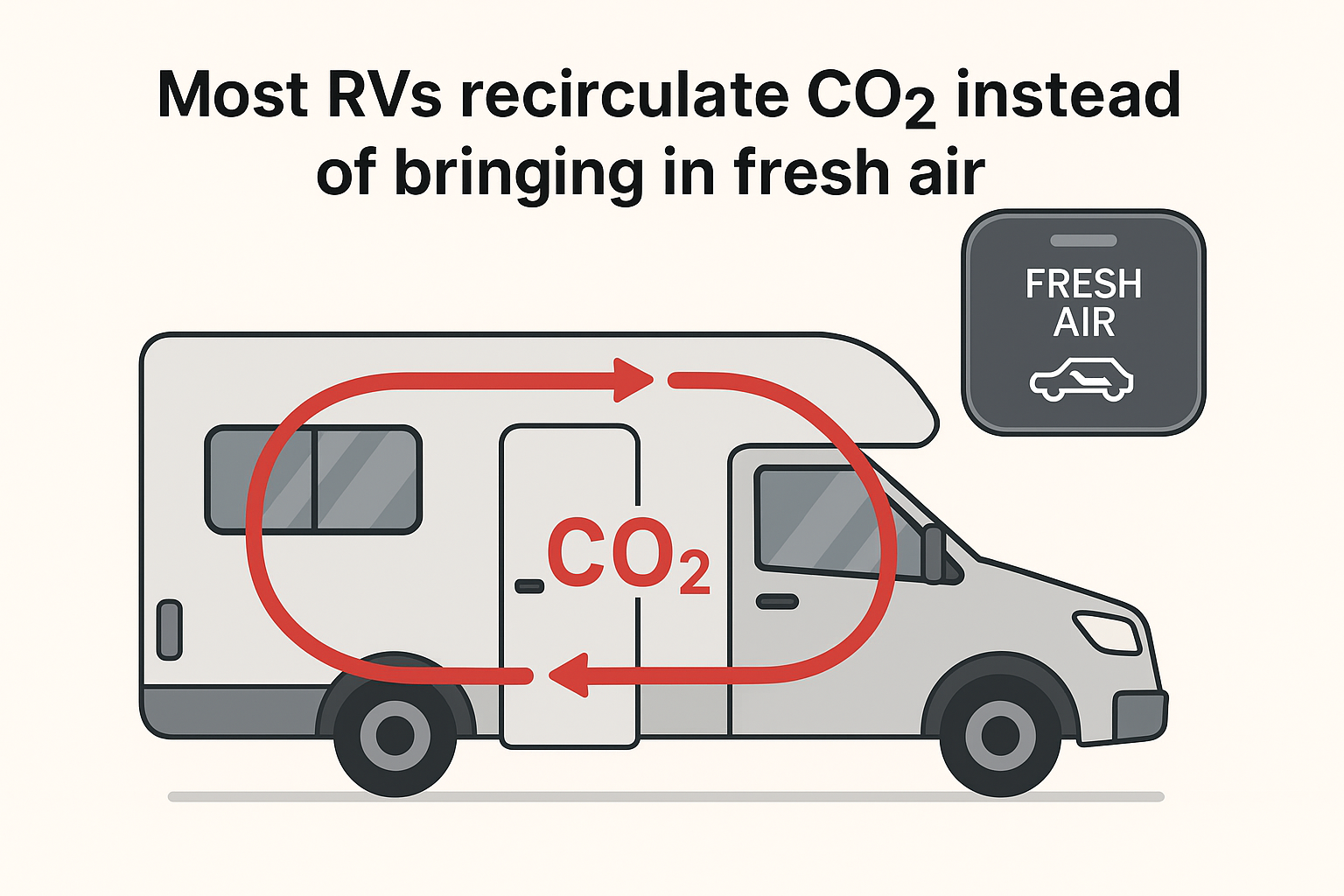
I Used to Think “Fresh Air” Was Always the Safer Choice
For a long time, I treated fresh-air mode in my RV as a universal solution.
If the air felt stale, I switched it on.
If CO₂ was rising, I switched it on.
If something felt off, I trusted fresh air to fix it.
It felt obvious.
But after spending more time living, cooking, and sleeping inside an RV, I realized something uncomfortable:
👉 Fresh-air mode solves one problem — but can quietly create others if you don’t understand when and how to use it.
The danger isn’t dramatic.
It’s subtle, situational, and easy to miss.
Why “Fresh Air” Feels Like the Right Answer
Fresh-air mode sounds inherently safe because it promises:
- air exchange
- lower CO₂
- less reuse of cabin air
And in many cases, it does help.
But RVs are not houses — and they’re not cars in motion either.
They sit still for long periods, often in environments where “outside air” isn’t as clean or stable as we assume.
Fresh Air Doesn’t Mean Clean Air
This was the first mental shift I had to make.
In an RV, outside air may contain:
- vehicle exhaust from nearby campers
- generator fumes
- dust or pollen
- wildfire smoke
- cold or humid air
Fresh-air mode doesn’t filter these out by default.
It simply pulls them inside.
So while CO₂ may drop, other pollutants can quietly increase.
Why This Matters More When Parked
When driving, fresh air is constantly changing.
But when parked:
- air around the RV can stagnate
- exhaust sources may remain nearby
- wind may be minimal
Fresh-air mode can repeatedly draw in the same contaminated air.
This creates a false sense of safety:
- CO₂ numbers look better
- air feels cooler or fresher
- but overall air quality may degrade
The tradeoff isn’t obvious unless you’re looking for it.
Temperature and Comfort Side Effects
Another hidden cost of constant fresh air in RVs is thermal instability.
Fresh-air mode can:
- dump cold air into the cabin at night
- increase heating or cooling demand
- cause temperature swings
- disrupt sleep
So people often respond by:
- sealing the RV again
- turning fresh air off abruptly
- letting CO₂ climb overnight
This on-off cycle is common — and inefficient.
Why Fresh Air Can Mask Other Problems
Here’s a subtle issue I didn’t expect.
Fresh air can feel good enough to:
- mask VOC buildup from interior materials
- hide uneven airflow zones
- reduce awareness of ventilation timing
So instead of managing air intentionally, it’s easy to rely on a single mode and assume everything is fine.
But RV air quality isn’t binary.
It’s layered.
The Real Risk: Treating Fresh Air as “Set and Forget”
The danger isn’t fresh air itself.
The danger is thinking:
“If fresh-air mode is on, I don’t need to think about air anymore.”
In RVs, air quality depends on:
- duration
- surroundings
- weather
- occupancy
- activity (sleeping, cooking, idling)
Fresh air without context can:
- lower CO₂ but raise pollutants
- improve numbers but reduce comfort
- fix one metric while ignoring others
How I Use Fresh-Air Mode Now
I didn’t stop using it.
I just stopped over-trusting it.
Here’s what changed:
- I treat fresh air as a tool, not a default
- I use it periodically, not constantly
- I consider where the RV is parked
- I pair fresh air with filtration when possible
- I avoid long, unattended fresh-air cycles
Fresh air works best when it’s intentional.
A Better Mental Model
This is how I think about it now:
- Fresh air controls CO₂
- Filtration controls pollutants
- Timing controls comfort
- Context controls safety
No single mode handles everything.
Final Thoughts
Fresh-air mode in an RV isn’t dangerous by nature.
What’s dangerous is assuming it’s always the right answer — regardless of context.
In small, sealed, stationary spaces:
- outside air isn’t always better
- CO₂ isn’t the only variable
- comfort can hide imbalance
Once I understood that, I stopped chasing a single “safe” setting and started managing air like any other RV resource — deliberately, calmly, and with awareness.
Because in RV life,
good air isn’t automatic — it’s managed.
Amazon is a trademark of Amazon.com, Inc. or its affiliates.
Leave a Reply