I Assumed Speed and Airflow Would Solve It — They Don’t (At Least Not the Way I Thought)
For a long time, I believed something that felt obvious.
“If the car is moving fast, air must be flowing through it.”
“Good aerodynamics should help flush the cabin.”
“CO₂ buildup is probably only a problem when parked.”
That assumption sounds reasonable.
After all, modern cars are designed to slice through air efficiently.
You can feel wind noise.
You can see air rushing past the windows.
But once I started paying attention to how cabin air actually behaves, I realized something important:
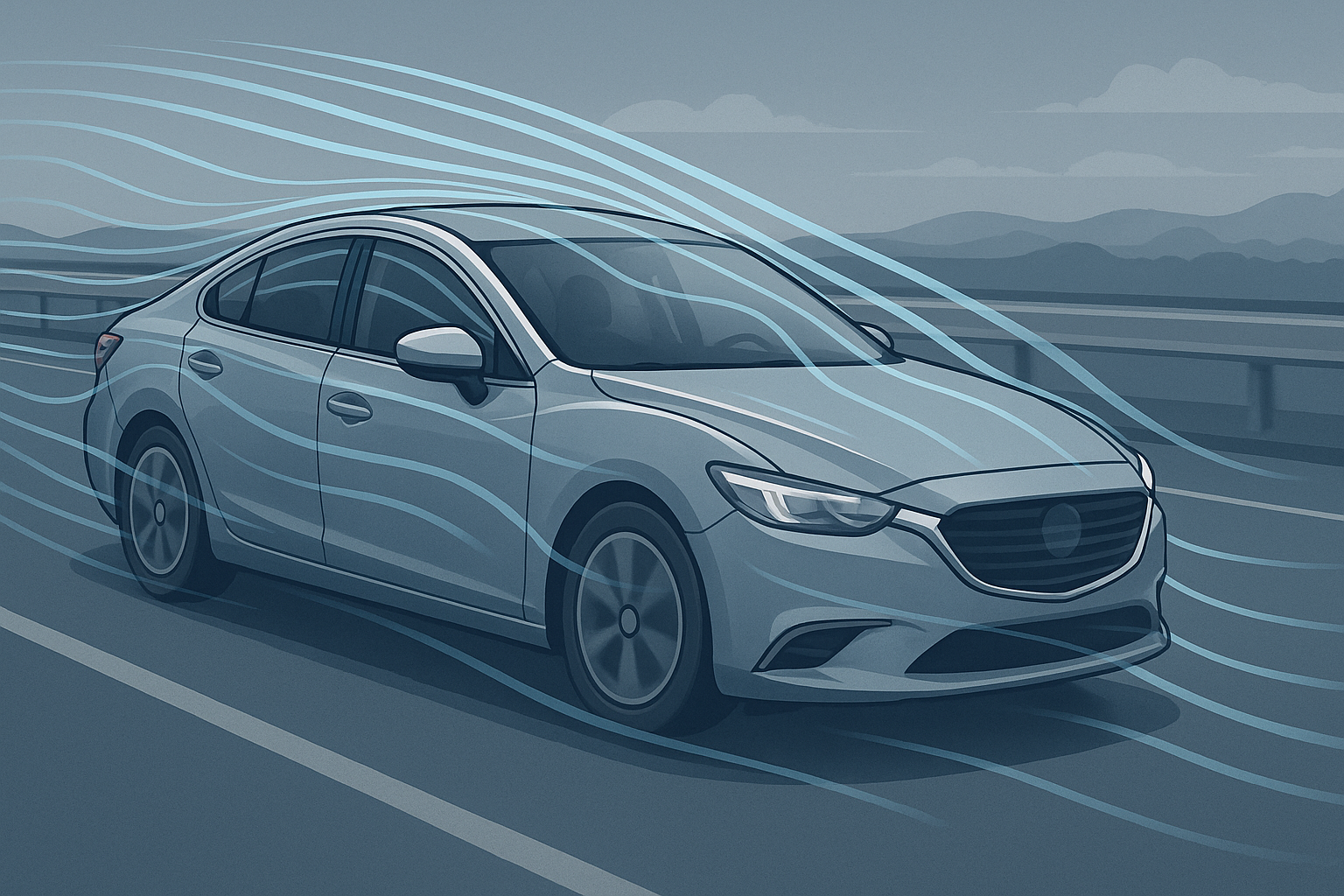
👉 Aerodynamics affect how air moves around a car — not how air is exchanged inside it.
That distinction changes everything.
What Aerodynamics Actually Do
Aerodynamics are about:
- reducing drag
- improving efficiency
- controlling airflow outside the vehicle
A well-designed car:
- keeps external air flowing smoothly around the body
- minimizes pressure disturbances
- reduces turbulence and noise
This is great for fuel economy and stability.
But none of this automatically means:
- fresh air enters the cabin
- stale air leaves the cabin
- CO₂ is diluted inside
External airflow and internal ventilation are two very different systems.
Why a Moving Car Is Still a Sealed Space
This surprised me at first.
Even at highway speed:
- the cabin is intentionally sealed
- doors and windows block pressure-driven flow
- HVAC controls almost all air exchange
Modern cars are designed to prevent uncontrolled air intrusion.
That’s why:
- wind doesn’t roar inside
- temperature stays stable
- noise is reduced
But it also means:
Speed alone does not guarantee fresh air inside.
If the HVAC is set to recirculation, the cabin remains a closed loop —
even at 70 mph.
The Pressure Myth: “Forward Motion Pushes Air In”
I used to imagine outside air being “forced” into the cabin as the car moves.
In reality:
- pressure zones form around the car
- most areas are neutral or low-pressure
- intentional vents control where air enters and exits
Unless the HVAC is actively drawing in outside air, the system doesn’t magically ventilate itself.
Aerodynamics help keep air out, not pull it in.
Why CO₂ Can Still Build Up While Driving
CO₂ inside the car comes primarily from:
- human breathing
As long as:
- people are inside
- air exchange is limited
- time passes
CO₂ will rise gradually.
Driving faster doesn’t change that equation.
What matters is:
- air intake mode (fresh vs recirculation)
- fan speed and mixing
- how long the cabin stays sealed
Not the vehicle’s drag coefficient.
Why This Feels Counterintuitive
This idea clashes with intuition because:
- we associate movement with ventilation
- wind is visible and audible
- motion feels “active”
But cabin air is managed by design, not motion.
That’s why you can:
- drive for hours
- feel comfortable
- hear airflow
…and still be breathing largely reused air.
When Aerodynamics Can Indirectly Matter
To be fair, aerodynamics aren’t irrelevant.
They can indirectly influence cabin air by:
- reducing noise (making air issues harder to notice)
- improving sealing (reducing passive leaks)
- stabilizing pressure (limiting unintended airflow)
Ironically, better aerodynamics often mean less accidental ventilation, not more.
So newer, more efficient cars may require more intentional air management, not less.
What Actually Helps Reduce CO₂ While Driving
Here’s what I found makes a real difference:
- switching to fresh-air mode periodically
- increasing fan speed briefly to mix air
- avoiding long, uninterrupted recirculation cycles
- refreshing air before mental dullness appears
These actions affect air exchange, not external airflow.
A Simple Way I Think About It Now
Here’s the mental model that finally stuck:
- Aerodynamics manage outside air
- HVAC manages inside air
They operate independently.
One improves efficiency.
The other determines freshness.
Confusing the two leads to false assumptions.
Final Thoughts
Driving speed and sleek aerodynamics don’t protect you from CO₂ buildup inside the car.
They were never meant to.
A car can be:
- fast
- quiet
- efficient
…and still have slowly reused cabin air.
Once I separated “how air moves around the car” from “how air moves inside it,” the confusion disappeared.
CO₂ management while driving isn’t about speed or shape.
It’s about intentional ventilation.
And that’s a choice the driver makes — not something aerodynamics can do for you.
Amazon is a trademark of Amazon.com, Inc. or its affiliates.
Leave a Reply